 Add to Chrome
 Add to Firefox
 Add to Edge
Reexamining zero-shot summarization: Empirical investigation of trustworthiness of LLM-summarizers
Jul 23, 2026
Zero-shot summarization using Large Language Models (LLMs) has significantly advanced the abstractive summarization task by producing coherent and fluent summaries. However, underlying stochasticity of the large language models raises concerns about the stability and trustworthiness of the LLM-generated summaries. This issue has become increasingly important due to proliferation of LLM-generated summaries in educational settings, where students and researchers summarize complex academic materials in zero-shot manner. We propose a novel two-level diagnostic protocol for benchmarking LLM-summarizers based on the stability of the generated summaries. At the lower level, document-level stability analysis is performed over multiple LLM-summaries generated under controlled environment, and the stability coefficient is computed. Each generated summary is scored for semantic and factual alignment with the original document, enabling estimation of stability along more than one dimensions. At the next level, observations from a stratified sample of documents drawn from the corpus are consolidated to estimate the stability index of the LLM-summarizer, which is the proxy for its trustworthiness. Our empirical investigation of three LLM-summarizers across three genres of documents reveals statistically significant differences in the generation-level variability among LLMs across summary evaluation metrics. This study advances the LLM-summarization research by evidential recognition of the stability problem in LLM-summaries and motivates further research towards development of robust, reliable and trustworthy LLM-summarizers.

Simple Features and Honest Calibration for Ambivalence and Hesitancy Recognition in Video
Jul 13, 2026We address ambivalence and hesitancy (A/H) recognition in the ABAW 2026 BAH Challenge: given a short interview video, predict whether the person shows signs of A/H. Our system combines affect-specialised text, audio, and visual representations with a small set of readable linguistic hesitation cues, fused by a reliability gate we call Affective Marker Fusion (AMF), and finished with a simple AP-weighted ensemble at a fixed decision threshold. We also introduce \emph{ASR-erased time}: speech recognisers delete fillers and hesitation pauses from the transcript, but the chunk timestamps keep the time those events took, and sixteen features built from these gaps form the strongest and most independent non-verbal channel we measured (AP $0.718$, correlation $0.11$--$0.36$ with all other members). Across controlled experiments we find three things: cross-modal conflict design does not reliably help on BAH; language is by far the strongest channel while affect-specialised audio is a useful second; and calibration matters more than architecture. Fitting ensemble weights and a threshold on the small validation split overfits: it scores $0.741$ macro-F1 on validation but only $0.690$ on the untouched test set. AP-weighting at a fixed threshold instead reaches $\mathbf{0.731}$ on test.
PRecG: Legal Precedent Retrieval with Graph Neural Networks and Rhetorical Role Segmentation
Jul 10, 2026Legal precedent retrieval is a fundamental task in legal case preparation, planning, litigation strategy, and legal research. Current approaches for automatic precedent retrieval map legal documents to a low-dimensional semantic space and compute similarity based on the proximity of their representations. These approaches treat legal documents as monolithic texts, ignoring the rhetorical organization of the legal technicalities. Ergo, they overlook nuanced legal meanings and fail to distinguish the contextual significance of legal entities and concepts that vary based on their rhetorical roles within the document. To address this insufficiency, we propose the PRecG pipeline that computes the similarity between pairs of legal judgments by hierarchically learning their representations. The process begins by decomposing each document into distinct semantic units (segments) based on the rhetorical roles of sentences. For each rhetorical segment, a knowledge graph is constructed to capture the legal entities and their relationships within the segment. Contextual representations of the entities are then learned and aggregated to derive segment-level embeddings. These embeddings are further integrated to produce a unified document-level representation, and finally, the semantic similarity between a pair of documents is computed. We validate the performance of the proposed approach through extensive experiments on a benchmark Indian legal dataset, comparing it against state-of-the-art baselines to demonstrate its effectiveness.
GrIT: Group Informed Transformer for Sequential Recommendation
Feb 23, 2026Sequential recommender systems aim to predict a user's future interests by extracting temporal patterns from their behavioral history. Existing approaches typically employ transformer-based architectures to process long sequences of user interactions, capturing preference shifts by modeling temporal relationships between items. However, these methods often overlook the influence of group-level features that capture the collective behavior of similar users. We hypothesize that explicitly modeling temporally evolving group features alongside individual user histories can significantly enhance next-item recommendation. Our approach introduces latent group representations, where each user's affiliation to these groups is modeled through learnable, time-varying membership weights. The membership weights at each timestep are computed by modeling shifts in user preferences through their interaction history, where we incorporate both short-term and long-term user preferences. We extract a set of statistical features that capture the dynamics of user behavior and further refine them through a series of transformations to produce the final drift-aware membership weights. A group-based representation is derived by weighting latent group embeddings with the learned membership scores. This representation is integrated with the user's sequential representation within the transformer block to jointly capture personal and group-level temporal dynamics, producing richer embeddings that lead to more accurate, context-aware recommendations. We validate the effectiveness of our approach through extensive experiments on five benchmark datasets, where it consistently outperforms state-of-the-art sequential recommendation methods.
DReX: An Explainable Deep Learning-based Multimodal Recommendation Framework
Feb 23, 2026Multimodal recommender systems leverage diverse data sources, such as user interactions, content features, and contextual information, to address challenges like cold-start and data sparsity. However, existing methods often suffer from one or more key limitations: processing different modalities in isolation, requiring complete multimodal data for each interaction during training, or independent learning of user and item representations. These factors contribute to increased complexity and potential misalignment between user and item embeddings. To address these challenges, we propose DReX, a unified multimodal recommendation framework that incrementally refines user and item representations by leveraging interaction-level features from multimodal feedback. Our model employs gated recurrent units to selectively integrate these fine-grained features into global representations. This incremental update mechanism provides three key advantages: (1) simultaneous modeling of both nuanced interaction details and broader preference patterns, (2) eliminates the need for separate user and item feature extraction processes, leading to enhanced alignment in their learned representation, and (3) inherent robustness to varying or missing modalities. We evaluate the performance of the proposed approach on three real-world datasets containing reviews and ratings as interaction modalities. By considering review text as a modality, our approach automatically generates interpretable keyword profiles for both users and items, which supplement the recommendation process with interpretable preference indicators. Experiment results demonstrate that our approach outperforms state-of-the-art methods across all evaluated datasets.
What Matters in Data Curation for Multimodal Reasoning? Insights from the DCVLR Challenge
Jan 16, 2026We study data curation for multimodal reasoning through the NeurIPS 2025 Data Curation for Vision-Language Reasoning (DCVLR) challenge, which isolates dataset selection by fixing the model and training protocol. Using a compact curated dataset derived primarily from Walton Multimodal Cold Start, our submission placed first in the challenge. Through post-competition ablations, we show that difficulty-based example selection on an aligned base dataset is the dominant driver of performance gains. Increasing dataset size does not reliably improve mean accuracy under the fixed training recipe, but mainly reduces run-to-run variance, while commonly used diversity and synthetic augmentation heuristics provide no additional benefit and often degrade performance. These results characterize DCVLR as a saturation-regime evaluation and highlight the central role of alignment and difficulty in data-efficient multimodal reasoning.
AugAbEx : Way Forward for Extractive Case Summarization
Nov 15, 2025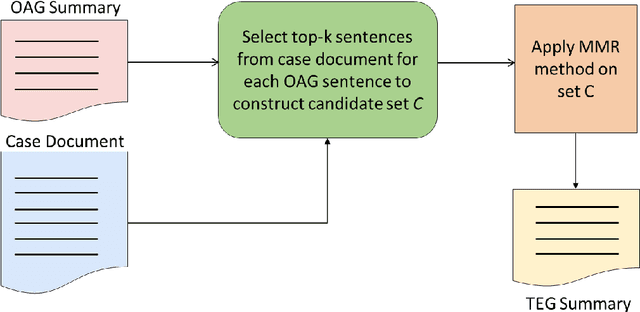
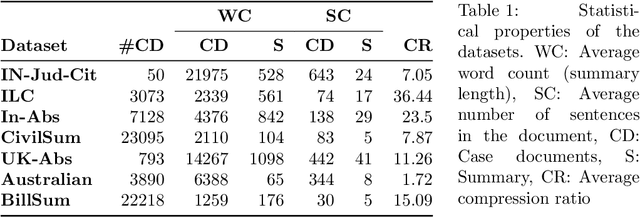
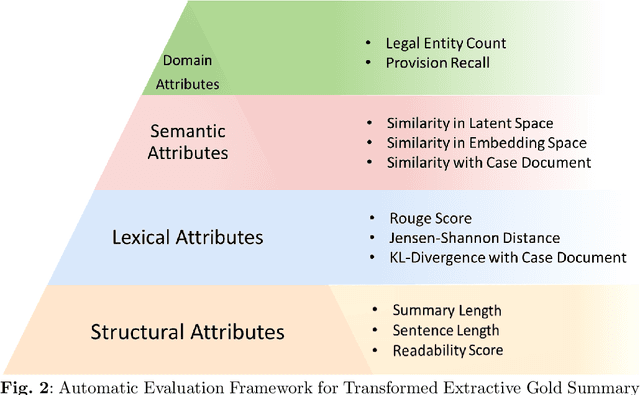
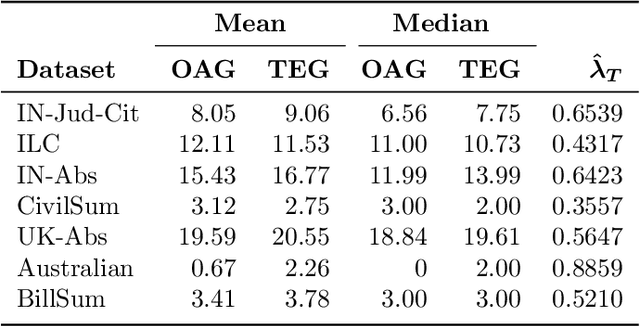
Summarization of legal judgments poses a heavy cognitive burden on law practitioners due to the complexity of the language, context-sensitive legal jargon, and the length of the document. Therefore, the automatic summarization of legal documents has attracted serious attention from natural language processing researchers. Since the abstractive summaries of legal documents generated by deep neural methods remain prone to the risk of misrepresenting nuanced legal jargon or overlooking key contextual details, we envisage a rising trend toward the use of extractive case summarizers. Given the high cost of human annotation for gold standard extractive summaries, we engineer a light and transparent pipeline that leverages existing abstractive gold standard summaries to create the corresponding extractive gold standard versions. The approach ensures that the experts` opinions ensconced in the original gold standard abstractive summaries are carried over to the transformed extractive summaries. We aim to augment seven existing case summarization datasets, which include abstractive summaries, by incorporating corresponding extractive summaries and create an enriched data resource for case summarization research community. To ensure the quality of the augmented extractive summaries, we perform an extensive comparative evaluation with the original abstractive gold standard summaries covering structural, lexical, and semantic dimensions. We also compare the domain-level information of the two summaries. We commit to release the augmented datasets in the public domain for use by the research community and believe that the resource will offer opportunities to advance the field of automatic summarization of legal documents.
Geometric Preference Elicitation for Minimax Regret Optimization in Uncertainty Matroids
Mar 25, 2025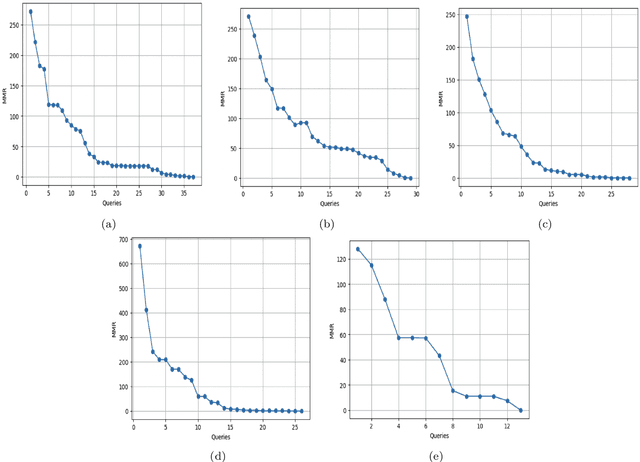
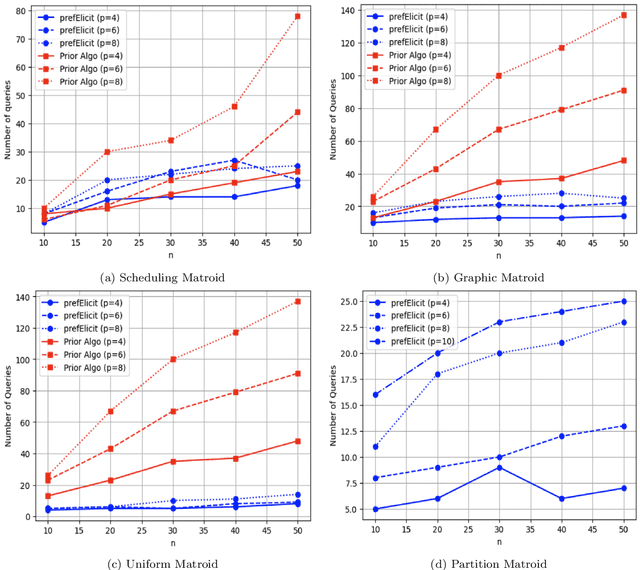


This paper presents an efficient preference elicitation framework for uncertain matroid optimization, where precise weight information is unavailable, but insights into possible weight values are accessible. The core innovation of our approach lies in its ability to systematically elicit user preferences, aligning the optimization process more closely with decision-makers' objectives. By incrementally querying preferences between pairs of elements, we iteratively refine the parametric uncertainty regions, leveraging the structural properties of matroids. Our method aims to achieve the exact optimum by reducing regret with a few elicitation rounds. Additionally, our approach avoids the computation of Minimax Regret and the use of Linear programming solvers at every iteration, unlike previous methods. Experimental results on four standard matroids demonstrate that our method reaches optimality more quickly and with fewer preference queries than existing techniques.
Multimodal Fusion Learning with Dual Attention for Medical Imaging
Dec 02, 2024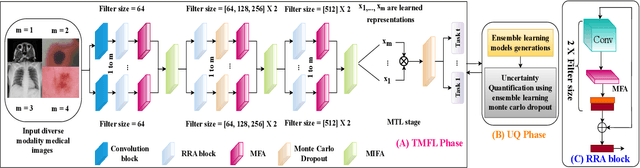
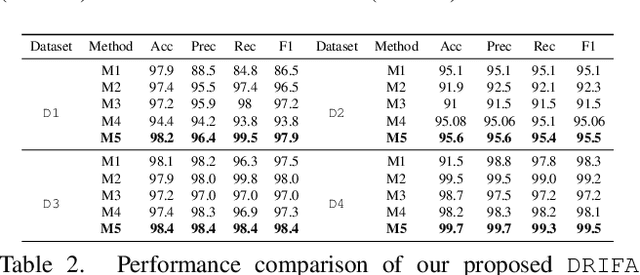
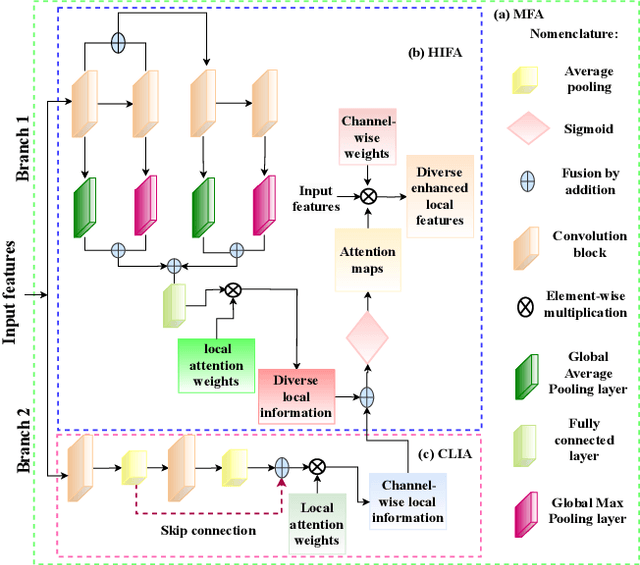
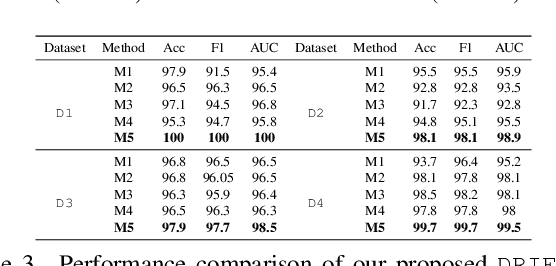
Multimodal fusion learning has shown significant promise in classifying various diseases such as skin cancer and brain tumors. However, existing methods face three key limitations. First, they often lack generalizability to other diagnosis tasks due to their focus on a particular disease. Second, they do not fully leverage multiple health records from diverse modalities to learn robust complementary information. And finally, they typically rely on a single attention mechanism, missing the benefits of multiple attention strategies within and across various modalities. To address these issues, this paper proposes a dual robust information fusion attention mechanism (DRIFA) that leverages two attention modules, i.e. multi-branch fusion attention module and the multimodal information fusion attention module. DRIFA can be integrated with any deep neural network, forming a multimodal fusion learning framework denoted as DRIFA-Net. We show that the multi-branch fusion attention of DRIFA learns enhanced representations for each modality, such as dermoscopy, pap smear, MRI, and CT-scan, whereas multimodal information fusion attention module learns more refined multimodal shared representations, improving the network's generalization across multiple tasks and enhancing overall performance. Additionally, to estimate the uncertainty of DRIFA-Net predictions, we have employed an ensemble Monte Carlo dropout strategy. Extensive experiments on five publicly available datasets with diverse modalities demonstrate that our approach consistently outperforms state-of-the-art methods. The code is available at https://github.com/misti1203/DRIFA-Net.
* 10 pages
Citation-Based Summarization of Landmark Judgments
Jun 16, 2024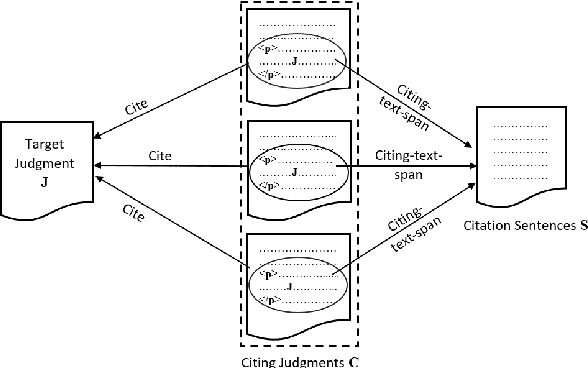
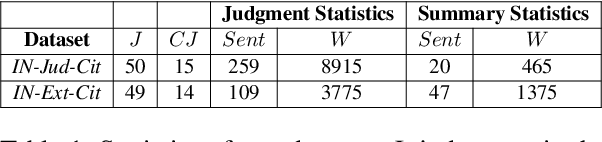
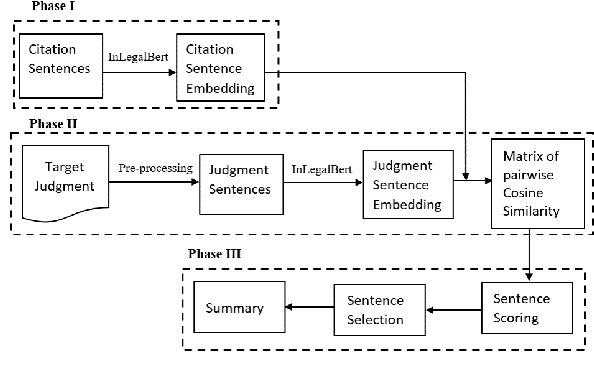
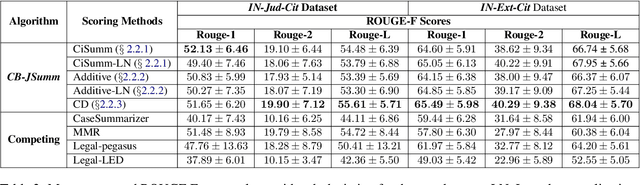
Landmark judgments are of prime importance in the Common Law System because of their exceptional jurisprudence and frequent references in other judgments. In this work, we leverage contextual references available in citing judgments to create an extractive summary of the target judgment. We evaluate the proposed algorithm on two datasets curated from the judgments of Indian Courts and find the results promising.