 Add to Chrome
 Add to Firefox
 Add to Edge
A Stabilized Path-Space Approach to Diffusion-Based Posterior Sampling
Jun 10, 2026
Diffusion models provide expressive data-driven priors for Bayesian inverse problems, but many diffusion posterior samplers rely on heuristic guidance approximations that can fail for nonlinear operators and multimodal posteriors. In this work, we develop a stabilized path-space framework for diffusion-based posterior sampling. Starting from a base diffusion process whose terminal marginal represents the prior, we define a likelihood-weighted target measure on trajectories and cast posterior sampling as learning a controlled stochastic process whose path measure matches this target. This formulation connects diffusion posterior sampling to stochastic optimal control while preserving the Bayesian structure needed for uncertainty quantification. We introduce a time reparameterization that makes the path-space control problem well posed by removing the bias induced by the unknown initial value function, without auxiliary training. We then learn the control via a trust-region path-space optimization method with log-variance objectives. The path-space perspective also unifies our learned control approach with existing guidance-based samplers, quantifies the sampling error induced by approximate controls, and yields importance sampling corrections for asymptotically exact posterior expectations. We evaluate the proposed framework on a suite of benchmark inverse problems with analytically characterized or high-quality reference posteriors, enabling principled assessment of sampling accuracy and uncertainty quantification. These experiments provide insight into the behavior of diffusion-based posterior samplers and demonstrate improved accuracy and robustness over leading approaches.

A Learning-based Framework for Spatial Impulse Response Compensation in 3D Photoacoustic Computed Tomography
Jan 28, 2026Photoacoustic computed tomography (PACT) is a promising imaging modality that combines the advantages of optical contrast with ultrasound detection. Utilizing ultrasound transducers with larger surface areas can improve detection sensitivity. However, when computationally efficient analytic reconstruction methods that neglect the spatial impulse responses (SIRs) of the transducer are employed, the spatial resolution of the reconstructed images will be compromised. Although optimization-based reconstruction methods can explicitly account for SIR effects, their computational cost is generally high, particularly in three-dimensional (3D) applications. To address the need for accurate but rapid 3D PACT image reconstruction, this study presents a framework for establishing a learned SIR compensation method that operates in the data domain. The learned compensation method maps SIR-corrupted PACT measurement data to compensated data that would have been recorded by idealized point-like transducers. Subsequently, the compensated data can be used with a computationally efficient reconstruction method that neglects SIR effects. Two variants of the learned compensation model are investigated that employ a U-Net model and a specifically designed, physics-inspired model, referred to as Deconv-Net. A fast and analytical training data generation procedure is also a component of the presented framework. The framework is rigorously validated in virtual imaging studies, demonstrating resolution improvement and robustness to noise variations, object complexity, and sound speed heterogeneity. When applied to in-vivo breast imaging data, the learned compensation models revealed fine structures that had been obscured by SIR-induced artifacts. To our knowledge, this is the first demonstration of learned SIR compensation in 3D PACT imaging.
Benchmarking Deep Learning-Based Reconstruction Methods for Photoacoustic Computed Tomography with Clinically Relevant Synthetic Datasets
Jan 23, 2026Deep learning (DL)-based image reconstruction methods for photoacoustic computed tomography (PACT) have developed rapidly in recent years. However, most existing methods have not employed standardized datasets, and their evaluations rely on traditional image quality (IQ) metrics that may lack clinical relevance. The absence of a standardized framework for clinically meaningful IQ assessment hinders fair comparison and raises concerns about the reproducibility and reliability of reported advancements in PACT. A benchmarking framework is proposed that provides open-source, anatomically plausible synthetic datasets and evaluation strategies for DL-based acoustic inversion methods in PACT. The datasets each include over 11,000 two-dimensional (2D) stochastic breast objects with clinically relevant lesions and paired measurements at varying modeling complexity. The evaluation strategies incorporate both traditional and task-based IQ measures to assess fidelity and clinical utility. A preliminary benchmarking study is conducted to demonstrate the framework's utility by comparing DL-based and physics-based reconstruction methods. The benchmarking study demonstrated that the proposed framework enabled comprehensive, quantitative comparisons of reconstruction performance and revealed important limitations in certain DL-based methods. Although they performed well according to traditional IQ measures, they often failed to accurately recover lesions. This highlights the inadequacy of traditional metrics and motivates the need for task-based assessments. The proposed benchmarking framework enables systematic comparisons of DL-based acoustic inversion methods for 2D PACT. By integrating clinically relevant synthetic datasets with rigorous evaluation protocols, it enables reproducible, objective assessments and facilitates method development and system optimization in PACT.
Can Diffusion Models Provide Rigorous Uncertainty Quantification for Bayesian Inverse Problems?
Mar 04, 2025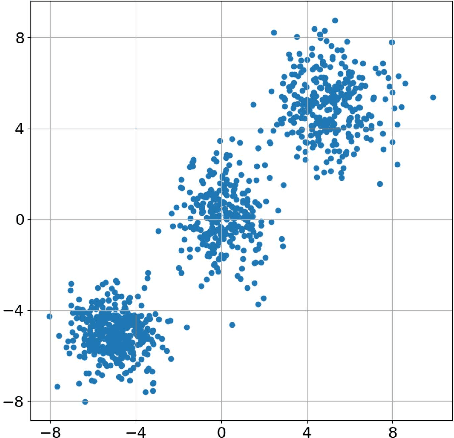
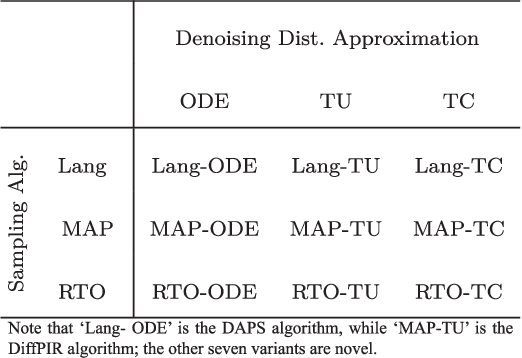
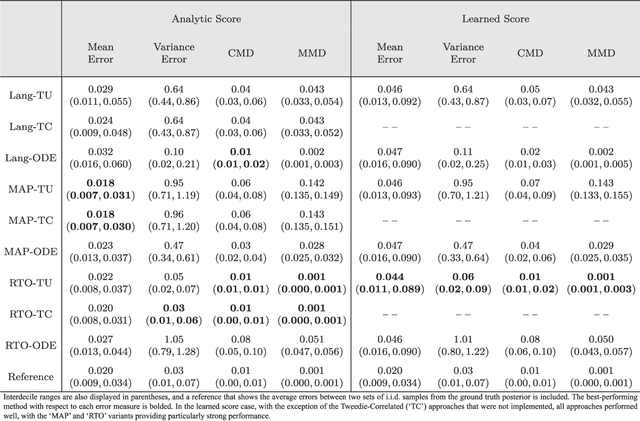
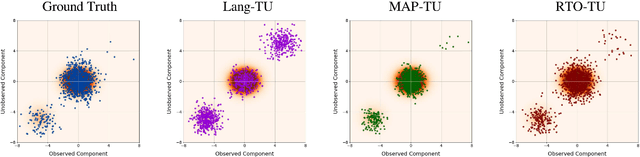
In recent years, the ascendance of diffusion modeling as a state-of-the-art generative modeling approach has spurred significant interest in their use as priors in Bayesian inverse problems. However, it is unclear how to optimally integrate a diffusion model trained on the prior distribution with a given likelihood function to obtain posterior samples. While algorithms that have been developed for this purpose can produce high-quality, diverse point estimates of the unknown parameters of interest, they are often tested on problems where the prior distribution is analytically unknown, making it difficult to assess their performance in providing rigorous uncertainty quantification. In this work, we introduce a new framework, Bayesian Inverse Problem Solvers through Diffusion Annealing (BIPSDA), for diffusion model based posterior sampling. The framework unifies several recently proposed diffusion model based posterior sampling algorithms and contains novel algorithms that can be realized through flexible combinations of design choices. Algorithms within our framework were tested on model problems with a Gaussian mixture prior and likelihood functions inspired by problems in image inpainting, x-ray tomography, and phase retrieval. In this setting, approximate ground-truth posterior samples can be obtained, enabling principled evaluation of the performance of the algorithms. The results demonstrate that BIPSDA algorithms can provide strong performance on the image inpainting and x-ray tomography based problems, while the challenging phase retrieval problem, which is difficult to sample from even when the posterior density is known, remains outside the reach of the diffusion model based samplers.
Learned Correction Methods for Ultrasound Computed Tomography Imaging Using Simplified Physics Models
Feb 13, 2025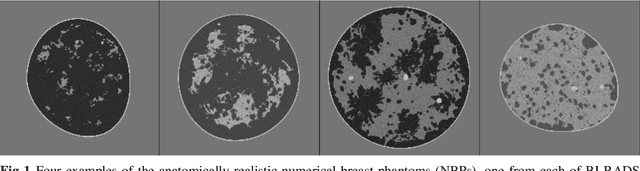
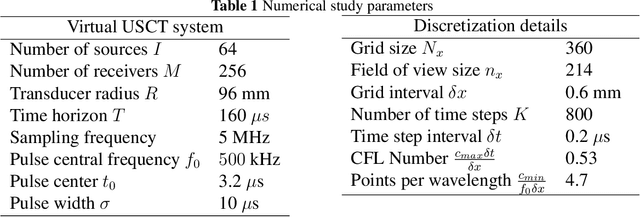
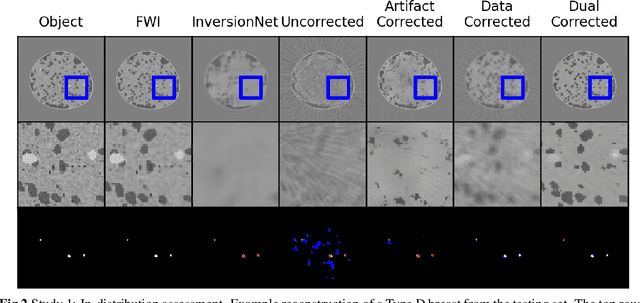
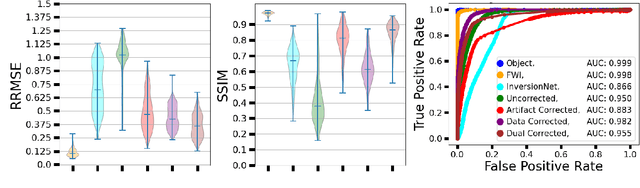
Ultrasound computed tomography (USCT) is an emerging modality for breast imaging. Image reconstruction methods that incorporate accurate wave physics produce high resolution quantitative images of acoustic properties but are computationally expensive. The use of a simplified linear model in reconstruction reduces computational expense at the cost of reduced accuracy. This work aims to systematically compare different learning approaches for USCT reconstruction utilizing simplified linear models. This work considered various learning approaches to compensate for errors stemming from a linearized wave propagation model: correction in the data and image domains. The resulting image reconstruction methods are systematically assessed, alongside data-driven and model-based methods, in four virtual imaging studies utilizing anatomically realistic numerical phantoms. Image quality was assessed utilizing relative root mean square error (RRMSE), structural similarity index measure (SSIM), and a task-based assessment for tumor detection. Correction in the measurement domain resulted in images with minor visual artifacts and highly accurate task performance. Correction in the image domain demonstrated a heavy bias on training data, resulting in hallucinations, but greater robustness to measurement noise. Combining both forms of correction performed best in terms of RRMSE and SSIM, at the cost of task performance. This work systematically assessed learned reconstruction methods incorporating an approximated physical model for USCT imaging. Results demonstrated the importance of incorporating physics, compared to data-driven methods. Learning a correction in the data domain led to better task performance and robust out-of-distribution generalization compared to correction in the image domain.
Learning a Filtered Backprojection Reconstruction Method for Photoacoustic Computed Tomography with Hemispherical Measurement Geometries
Dec 02, 2024In certain three-dimensional (3D) applications of photoacoustic computed tomography (PACT), including \textit{in vivo} breast imaging, hemispherical measurement apertures that enclose the object within their convex hull are employed for data acquisition. Data acquired with such measurement geometries are referred to as \textit{half-scan} data, as only half of a complete spherical measurement aperture is employed. Although previous studies have demonstrated that half-scan data can uniquely and stably reconstruct the sought-after object, no closed-form reconstruction formula for use with half-scan data has been reported. To address this, a semi-analytic reconstruction method in the form of filtered backprojection (FBP), referred to as the half-scan FBP method, is developed in this work. Because the explicit form of the filtering operation in the half-scan FBP method is not currently known, a learning-based method is proposed to approximate it. The proposed method is systematically investigated by use of virtual imaging studies of 3D breast PACT that employ ensembles of numerical breast phantoms and a physics-based model of the data acquisition process. The method is subsequently applied to experimental data acquired in an \textit{in vivo} breast PACT study. The results confirm that the half-scan FBP method can accurately reconstruct 3D images from half-scan data. Importantly, because the sought-after inverse mapping is well-posed, the reconstruction method remains accurate even when applied to data that differ considerably from those employed to learn the filtering operation.
Physics and Deep Learning in Computational Wave Imaging
Oct 10, 2024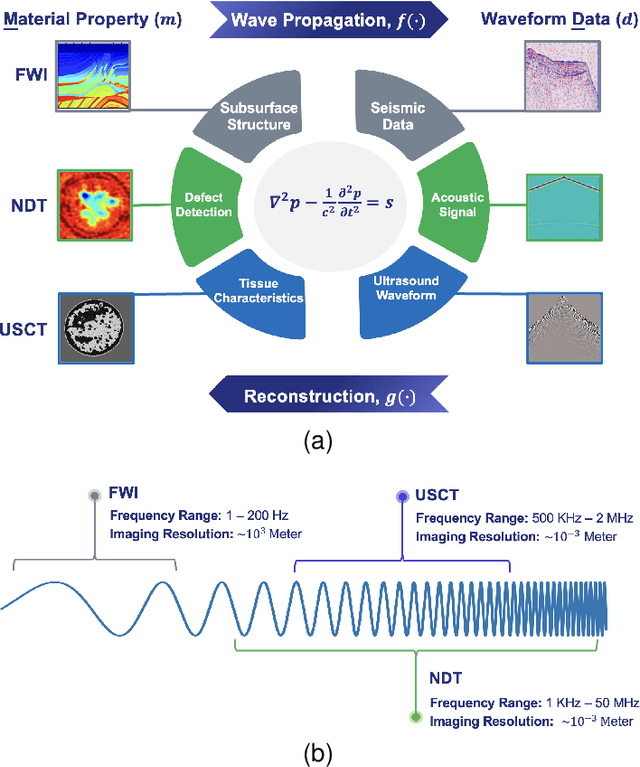
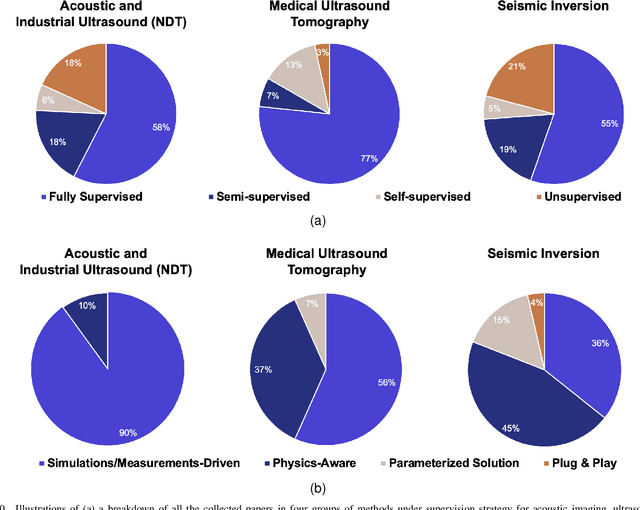
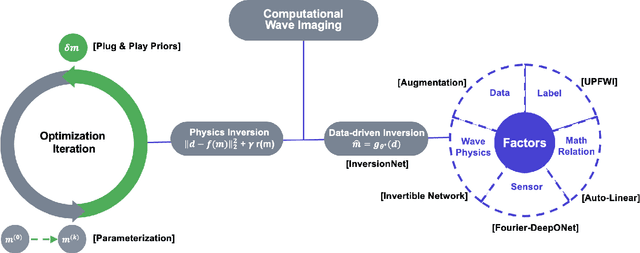
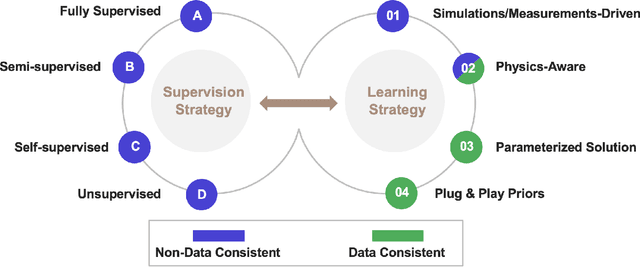
Computational wave imaging (CWI) extracts hidden structure and physical properties of a volume of material by analyzing wave signals that traverse that volume. Applications include seismic exploration of the Earth's subsurface, acoustic imaging and non-destructive testing in material science, and ultrasound computed tomography in medicine. Current approaches for solving CWI problems can be divided into two categories: those rooted in traditional physics, and those based on deep learning. Physics-based methods stand out for their ability to provide high-resolution and quantitatively accurate estimates of acoustic properties within the medium. However, they can be computationally intensive and are susceptible to ill-posedness and nonconvexity typical of CWI problems. Machine learning-based computational methods have recently emerged, offering a different perspective to address these challenges. Diverse scientific communities have independently pursued the integration of deep learning in CWI. This review delves into how contemporary scientific machine-learning (ML) techniques, and deep neural networks in particular, have been harnessed to tackle CWI problems. We present a structured framework that consolidates existing research spanning multiple domains, including computational imaging, wave physics, and data science. This study concludes with important lessons learned from existing ML-based methods and identifies technical hurdles and emerging trends through a systematic analysis of the extensive literature on this topic.
Revisiting the joint estimation of initial pressure and speed-of-sound distributions in photoacoustic computed tomography with consideration of canonical object constraints
Oct 05, 2024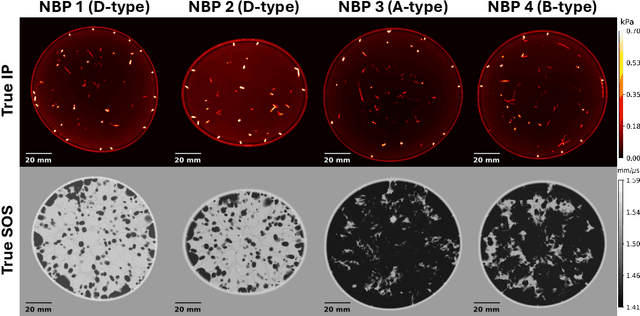
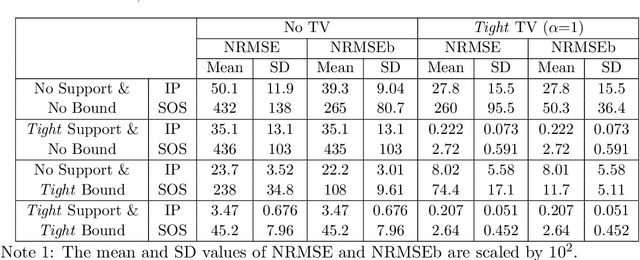
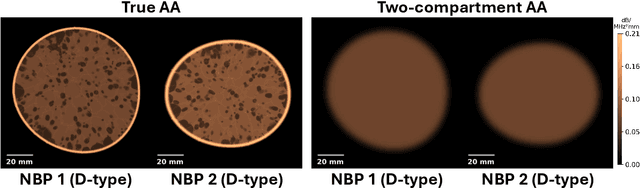

In photoacoustic computed tomography (PACT) the accurate estimation of the initial pressure (IP) distribution generally requires knowledge of the object's heterogeneous speed-of-sound (SOS) distribution. Although hybrid imagers that combine ultrasound tomography with PACT have been proposed, in many current applications of PACT the SOS distribution remains unknown. Joint reconstruction (JR) of the IP and SOS distributions from PACT measurement data alone can address this issue. However, this joint estimation problem is ill-posed and corresponds to a non-convex optimization problem. While certain regularization strategies have been deployed, stabilizing the JR problem to yield accurate estimates of the IP and SOS distributions has remained an open challenge. To address this, the presented numerical studies explore the effectiveness of easy to implement canonical object constraints for stabilizing the JR problem. The considered constraints include support, bound, and total variation constraints, which are incorporated into an optimization-based method for JR. Computer-simulation studies that employ anatomically realistic numerical breast phantoms are conducted to evaluate the impact of these object constraints on JR accuracy. Additionally, the impact of certain data inconsistencies, such as caused by measurement noise and physics modeling mismatches, on the effectiveness of the object constraints is investigated. The results demonstrate, for the first time, that the incorporation of canonical object constraints in an optimization-based image reconstruction method holds significant potential for mitigating the ill-posed nature of the PACT JR problem.
ProxNF: Neural Field Proximal Training for High-Resolution 4D Dynamic Image Reconstruction
Mar 06, 2024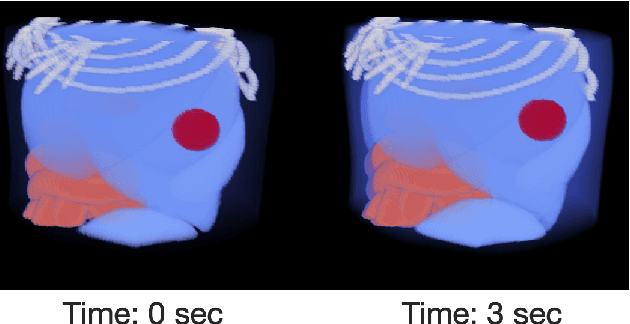
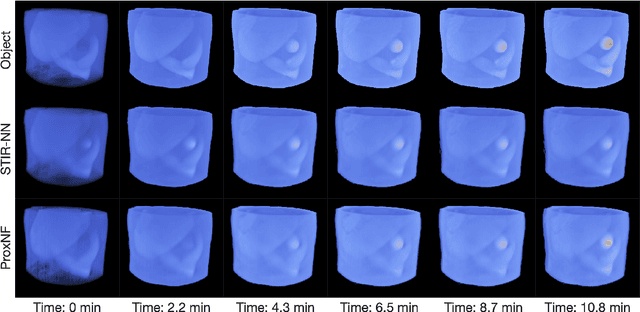
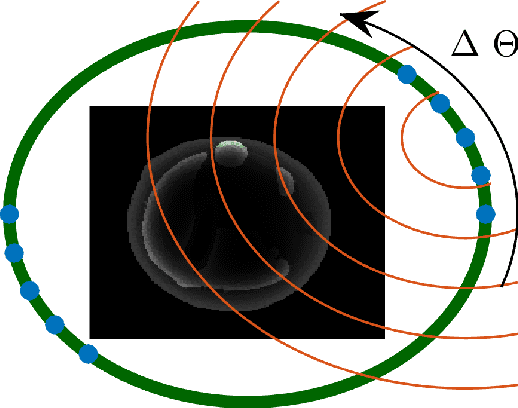
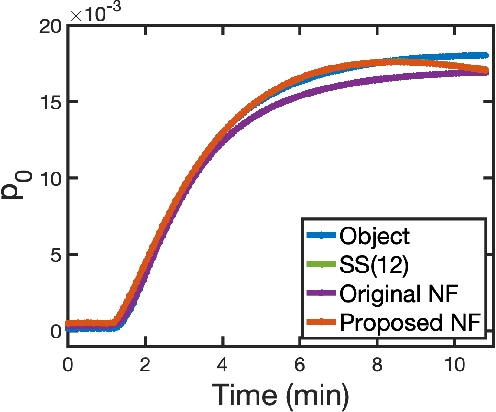
Accurate spatiotemporal image reconstruction methods are needed for a wide range of biomedical research areas but face challenges due to data incompleteness and computational burden. Data incompleteness arises from the undersampling often required to increase frame rates and reduce acquisition times, while computational burden emerges due to the memory footprint of high-resolution images with three spatial dimensions and extended time horizons. Neural fields, an emerging class of neural networks that act as continuous representations of spatiotemporal objects, have previously been introduced to solve these dynamic imaging problems by reframing image reconstruction to a problem of estimating network parameters. Neural fields can address the twin challenges of data incompleteness and computational burden by exploiting underlying redundancies in these spatiotemporal objects. This work proposes ProxNF, a novel neural field training approach for spatiotemporal image reconstruction leveraging proximal splitting methods to separate computations involving the imaging operator from updates of the network parameter. Specifically, ProxNF evaluates the (subsampled) gradient of the data-fidelity term in the image domain and uses a fully supervised learning approach to update the neural field parameters. By reducing the memory footprint and the computational cost of evaluating the imaging operator, the proposed ProxNF approach allows for reconstructing large, high-resolution spatiotemporal images. This method is demonstrated in two numerical studies involving virtual dynamic contrast-enhanced photoacoustic computed tomography imaging of an anatomically realistic dynamic numerical mouse phantom and a two-compartment model of tumor perfusion.
Technical Note: An Efficient Implementation of the Spherical Radon Transform with Cylindrical Apertures
Feb 23, 2024The spherical Radon transform (SRT) is an integral transform that maps a function to its integrals over concentric spherical shells centered at specified sensor locations. It has several imaging applications, including synthetic aperture radar and photoacoustic computed tomography. However, computation of the SRT can be expensive. Efficient implementation of SRT on general purpose graphic processing units (GPGPUs) often utilizes non-matched implementation of the adjoint operator, leading to inconsistent gradients in optimization-based image reconstruction methods. This work details an efficient implementation of the SRT and its adjoint for the case of a cylindrical measurement aperture. Exploiting symmetry of the cylindrical geometry, the SRT can then be expressed as the composition of two circular Radon transforms (CRT). Utilizing this formulation then allows for an efficient implementation of the SRT as a discrete-to-discrete operator utilizing sparse matrix representation.