 Add to Chrome
 Add to Firefox
 Add to Edge
CADET: Context-Conditioned Ads CTR Prediction With a Decoder-Only Transformer
Feb 11, 2026
Click-through rate (CTR) prediction is fundamental to online advertising systems. While Deep Learning Recommendation Models (DLRMs) with explicit feature interactions have long dominated this domain, recent advances in generative recommenders have shown promising results in content recommendation. However, adapting these transformer-based architectures to ads CTR prediction still presents unique challenges, including handling post-scoring contextual signals, maintaining offline-online consistency, and scaling to industrial workloads. We present CADET (Context-Conditioned Ads Decoder-Only Transformer), an end-to-end decoder-only transformer for ads CTR prediction deployed at LinkedIn. Our approach introduces several key innovations: (1) a context-conditioned decoding architecture with multi-tower prediction heads that explicitly model post-scoring signals such as ad position, resolving the chicken-and-egg problem between predicted CTR and ranking; (2) a self-gated attention mechanism that stabilizes training by adaptively regulating information flow at both representation and interaction levels; (3) a timestamp-based variant of Rotary Position Embedding (RoPE) that captures temporal relationships across timescales from seconds to months; (4) session masking strategies that prevent the model from learning dependencies on unavailable in-session events, addressing train-serve skew; and (5) production engineering techniques including tensor packing, sequence chunking, and custom Flash Attention kernels that enable efficient training and serving at scale. In online A/B testing, CADET achieves a 11.04\% CTR lift compared to the production LiRank baseline model, a hybrid ensemble of DCNv2 and sequential encoders. The system has been successfully deployed on LinkedIn's advertising platform, serving the main traffic for homefeed sponsored updates.

Model Extraction and Adversarial Attacks on Neural Networks using Switching Power Information
Jun 15, 2021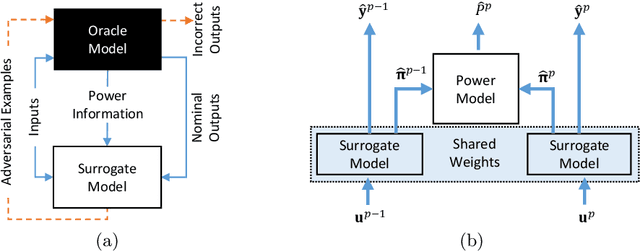
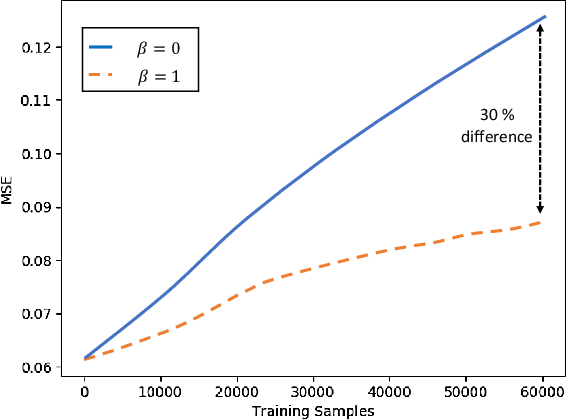
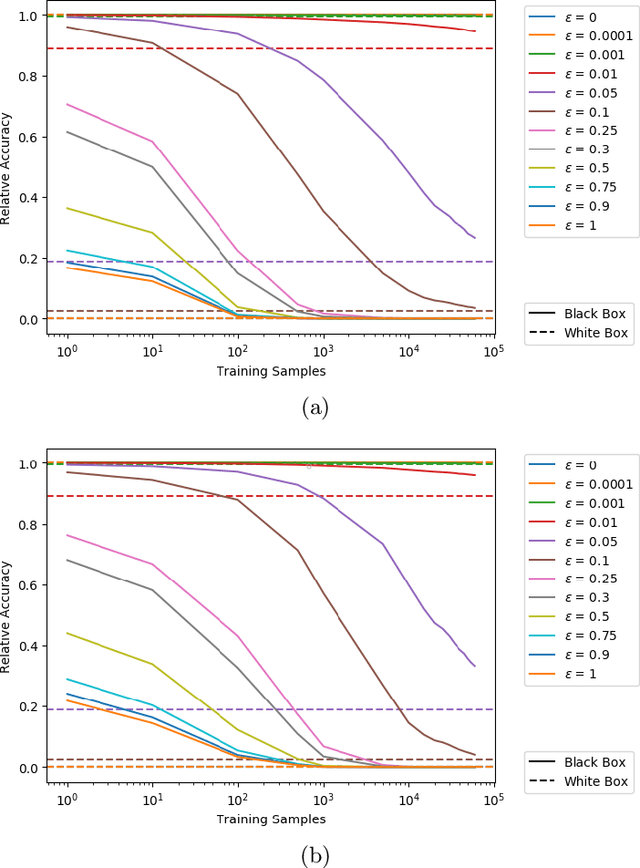
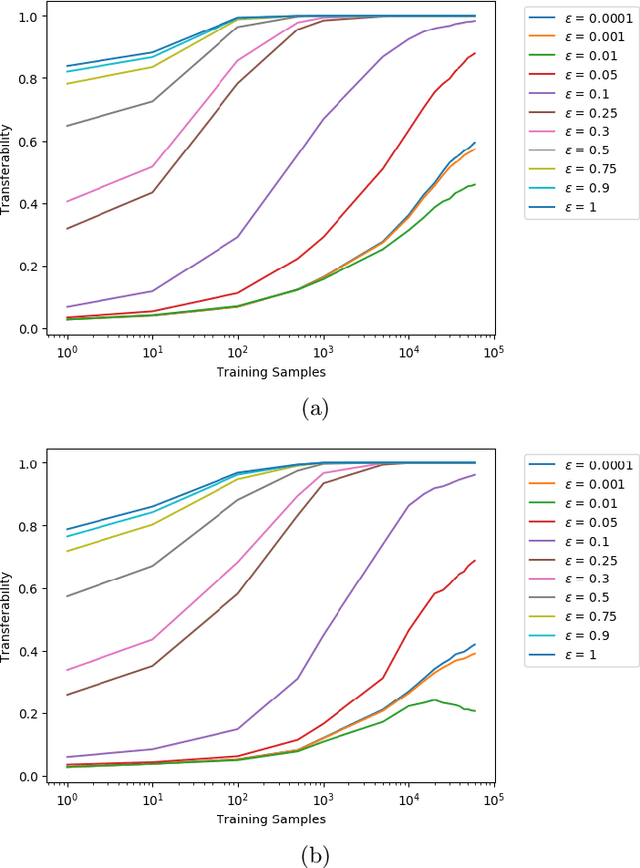
Artificial neural networks (ANNs) have gained significant popularity in the last decade for solving narrow AI problems in domains such as healthcare, transportation, and defense. As ANNs become more ubiquitous, it is imperative to understand their associated safety, security, and privacy vulnerabilities. Recently, it has been shown that ANNs are susceptible to a number of adversarial evasion attacks--inputs that cause the ANN to make high-confidence misclassifications despite being almost indistinguishable from the data used to train and test the network. This work explores to what degree finding these examples maybe aided by using side-channel information, specifically switching power consumption, of hardware implementations of ANNs. A black-box threat scenario is assumed, where an attacker has access to the ANN hardware's input, outputs, and topology, but the trained model parameters are unknown. Then, a surrogate model is trained to have similar functional (i.e. input-output mapping) and switching power characteristics as the oracle (black-box) model. Our results indicate that the inclusion of power consumption data increases the fidelity of the model extraction by up to 30 percent based on a mean square error comparison of the oracle and surrogate weights. However, transferability of adversarial examples from the surrogate to the oracle model was not significantly affected.