 Add to Chrome
 Add to Firefox
 Add to Edge
FastTPS: An Optimized Method for LLM Token Phase for AI accelerators
Jul 13, 2026
The popularity of large language models (LLMs) escalates an ongoing demand for effective inference. However, due to the sequential processing of tokens during the token phase in decoder-only LLMs inference, the inherent low parallelism leads to reduced throughput and suboptimal utilization of the computing units on artificial intelligence (AI) accelerators, particularly when handling long-sequence inputs that impose significant memory overhead. Recently, many reported methods have been developed as potential solutions, since they emerge with numeric deviation. This paper presents FastTPS, a high performance and low-precision loss method for accelerating the token-phase in LLM inference on general AI accelerators which includes three key components: (1) AI accelerator-enabled reloading-free KV Cache concatenation which decreases memory access overhead as well as enables full fusion of Attention, (2) high-efficiency and high-accuracy 'RoPE' attention based on the tiling optimized FLAT, and (3) highly-fused MLP with fine-grain pipeline scheduling. Our results confirm that FastTPS significantly alleviates memory bottlenecks in the token phase, delivering a 6x speed improvement (compared to none-fusion) on an AMD Ryzen AI 300 series NPU with BF16 precision while sustaining 93% peak memory bandwidth utilization during Phi3-mini-4k-instruct inference.

Multiple feature fusion-based video face tracking for IoT big data
Apr 15, 2021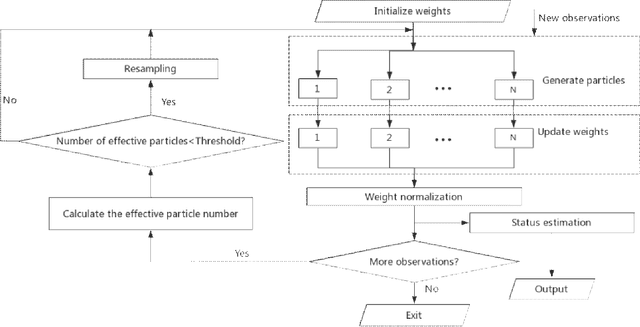
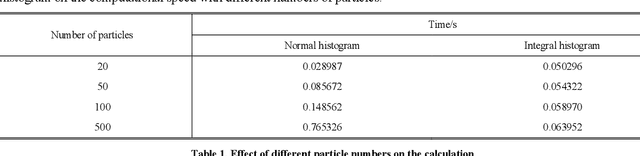
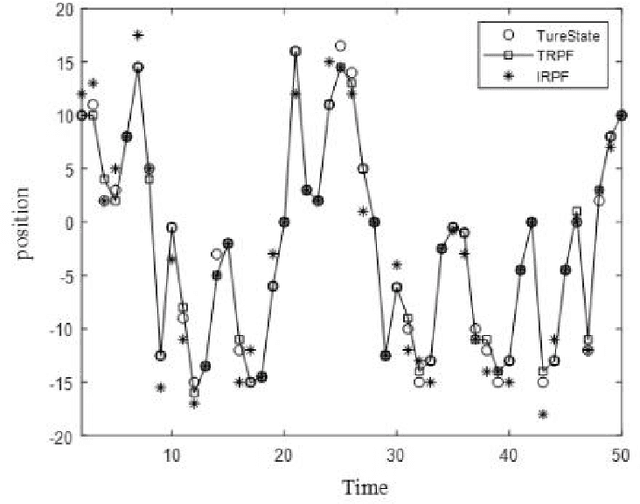

With the advancement of IoT and artificial intelligence technologies, and the need for rapid application growth in fields such as security entrance control and financial business trade, facial information processing has become an important means for achieving identity authentication and information security. In this paper, we propose a multi-feature fusion algorithm based on integral histograms and a real-time update tracking particle filtering module. First, edge and colour features are extracted, weighting methods are used to weight the colour histogram and edge features to describe facial features, and fusion of colour and edge features is made adaptive by using fusion coefficients to improve face tracking reliability. Then, the integral histogram is integrated into the particle filtering algorithm to simplify the calculation steps of complex particles. Finally, the tracking window size is adjusted in real time according to the change in the average distance from the particle centre to the edge of the current model and the initial model to reduce the drift problem and achieve stable tracking with significant changes in the target dimension. The results show that the algorithm improves video tracking accuracy, simplifies particle operation complexity, improves the speed, and has good anti-interference ability and robustness.