 Add to Chrome
 Add to Firefox
 Add to Edge
Self-Interference-Aware AS-Assisted Tri-Hybrid Beamforming for Full-Duplex Massive MIMO
Jul 20, 2026
This paper proposes a tri-hybrid beamforming (tri-HBF) scheme with antenna-selection (AS)-based reconfigurable sub-arrays for full-duplex (FD) massive multiple-input multiple-output (mMIMO) systems. A sub-connected HBF architecture is adopted, where AS is performed in a group-wise manner to avoid excessive switch-network and routing complexity. An alternating optimization (AO) algorithm is developed to jointly optimize the i) active antenna subsets considering a self-interference (SI)-aware utility, ii) analog beamformers through projected gradient ascent (PGA), iii) digital precoders/combiners via SI-aware regularized zero-forcing (RZF) and minimum mean-square error (MMSE) updates, and iv) DL/UL power allocation by successive convex approximation (SCA). To capture realistic electromagnetic coupling in FD mMIMO operation, experimental SI channels based on an 8x8 Tx-8x8 Rx FD array prototype are incorporated into the study. The proposed AS-aided tri-HBF optimization scheme exhibits robust convergence across various base station configurations and effectively balances desired-signal enhancement, SI mitigation, and multi-user interference suppression in FD mMIMO operation. Illustrative results show that selective activation can outperform full-array activation, achieving a 21.3% higher average sum-rate and a more consistent performance across user realizations, with power-efficiency benefits by reducing the active paths. A comprehensive study is conducted to characterize how the number of activated antennas affects the achievable rate, user-channel coherence, and SI suppression gain. Compared with various selection baselines, it achieves a 45.1% improvement in average sum-rate, with average DL and UL rate gains of 36.9% and 82.9%, respectively. In addition, beam-level isolation better than 63 dB is achieved, further confirming the effectiveness of the proposed SI-aware design.

Sub-array Selection Optimization for Joint Self-Interference and Multi-User Interference Suppression in FD mMIMO
Jun 11, 2026This paper proposes a beamforming optimization scheme with joint antenna sub-array selection (SAS) and angular perturbation-based nulling (APN) for full-duplex (FD) massive multiple-input multiple-output (mMIMO) systems, to simultaneously suppress self-interference (SI) and multi-user interference (MUI). A comprehensive over-the-air SI channel measurement campaign, conducted with an 8x8Tx-8x8Rx FD array prototype, reveals significant variations across sub-arrays at different spatial locations, as well as reconfigurable characteristics of the SI channel under diverse Tx and Rx sub-array configurations. To exploit the selective SI channels, a particle swarm optimization (PSO)-based algorithm is developed to jointly determine optimal sub-array indices and perturbed steering angles, thereby effectively nullifying potential interference. Selecting sub-arrays with inherently lower SI channels notably enhances the beam-level isolation, while the added selection flexibility among comparable SI channels ensures more uniform SI suppression across diverse DL/UL locations and significantly improves worst-case isolation. Experimental evaluation based on the measured SI channel demonstrates that the proposed SAS technique achieves residual Tx-Rx beam-level SI suppression improvements of 29.2 dB and 26.6 dB for the sample 1x2 and 1x4 sub-arrays, respectively. A worst-case improvement greater than 30.7 dB is observed. Overall, the joint SAS and APN optimization scheme achieves average beam-level isolation of 85.2 dB and 83.3 dB with the 1x2 and 1x4 sub-arrays, respectively. With the application of a baseband precoder, all tested sub-array configurations achieve average MUI suppression better than -181.3 dB. These results confirm the potential of the proposed optimization algorithm to successfully reduce interference to the noise floor, thereby guaranteeing reliable FD mMIMO operation.
A Deep Neural Network Codebook Approach for Near-Field Nulling Control Beam Focusing
Sep 26, 2025This paper proposes a deep neural network (DNN) codebook approach for multi-user interference (MUI) mitigation in extremely large multiple-input multiple-output (XL-MIMO) systems operating in the near-field region. Unlike existing DNN-based nulling control beamforming (NCBF) methods that face scalability and complexity challenges, the proposed framework partitions the Fresnel region using correlation-based sampling and assigns a lightweight fully connected DNN model to each subsection. Each model is trained on beamforming weights generated using the linearly constrained minimum variance (LCMV) method, enabling accurate prediction of nulling control beam-focusing weights that simultaneously optimize the desired signal strength and suppress potential interference for both collinear and non-collinear user configurations. Simulation results show that the trained models achieve average phase and magnitude prediction errors of 0.085 radians and 0.52 dB, respectively, across 75 sample subsections. Full-wave simulations in Ansys HFSS further demonstrate that the proposed DNN codebook achieves interference suppression better than 31.64 dB, with a performance gap within 2 dB of the LCMV method, thereby validating its effectiveness in mitigating MUI while reducing computational complexity.
Degrees of Freedom of Spatial Multiplexing in Distance Domain of Arbitrary Continuous-Aperture Array in Near-Field Region
Jul 01, 2025Extremely large aperture array operating in the near-field regime unlocks additional spatial resources that can be exploited to simultaneously serve multiple users even when they share the same angular direction, a capability not achievable in conventional far-field systems. A fundamental question, however, remains: What is the maximum spatial degree of freedom (DoF) of spatial multiplexing in the distance domain? In this paper, we address this open problem by investigating the spatial DoF of a line-of-sight (LoS) channel between a large two-dimensional transmit aperture and a linear receive array with collinearly-aligned elements (i.e., at the same angular direction) but located at different distances from the transmit aperture. We assume that both the aperture and linear array are continuous-aperture (CAP) arrays with an infinite number of elements and infinitesimal spacing, which establishes an upper bound for the spatial degrees of freedom (DoF) in the case of finite elements. First, we assume an ideal case where the transmit array is a single piece and the linear array is on the broad side of the transmit array. By reformulating the channel as an integral operator with a Hermitian convolution kernel, we derive a closed-form expression for the spatial DoF via the Fourier transform. Our analysis shows that the spatial DoF in the distance domain is predominantly determined by the extreme boundaries of the array rather than its detailed interior structure. We further extend the framework to non-broadside configurations by employing a projection method, which effectively converts the spatial DoF to an equivalent broadside case. Finally, we extend our analytical framework to the modular array, which shows the spatial DoF gain over the single-piece array given the constraint of the physical length of the array.
Angular-Based Hybrid Beamforming for Wideband THz Massive MIMO Systems: Mitigating Beam Split by Leveraging Angular Spread
Mar 24, 2025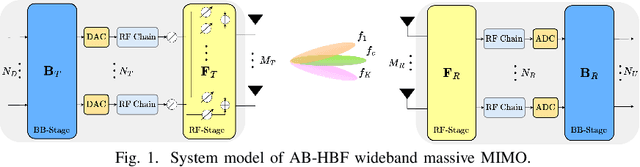
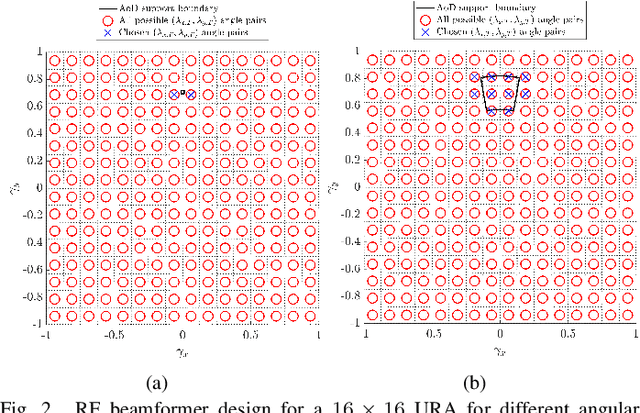
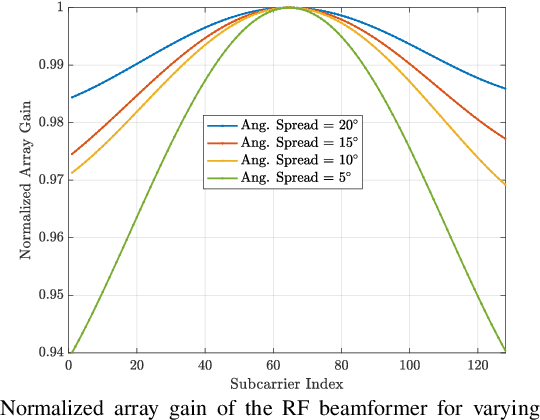
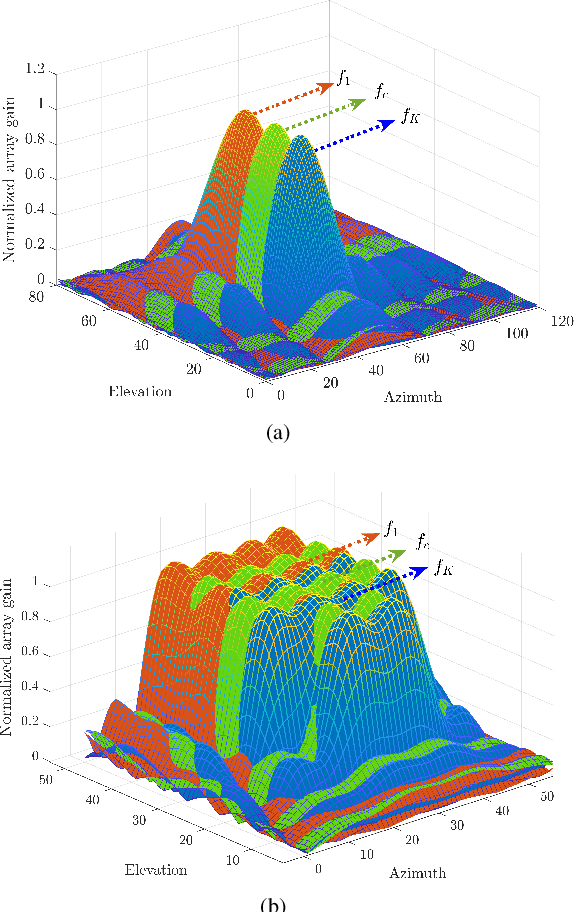
Beam split is a critical challenge in wideband THz massive MIMO systems, arising from frequency-dependent beam misalignment that degrades communication performance, particularly in scenarios with narrow beamwidths and large arrays. This work proposes an angular-based hybrid beamforming framework that leverages angular spread to mitigate the beam split effect. Instead of relying on precise angular spread modeling, we utilize coarse angular information to guide the design of subcarrier-specific beams, effectively reducing misalignment across subcarriers. By broadening the effective beamwidth through angular spread, the proposed method enhances user coverage and alleviates beam split without requiring complex time-delay units or hardware-intensive solutions. Simulation results demonstrate that the proposed approach achieves significant improvements in spectral efficiency and beamforming accuracy while maintaining low computational and hardware complexity. This work provides a practical and efficient solution for addressing beam split in next-generation wideband THz communication systems.
Spider RIS: Mobilizing Intelligent Surfaces for Enhanced Wireless Communications
May 04, 2024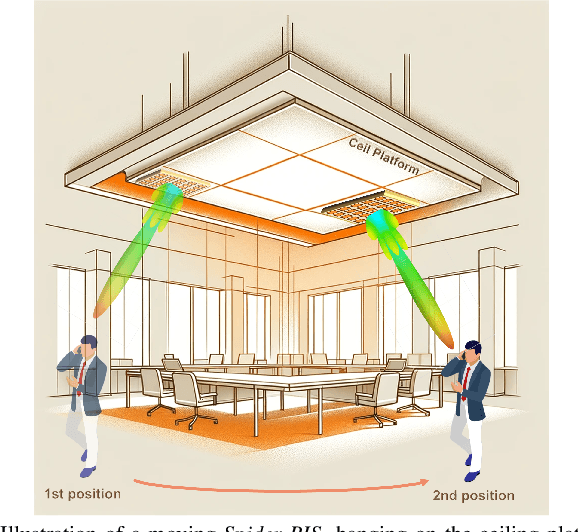
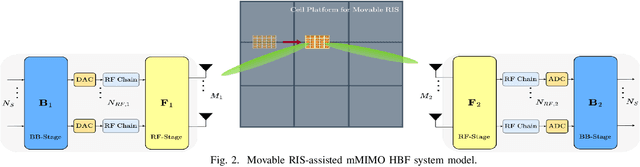
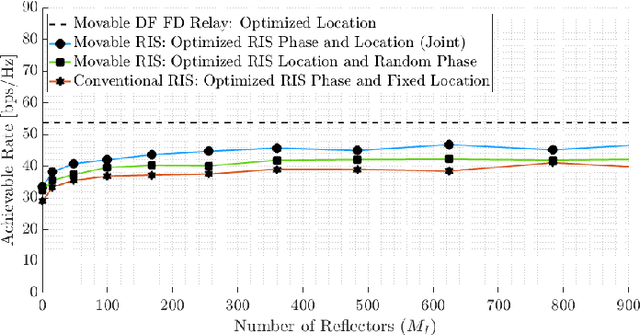
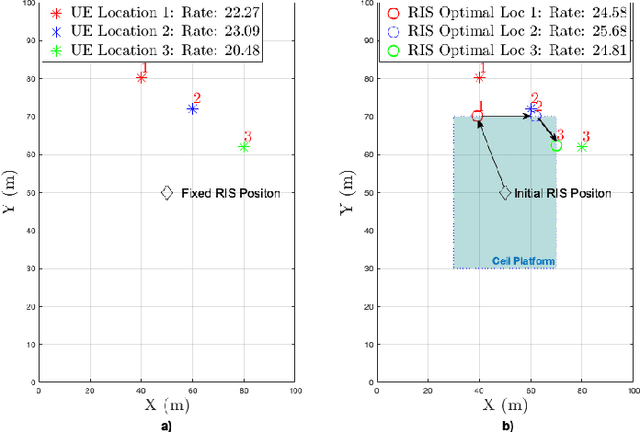
In this study, we introduce Spider RIS technology, which offers an innovative solution to the challenges encountered in movable antennas (MAs) and unmanned aerial vehicle (UAV)-enabled communication systems. By combining the dynamic adaptation capability of MAs and the flexible location advantages of UAVs, this technology offers a dynamic and movable RIS, which can flexibly optimize physical locations within the two-dimensional movement platform. Spider RIS aims to enhance the communication efficiency and reliability of wireless networks, particularly in obstructive environments, by elevating the signal quality and achievable rate. The motivation of Spider RIS is based on the ability to fully exploit the spatial variability of wireless channels and maximize channel capacity even with a limited number of reflecting elements by overcoming the limitations of traditional fixed RIS and energy-intensive UAV systems. Considering the geometry-based millimeter wave channel model, we present the design of a three-stage angular-based hybrid beamforming system empowered by Spider RIS: First, analog beamformers are designed using angular information, followed by the generation of digital precoder/combiner based on the effective channel observed from baseband stage. Subsequently, the joint dynamic positioning with phase shift design of the Spider RIS is optimized using particle swarm optimization, maximizing the achievable rate of the systems.
UAV-Assisted Enhanced Coverage and Capacity in Dynamic MU-mMIMO IoT Systems: A Deep Reinforcement Learning Approach
Apr 10, 2024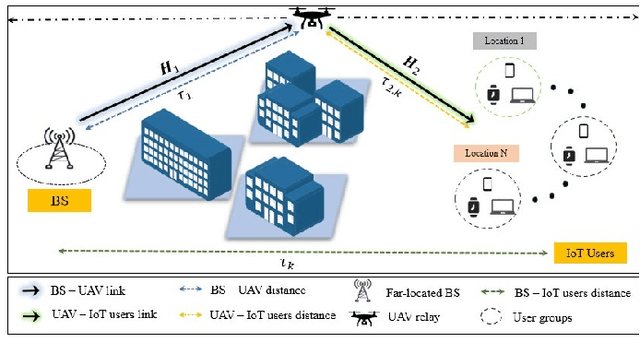
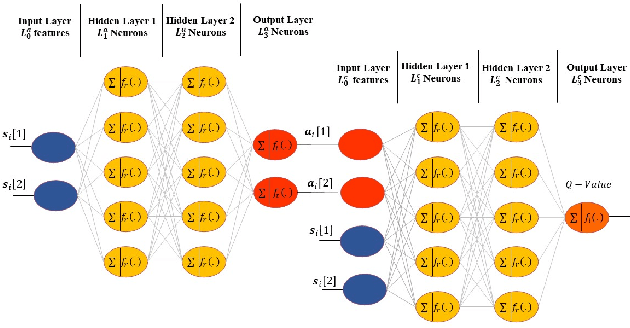
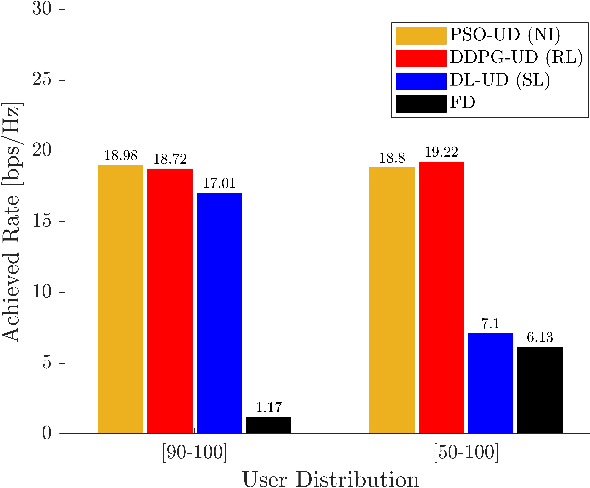
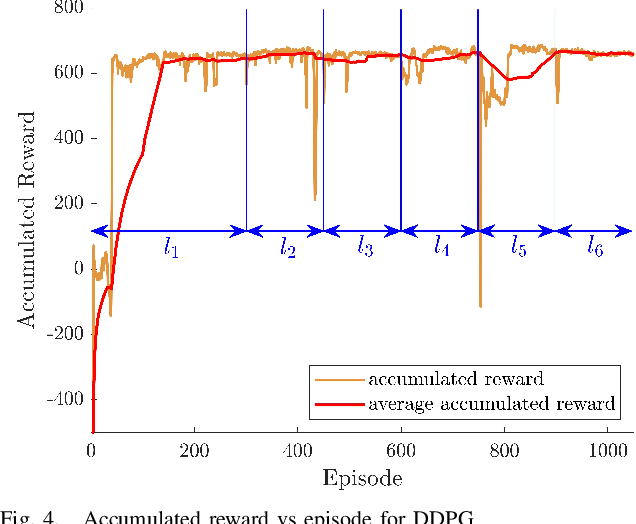
This study focuses on a multi-user massive multiple-input multiple-output (MU-mMIMO) system by incorporating an unmanned aerial vehicle (UAV) as a decode-and-forward (DF) relay between the base station (BS) and multiple Internet-of-Things (IoT) devices. Our primary objective is to maximize the overall achievable rate (AR) by introducing a novel framework that integrates joint hybrid beamforming (HBF) and UAV localization in dynamic MU-mMIMO IoT systems. Particularly, HBF stages for BS and UAV are designed by leveraging slow time-varying angular information, whereas a deep reinforcement learning (RL) algorithm, namely deep deterministic policy gradient (DDPG) with continuous action space, is developed to train the UAV for its deployment. By using a customized reward function, the RL agent learns an optimal UAV deployment policy capable of adapting to both static and dynamic environments. The illustrative results show that the proposed DDPG-based UAV deployment (DDPG-UD) can achieve approximately 99.5% of the sum-rate capacity achieved by particle swarm optimization (PSO)-based UAV deployment (PSO-UD), while requiring a significantly reduced runtime at approximately 68.50% of that needed by PSO-UD, offering an efficient solution in dynamic MU-mMIMO environments.
Multiple UAV-Assisted Cooperative DF Relaying in Multi-User Massive MIMO IoT Systems
Apr 03, 2024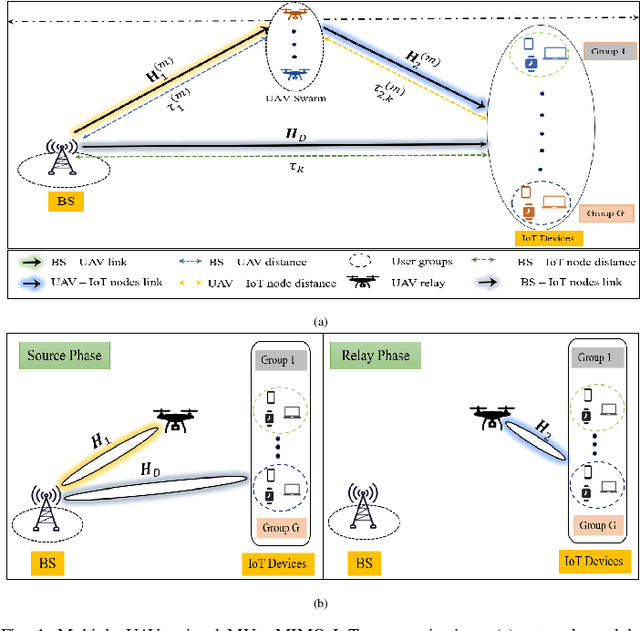
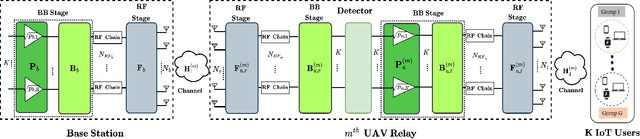
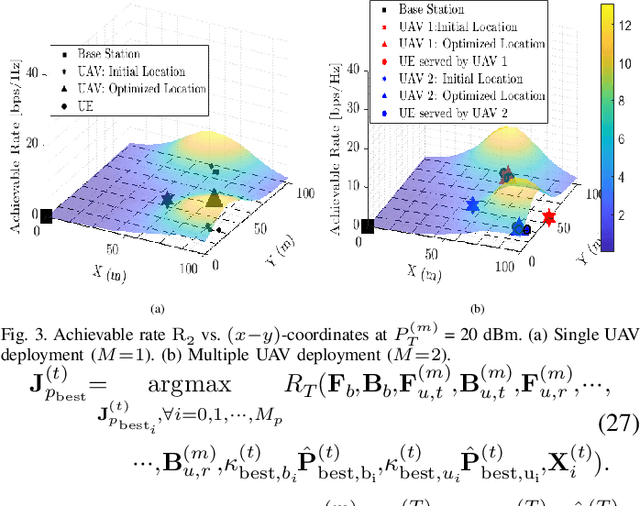
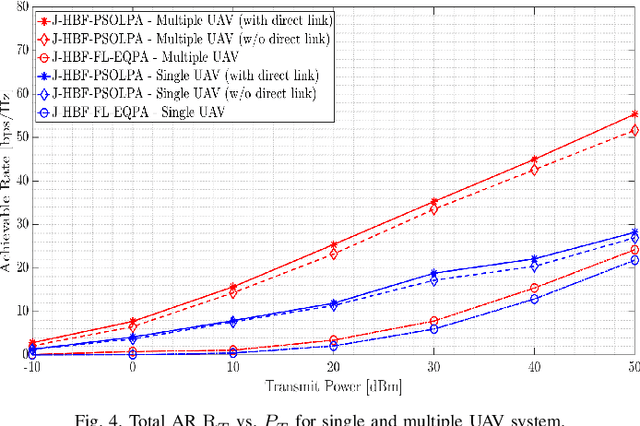
This work considers a multi-user massive multiple-input multiple-output (MU-mMIMO) Internet-of-Things (IoT) system, where multiple unmanned aerial vehicles (UAVs) operating as decode-and-forward (DF) relays connect the base station (BS) to a large number of IoT devices. To maximize the total achievable rate, we propose a novel joint optimization problem of hybrid beamforming (HBF), multiple UAV relay positioning, and power allocation (PA) to multiple IoT users. The study adopts a geometry-based millimeter-wave (mmWave) channel model for both links and utilizes sequential optimization based on K-means UAV-user association. The radio frequency (RF) stages are designed based on the slow time-varying angular information, while the baseband (BB) stages are designed utilizing the reduced-dimension effective channel matrices. The illustrative results show that multiple UAV-assisted cooperative relaying systems outperform a single UAV system in practical user distributions. Moreover, compared to fixed positions and equal PA of UAVs and BS, the joint optimization of UAV location and PA substantially enhances the total achievable rate.
Adaptive Modulus RF Beamforming for Enhanced Self-Interference Suppression in Full-Duplex Massive MIMO Systems
Feb 13, 2024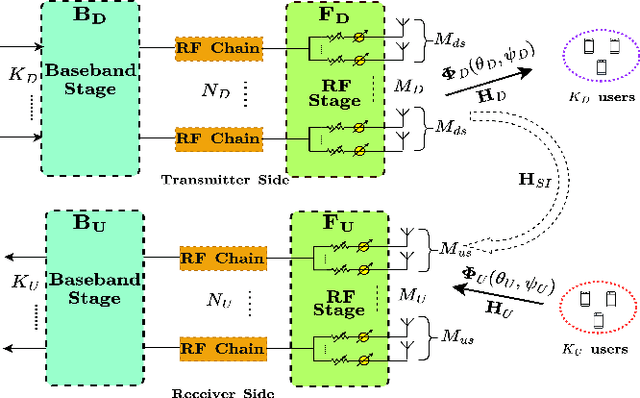
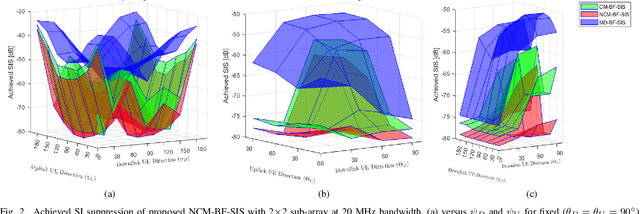
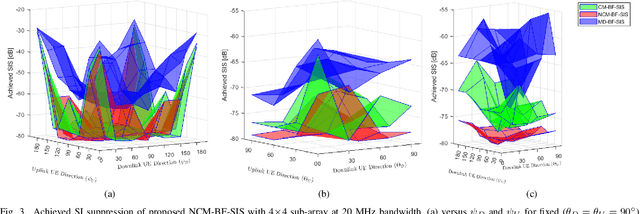
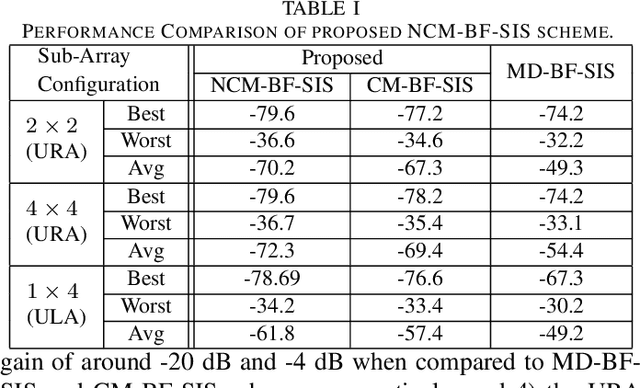
This study employs a uniform rectangular array (URA) sub-connected hybrid beamforming (SC-HBF) architecture to provide a novel self-interference (SI) suppression scheme in a full-duplex (FD) massive multiple-input multiple-output (mMIMO) system. Our primary objective is to mitigate the strong SI through the design of RF beamforming stages for uplink and downlink transmissions that utilize the spatial degrees of freedom provided due to the use of large array structures. We propose a non-constant modulus RF beamforming (NCM-BF-SIS) scheme that incorporates the gain controllers for both transmit (Tx) and receive (Rx) RF beamforming stages and optimizes the uplink and downlink beam directions jointly with gain controller coefficients. To solve this challenging non-convex optimization problem, we propose a swarm intelligence-based algorithmic solution that finds the optimal beam perturbations while also adjusting the Tx/Rx gain controllers to alleviate SI subject to the directivity degradation constraints for the beams. The data-driven analysis based on the measured SI channel in an anechoic chamber shows that the proposed NCM-BF-SIS scheme can suppress SI by around 80 dB in FD mMIMO systems.
Deep Learning Meets Swarm Intelligence for UAV-Assisted IoT Coverage in Massive MIMO
Sep 21, 2023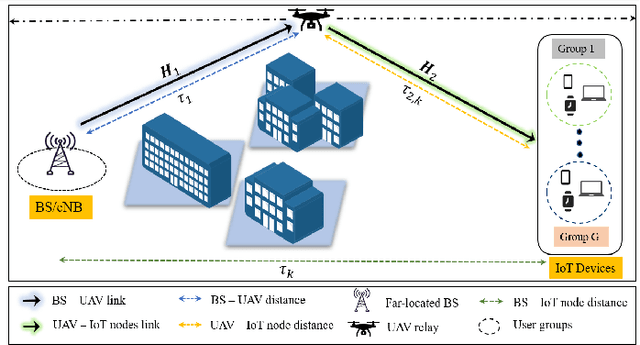
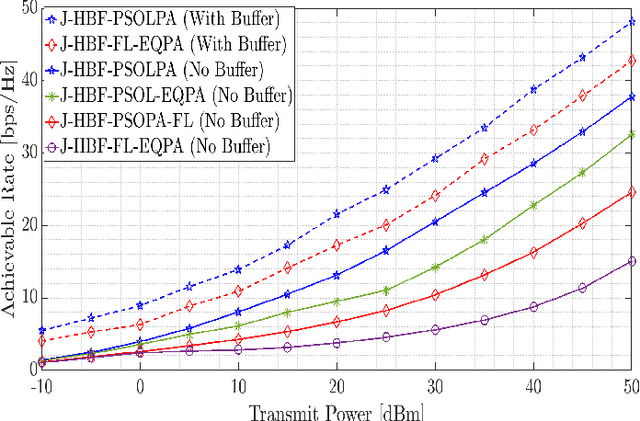
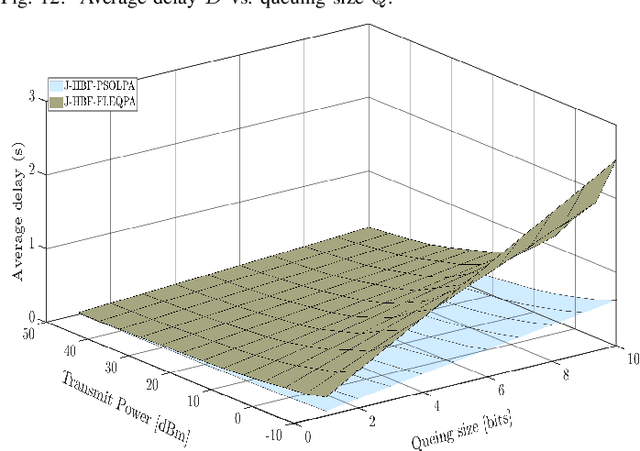
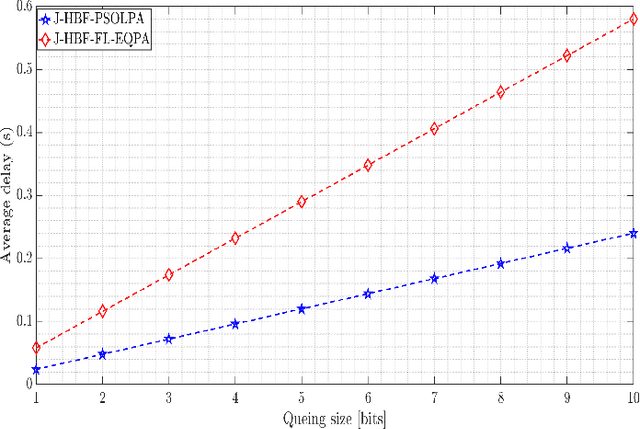
This study considers a UAV-assisted multi-user massive multiple-input multiple-output (MU-mMIMO) systems, where a decode-and-forward (DF) relay in the form of an unmanned aerial vehicle (UAV) facilitates the transmission of multiple data streams from a base station (BS) to multiple Internet-of-Things (IoT) users. A joint optimization problem of hybrid beamforming (HBF), UAV relay positioning, and power allocation (PA) to multiple IoT users to maximize the total achievable rate (AR) is investigated. The study adopts a geometry-based millimeter-wave (mmWave) channel model for both links and proposes three different swarm intelligence (SI)-based algorithmic solutions to optimize: 1) UAV location with equal PA; 2) PA with fixed UAV location; and 3) joint PA with UAV deployment. The radio frequency (RF) stages are designed to reduce the number of RF chains based on the slow time-varying angular information, while the baseband (BB) stages are designed using the reduced-dimension effective channel matrices. Then, a novel deep learning (DL)-based low-complexity joint hybrid beamforming, UAV location and power allocation optimization scheme (J-HBF-DLLPA) is proposed via fully-connected deep neural network (DNN), consisting of an offline training phase, and an online prediction of UAV location and optimal power values for maximizing the AR. The illustrative results show that the proposed algorithmic solutions can attain higher capacity and reduce average delay for delay-constrained transmissions in a UAV-assisted MU-mMIMO IoT systems. Additionally, the proposed J-HBF-DLLPA can closely approach the optimal capacity while significantly reducing the runtime by 99%, which makes the DL-based solution a promising implementation for real-time online applications in UAV-assisted MU-mMIMO IoT systems.