 Add to Chrome
 Add to Firefox
 Add to Edge
$τ_0$-VLA: a Hierarchical Robot Foundation Model with World-Model-Guided Test-Time Computation
Aug 17, 2026
Long-horizon robot manipulation requires a robot to both execute individual skills reliably and sequence them coherently over extended tasks. Most hierarchical vision-language-action (VLA) models make each such decision with a single forward pass, leaving no mechanism to allocate additional computation to difficult or consequential choices. We introduce $τ_0$-VLA, a hierarchical robot foundation model that formulates high-level subtask generation as a compute-scalable inference problem through world-model-guided test-time computation. At each inference step, the high-level policy uses execution memory to generate a subtask and, when needed, searches over alternatives before committing to its output. A low-level policy then executes the generated subtask across multiple robot embodiments. The policy is trained on 40,115 hours of heterogeneous real-world data with multimodal co-training. Across in-domain and distribution-shifted settings, allocating additional test-time computation substantially improves next-subtask prediction accuracy, and these gains translate into higher closed-loop success on long-horizon robot manipulation tasks.

Generation of Conservative Dynamical Systems Based on Stiffness Encoding
Nov 02, 2024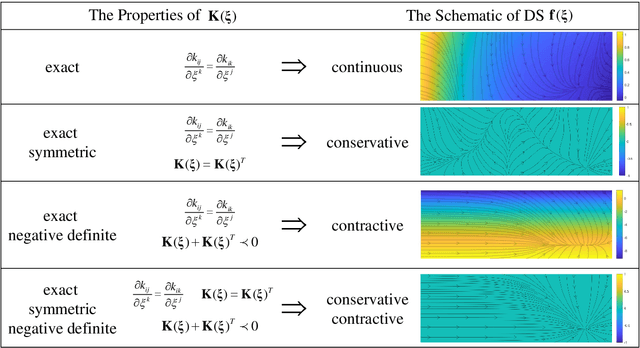
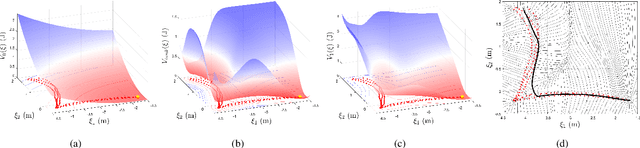
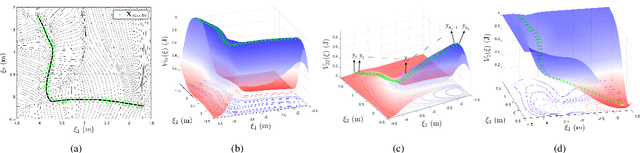
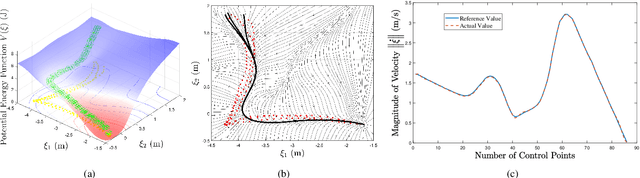
Dynamical systems (DSs) provide a framework for high flexibility, robustness, and control reliability and are widely used in motion planning and physical human-robot interaction. The properties of the DS directly determine the robot's specific motion patterns and the performance of the closed-loop control system. In this paper, we establish a quantitative relationship between stiffness properties and DS. We propose a stiffness encoding framework to modulate DS properties by embedding specific stiffnesses. In particular, from the perspective of the closed-loop control system's passivity, a conservative DS is learned by encoding a conservative stiffness. The generated DS has a symmetric attraction behavior and a variable stiffness profile. The proposed method is applicable to demonstration trajectories belonging to different manifolds and types (e.g., closed and self-intersecting trajectories), and the closed-loop control system is always guaranteed to be passive in different cases. For controllers tracking the general DS, the passivity of the system needs to be guaranteed by the energy tank. We further propose a generic vector field decomposition strategy based on conservative stiffness, which effectively slows down the decay rate of energy in the energy tank and improves the stability margin of the control system. Finally, a series of simulations in various scenarios and experiments on planar and curved motion tasks demonstrate the validity of our theory and methodology.