 Add to Chrome
 Add to Firefox
 Add to Edge
Reasoning4Sciences: Bridging Reasoning Language Models to All Scientific Branches
May 31, 2026
While Reasoning Language Models (RLMs) are rapidly emerging as powerful tools for scientific research, their impact is primarily concentrated in "hard science" fields. The slow -- or lack of -- adoption of RLMs in other branches of science is causing a widening gap in research productivity. In this survey, we provide the first comprehensive analysis of RLM adoption across 28 scientific disciplines following the classification used by the European Research Council (ERC), spanning the Social Sciences and Humanities, Physical Sciences and Engineering, and Life Sciences. We examine how RLMs are developed, evaluated, and applied across disciplines. Furthermore, we introduce a maturity-oriented assessment framework based on available domain-specific development and evaluation resources, revealing substantial disparities in RLM maturity that become even more pronounced when only publicly available resources are considered. Finally, we highlight current implementation paradigms that are gaining popularity across disciplines, current challenges, and future directions in enabling RLM adoption across science.

What properties of reasoning supervision are associated with improved downstream model quality?
May 13, 2026Validating training data for reasoning models typically requires expensive trial-and-error fine-tuning cycles. In this work, we investigate whether the utility of a reasoning dataset can be reliably predicted prior to training using intrinsic data metrics. We propose a suite of quantitative measures and evaluate their predictive power by fine-tuning 8B and 11B models on semantically distinct variants of a Polish reasoning dataset. Our analysis reveals that these intrinsic metrics demonstrate strong and significant correlations with downstream model performance. Crucially, we find that the predictors of utility are scale-dependent: smaller models rely on alignment-focused metrics to ensure precision, whereas larger models benefit from high redundancy, utilizing verbose traces to solve complex tasks. These findings establish a scale-aware framework for validating reasoning data, enabling practitioners to select effective training sets without the need for exhaustive empirical testing.
PLLuM: A Family of Polish Large Language Models
Nov 05, 2025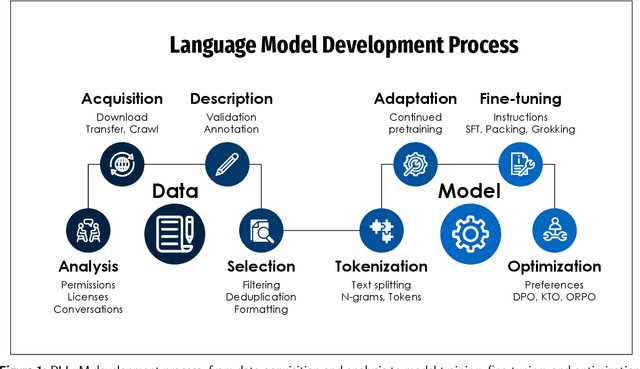
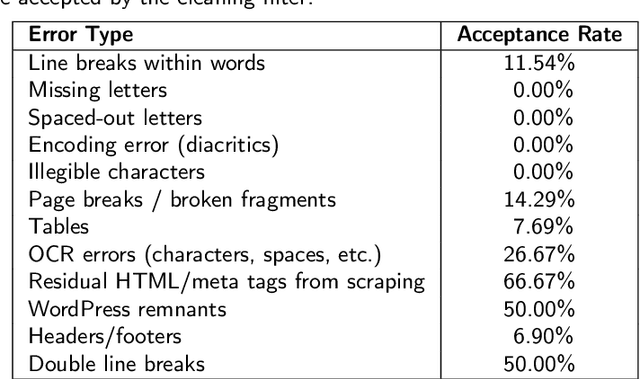
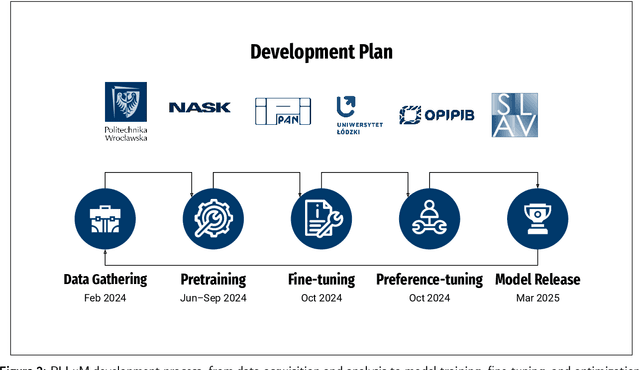

Large Language Models (LLMs) play a central role in modern artificial intelligence, yet their development has been primarily focused on English, resulting in limited support for other languages. We present PLLuM (Polish Large Language Model), the largest open-source family of foundation models tailored specifically for the Polish language. Developed by a consortium of major Polish research institutions, PLLuM addresses the need for high-quality, transparent, and culturally relevant language models beyond the English-centric commercial landscape. We describe the development process, including the construction of a new 140-billion-token Polish text corpus for pre-training, a 77k custom instructions dataset, and a 100k preference optimization dataset. A key component is a Responsible AI framework that incorporates strict data governance and a hybrid module for output correction and safety filtering. We detail the models' architecture, training procedures, and alignment techniques for both base and instruction-tuned variants, and demonstrate their utility in a downstream task within public administration. By releasing these models publicly, PLLuM aims to foster open research and strengthen sovereign AI technologies in Poland.
Crowdsource, Crawl, or Generate? Creating SEA-VL, a Multicultural Vision-Language Dataset for Southeast Asia
Mar 10, 2025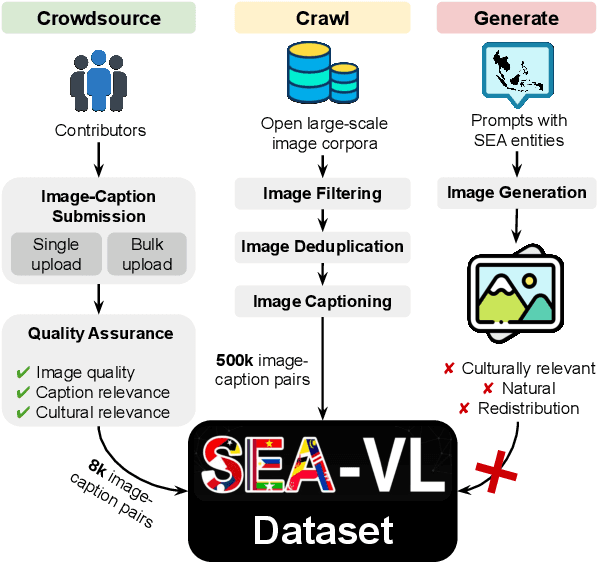
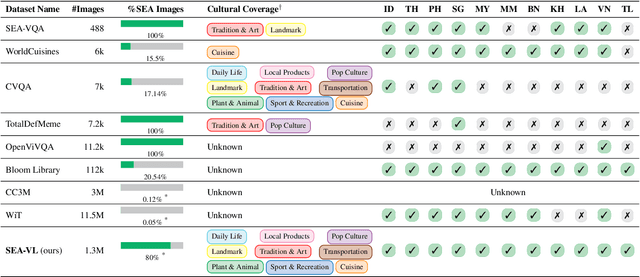
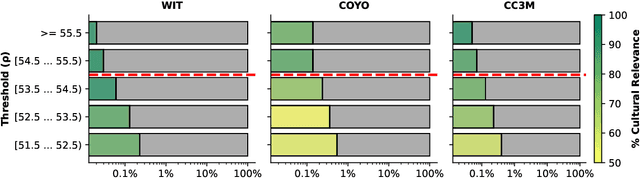
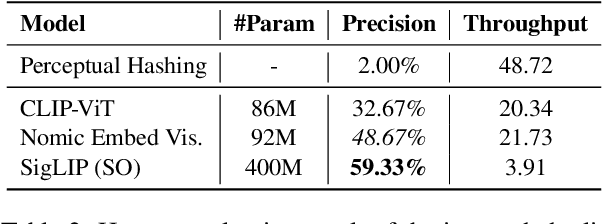
Southeast Asia (SEA) is a region of extraordinary linguistic and cultural diversity, yet it remains significantly underrepresented in vision-language (VL) research. This often results in artificial intelligence (AI) models that fail to capture SEA cultural nuances. To fill this gap, we present SEA-VL, an open-source initiative dedicated to developing high-quality, culturally relevant data for SEA languages. By involving contributors from SEA countries, SEA-VL aims to ensure better cultural relevance and diversity, fostering greater inclusivity of underrepresented languages in VL research. Beyond crowdsourcing, our initiative goes one step further in the exploration of the automatic collection of culturally relevant images through crawling and image generation. First, we find that image crawling achieves approximately ~85% cultural relevance while being more cost- and time-efficient than crowdsourcing. Second, despite the substantial progress in generative vision models, synthetic images remain unreliable in accurately reflecting SEA cultures. The generated images often fail to reflect the nuanced traditions and cultural contexts of the region. Collectively, we gather 1.28M SEA culturally-relevant images, more than 50 times larger than other existing datasets. Through SEA-VL, we aim to bridge the representation gap in SEA, fostering the development of more inclusive AI systems that authentically represent diverse cultures across SEA.
Self-training Large Language Models through Knowledge Detection
Jun 17, 2024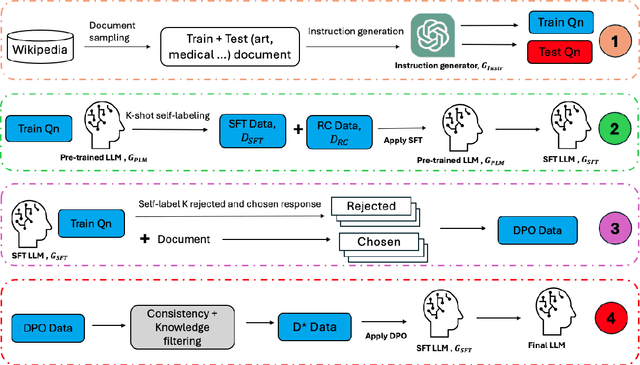
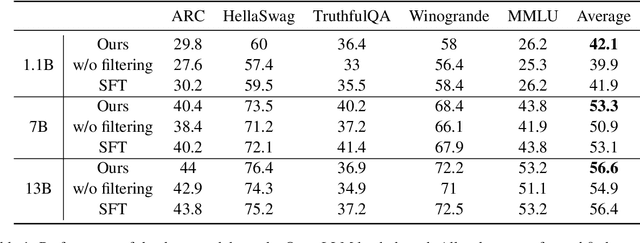
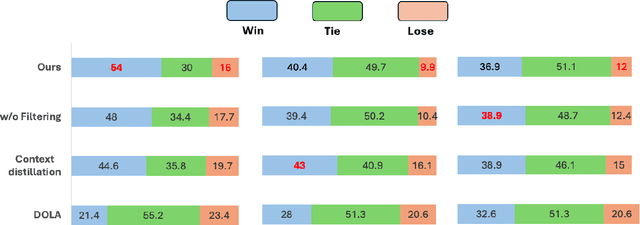
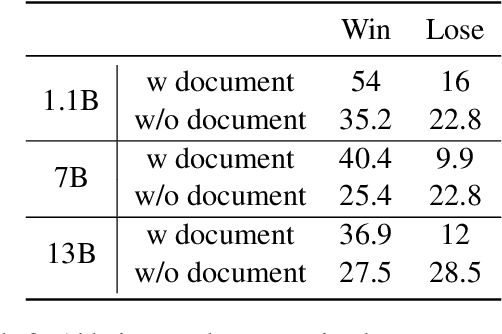
Large language models (LLMs) often necessitate extensive labeled datasets and training compute to achieve impressive performance across downstream tasks. This paper explores a self-training paradigm, where the LLM autonomously curates its own labels and selectively trains on unknown data samples identified through a reference-free consistency method. Empirical evaluations demonstrate significant improvements in reducing hallucination in generation across multiple subjects. Furthermore, the selective training framework mitigates catastrophic forgetting in out-of-distribution benchmarks, addressing a critical limitation in training LLMs. Our findings suggest that such an approach can substantially reduce the dependency on large labeled datasets, paving the way for more scalable and cost-effective language model training.
Eagle and Finch: RWKV with Matrix-Valued States and Dynamic Recurrence
Apr 10, 2024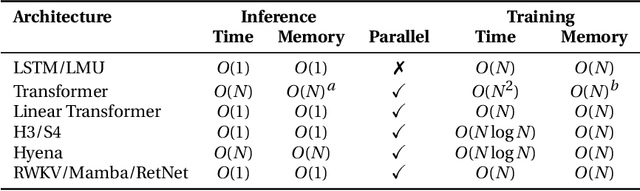

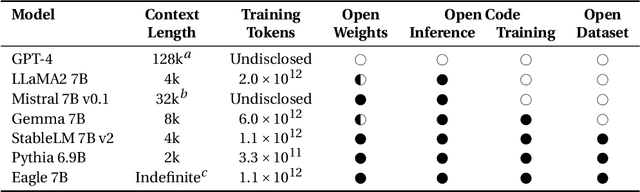
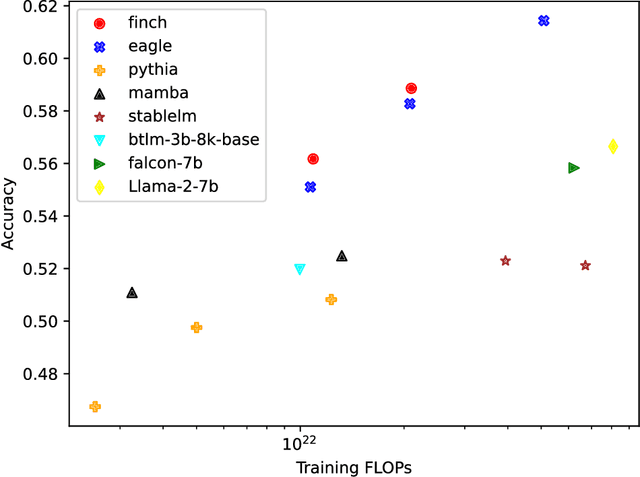
We present Eagle (RWKV-5) and Finch (RWKV-6), sequence models improving upon the RWKV (RWKV-4) architecture. Our architectural design advancements include multi-headed matrix-valued states and a dynamic recurrence mechanism that improve expressivity while maintaining the inference efficiency characteristics of RNNs. We introduce a new multilingual corpus with 1.12 trillion tokens and a fast tokenizer based on greedy matching for enhanced multilinguality. We trained four Eagle models, ranging from 0.46 to 7.5 billion parameters, and two Finch models with 1.6 and 3.1 billion parameters and find that they achieve competitive performance across a wide variety of benchmarks. We release all our models on HuggingFace under the Apache 2.0 license. Models at: https://huggingface.co/RWKV Training code at: https://github.com/RWKV/RWKV-LM Inference code at: https://github.com/RWKV/ChatRWKV Time-parallel training code at: https://github.com/RWKV/RWKV-infctx-trainer
Into the Unknown: Self-Learning Large Language Models
Feb 14, 2024We address the main problem of self-learning LLM: the question of what to learn. We propose a self-learning LLM framework that enables an LLM to independently learn previously unknown knowledge through self-assessment of their own hallucinations. Using the hallucination score, we introduce a new concept of Points in The Unknown (PiUs), along with one extrinsic and three intrinsic methods for automatic PiUs identification. It facilitates the creation of a self-learning loop that focuses exclusively on the knowledge gap in Points in The Unknown, resulting in a reduced hallucination score. We also developed evaluation metrics for gauging an LLM's self-learning capability. Our experiments revealed that 7B-Mistral models that have been finetuned or aligned are capable of self-learning considerably well. Our self-learning concept allows more efficient LLM updates and opens new perspectives for knowledge exchange. It may also increase public trust in AI.