 Add to Chrome
 Add to Firefox
 Add to Edge
From Evidence-Based Medicine to Knowledge Graph: Retrieval-Augmented Generation for Sports Rehabilitation and a Domain Benchmark
Jan 01, 2026
In medicine, large language models (LLMs) increasingly rely on retrieval-augmented generation (RAG) to ground outputs in up-to-date external evidence. However, current RAG approaches focus primarily on performance improvements while overlooking evidence-based medicine (EBM) principles. This study addresses two key gaps: (1) the lack of PICO alignment between queries and retrieved evidence, and (2) the absence of evidence hierarchy considerations during reranking. We present a generalizable strategy for adapting EBM to graph-based RAG, integrating the PICO framework into knowledge graph construction and retrieval, and proposing a Bayesian-inspired reranking algorithm to calibrate ranking scores by evidence grade without introducing predefined weights. We validated this framework in sports rehabilitation, a literature-rich domain currently lacking RAG systems and benchmarks. We released a knowledge graph (357,844 nodes and 371,226 edges) and a reusable benchmark of 1,637 QA pairs. The system achieved 0.830 nugget coverage, 0.819 answer faithfulness, 0.882 semantic similarity, and 0.788 PICOT match accuracy. In a 5-point Likert evaluation, five expert clinicians rated the system 4.66-4.84 across factual accuracy, faithfulness, relevance, safety, and PICO alignment. These findings demonstrate that the proposed EBM adaptation strategy improves retrieval and answer quality and is transferable to other clinical domains. The released resources also help address the scarcity of RAG datasets in sports rehabilitation.

Online Student-$t$ Processes with an Overall-local Scale Structure for Modelling Non-stationary Data
Nov 01, 2023
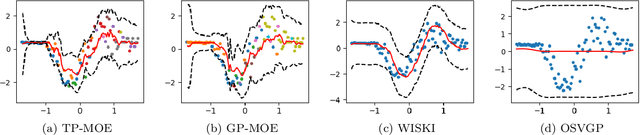
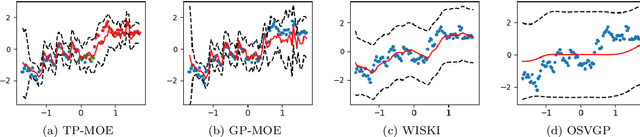
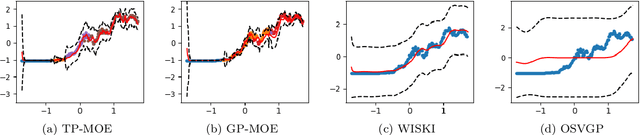
Time-dependent data often exhibit characteristics, such as non-stationarity and heavy-tailed errors, that would be inappropriate to model with the typical assumptions used in popular models. Thus, more flexible approaches are required to be able to accommodate such issues. To this end, we propose a Bayesian mixture of student-$t$ processes with an overall-local scale structure for the covariance. Moreover, we use a sequential Monte Carlo (SMC) sampler in order to perform online inference as data arrive in real-time. We demonstrate the superiority of our proposed approach compared to typical Gaussian process-based models on real-world data sets in order to prove the necessity of using mixtures of student-$t$ processes.