 Add to Chrome
 Add to Firefox
 Add to Edge
Readable but Not Controllable: Neuron-Level Evidence for Medical LLM Hallucination
Jun 30, 2026
Hallucination remains one of the central obstacles to deploying medical LLMs. Yet, even when hallucination can be detected, it is still unclear whether the internal representations associated with it can be used for control rather than detection alone. Using four open-source models across a suite of medical question-answering datasets, we show that a simple, carefully conditioned probe can reliably detect hallucination, with AUROC scores between 0.77 and 0.86 in our case. We further show that this signal is distributed and redundant rather than narrowly localized. Systematically selected neurons outperform random neurons only at very small subset sizes, whereas random subsets of a few hundred neurons recover nearly the full signal, and low-dimensional random projections preserve most of the detection performance. Beyond detection, we test whether this representation is causally actionable. Across 16 model--dataset combinations, our results reveal a sharp gap between decodability and controllability. The same internal structure that makes hallucination easy to detect does not translate into reliable neuron-level control. These findings show that medical hallucination seems to be readily visible in internal activations, but not easily corrected by steering the neurons most associated with it. More broadly, our results suggest that hallucination mitigation is not simply a matter of identifying the right neurons, and point to a deeper separation between what representations reveal and what they allow us to change.

CRAFT: Forgetting-Aware Intervention-Based Adaptation for Continual Learning
May 07, 2026Large language models (LLMs) can acquire new capabilities through fine-tuning, but continual adaptation often leads to catastrophic forgetting. We propose CRAFT, a continual learning framework that avoids updating model weights by instead learning low-rank interventions on hidden representations. CRAFT proceeds in three stages: it first routes each task to a group of similar tasks based on output-distribution divergence; it then fine-tunes the model using a Kullback-Leibler (KL) divergence against the group's prior state, which directly controls forgetting and determines convergence; finally, it merges interventions for the updated task into the shared representation using the same KL signal. This design unifies routing, regularization, and merging through a single KL-based objective. CRAFT improves overall performance and reduces forgetting compared to strong LoRA-based approaches across multiple benchmarks and model scales, while remaining robust to task ordering. These results suggest that controlling adaptation in representation space, guided by output-space divergence, provides a scalable and principled approach to continual learning in LLMs.
Synthetic Users, Real Differences: an Evaluation Framework for User Simulation in Multi-Turn Conversations
May 04, 2026There is growing interest in exploring user simulation as an alternative to gathering and scoring real user-chatbot interactions for AI chatbot evaluation. For this purpose, it is important to ensure the realism of the simulation, i.e., the extent to which simulated dialogues reflect real dialogues users have with chatbots. Most existing methods evaluating simulation realism produce coarse quality signal and remain solely at the level of individual dialogues. To support more rigorous evaluation in this area, we propose realsim, an evaluation framework that enables practitioners to take a distributional view of real vs. simulated dialogues along 8 dimensions, covering attributes related to the communicative functions of the interaction, user states, and the surface form of user messages. We then instantiate the framework with a curated dataset of 1K multi-turn task-focused real user-chatbot dialogues that cover 16 domains of chatbot applications. Overall, we find that simulated users tend to struggle at capturing communication frictions that real users introduce to interactions, which could make evaluations based on such simulations overly optimistic. We also observe variability in performance across different domains, which may indicate a need for domain-specific user simulators.
iAgentBench: Benchmarking Sensemaking Capabilities of Information-Seeking Agents on High-Traffic Topics
Mar 04, 2026With the emergence of search-enabled generative QA systems, users are increasingly turning to tools that browse, aggregate, and reconcile evidence across multiple sources on their behalf. Yet many widely used QA benchmarks remain answerable by retrieving a single relevant passage, making them poorly suited for measuring cross-source sensemaking, such as integrating evidence, tracking causal links, and resolving dependencies across facets of a topic. We present iAgentBench, a dynamic ODQA benchmark that targets these higher-level information needs while keeping questions natural and grounded in realistic information-seeking behavior. iAgentBench draws seed topics from real-world attention signals and uses common user intent patterns to construct user-like questions whose answers require combining evidence from multiple sources, not just extracting a single snippet. Each instance is released with traceable evidence and auditable intermediate artifacts that support contamination checks and enable fine-grained diagnosis of failures in retrieval versus synthesis. Experiments across multiple LLMs show that retrieval improves accuracy, but retrieval alone does not reliably resolve these questions, underscoring the need to evaluate evidence use, not just evidence access.
I Think, Therefore I Am Under-Qualified? A Benchmark for Evaluating Linguistic Shibboleth Detection in LLM Hiring Evaluations
Aug 06, 2025This paper introduces a comprehensive benchmark for evaluating how Large Language Models (LLMs) respond to linguistic shibboleths: subtle linguistic markers that can inadvertently reveal demographic attributes such as gender, social class, or regional background. Through carefully constructed interview simulations using 100 validated question-response pairs, we demonstrate how LLMs systematically penalize certain linguistic patterns, particularly hedging language, despite equivalent content quality. Our benchmark generates controlled linguistic variations that isolate specific phenomena while maintaining semantic equivalence, which enables the precise measurement of demographic bias in automated evaluation systems. We validate our approach along multiple linguistic dimensions, showing that hedged responses receive 25.6% lower ratings on average, and demonstrate the benchmark's effectiveness in identifying model-specific biases. This work establishes a foundational framework for detecting and measuring linguistic discrimination in AI systems, with broad applications to fairness in automated decision-making contexts.
RealWebAssist: A Benchmark for Long-Horizon Web Assistance with Real-World Users
Apr 14, 2025To achieve successful assistance with long-horizon web-based tasks, AI agents must be able to sequentially follow real-world user instructions over a long period. Unlike existing web-based agent benchmarks, sequential instruction following in the real world poses significant challenges beyond performing a single, clearly defined task. For instance, real-world human instructions can be ambiguous, require different levels of AI assistance, and may evolve over time, reflecting changes in the user's mental state. To address this gap, we introduce RealWebAssist, a novel benchmark designed to evaluate sequential instruction-following in realistic scenarios involving long-horizon interactions with the web, visual GUI grounding, and understanding ambiguous real-world user instructions. RealWebAssist includes a dataset of sequential instructions collected from real-world human users. Each user instructs a web-based assistant to perform a series of tasks on multiple websites. A successful agent must reason about the true intent behind each instruction, keep track of the mental state of the user, understand user-specific routines, and ground the intended tasks to actions on the correct GUI elements. Our experimental results show that state-of-the-art models struggle to understand and ground user instructions, posing critical challenges in following real-world user instructions for long-horizon web assistance.
Federated Multimodal Learning with Dual Adapters and Selective Pruning for Communication and Computational Efficiency
Mar 10, 2025Federated Learning (FL) enables collaborative learning across distributed clients while preserving data privacy. However, FL faces significant challenges when dealing with heterogeneous data distributions, which can lead to suboptimal global models that fail to generalize across diverse clients. In this work, we propose a novel framework designed to tackle these challenges by introducing a dual-adapter approach. The method utilizes a larger local adapter for client-specific personalization and a smaller global adapter to facilitate efficient knowledge sharing across clients. Additionally, we incorporate a pruning mechanism to reduce communication overhead by selectively removing less impactful parameters from the local adapter. Through extensive experiments on a range of vision and language tasks, our method demonstrates superior performance compared to existing approaches. It achieves higher test accuracy, lower performance variance among clients, and improved worst-case performance, all while significantly reducing communication and computation costs. Overall, the proposed method addresses the critical trade-off between model personalization and generalization, offering a scalable solution for real-world FL applications.
The Order Effect: Investigating Prompt Sensitivity in Closed-Source LLMs
Feb 06, 2025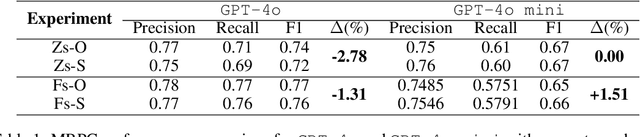

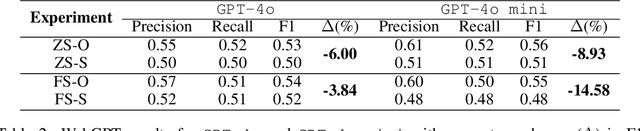
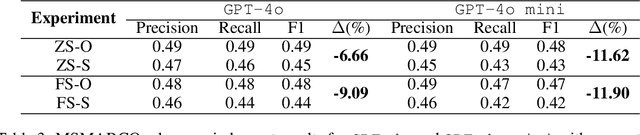
As large language models (LLMs) become integral to diverse applications, ensuring their reliability under varying input conditions is crucial. One key issue affecting this reliability is order sensitivity, wherein slight variations in input arrangement can lead to inconsistent or biased outputs. Although recent advances have reduced this sensitivity, the problem remains unresolved. This paper investigates the extent of order sensitivity in closed-source LLMs by conducting experiments across multiple tasks, including paraphrasing, relevance judgment, and multiple-choice questions. Our results show that input order significantly affects performance across tasks, with shuffled inputs leading to measurable declines in output accuracy. Few-shot prompting demonstrates mixed effectiveness and offers partial mitigation, however, fails to fully resolve the problem. These findings highlight persistent risks, particularly in high-stakes applications, and point to the need for more robust LLMs or improved input-handling techniques in future development.
How Well Do LLMs Represent Values Across Cultures? Empirical Analysis of LLM Responses Based on Hofstede Cultural Dimensions
Jun 21, 2024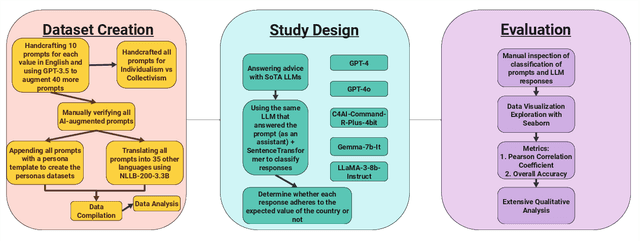


Large Language Models (LLMs) attempt to imitate human behavior by responding to humans in a way that pleases them, including by adhering to their values. However, humans come from diverse cultures with different values. It is critical to understand whether LLMs showcase different values to the user based on the stereotypical values of a user's known country. We prompt different LLMs with a series of advice requests based on 5 Hofstede Cultural Dimensions -- a quantifiable way of representing the values of a country. Throughout each prompt, we incorporate personas representing 36 different countries and, separately, languages predominantly tied to each country to analyze the consistency in the LLMs' cultural understanding. Through our analysis of the responses, we found that LLMs can differentiate between one side of a value and another, as well as understand that countries have differing values, but will not always uphold the values when giving advice, and fail to understand the need to answer differently based on different cultural values. Rooted in these findings, we present recommendations for training value-aligned and culturally sensitive LLMs. More importantly, the methodology and the framework developed here can help further understand and mitigate culture and language alignment issues with LLMs.
ClaimVer: Explainable Claim-Level Verification and Evidence Attribution of Text Through Knowledge Graphs
Mar 12, 2024In the midst of widespread misinformation and disinformation through social media and the proliferation of AI-generated texts, it has become increasingly difficult for people to validate and trust information they encounter. Many fact-checking approaches and tools have been developed, but they often lack appropriate explainability or granularity to be useful in various contexts. A text validation method that is easy to use, accessible, and can perform fine-grained evidence attribution has become crucial. More importantly, building user trust in such a method requires presenting the rationale behind each prediction, as research shows this significantly influences people's belief in automated systems. It is also paramount to localize and bring users' attention to the specific problematic content, instead of providing simple blanket labels. In this paper, we present $\textit{ClaimVer, a human-centric framework}$ tailored to meet users' informational and verification needs by generating rich annotations and thereby reducing cognitive load. Designed to deliver comprehensive evaluations of texts, it highlights each claim, verifies it against a trusted knowledge graph (KG), presents the evidence, and provides succinct, clear explanations for each claim prediction. Finally, our framework introduces an attribution score, enhancing applicability across a wide range of downstream tasks.