 Add to Chrome
 Add to Firefox
 Add to Edge
cotomi Act: Learning to Automate Work by Watching You
May 04, 2026
What if a browser agent could learn your work simply by watching you do it? We present cotomi Act, a browser-based computer-using agent that combines reliable multi-step task execution with persistent organizational knowledge learned from user behavior. For execution, an agent scaffold with adaptive lazy observation, verbal-diff-based history compression, coarse-grained actions, and test-time scaling via best-of-N action selection achieves 80.4% on the 179-task WebArena human-evaluation subset, exceeding the reported 78.2% human baseline. For organizational knowledge, a behavior-to-knowledge pipeline passively observes the user's browsing and progressively abstracts it into artifacts (task boards, wiki) exposed through a shared workspace editable by both user and agent. A controlled proxy evaluation confirms that task success improves as behavior-derived knowledge accumulates. In our live demonstration, attendees interact with the system in a real browser, issuing tasks and observing end-to-end autonomous execution and shared knowledge management.

Can a Crow Hatch a Falcon? Lineage Matters in Predicting Large Language Model Performance
Apr 28, 2025
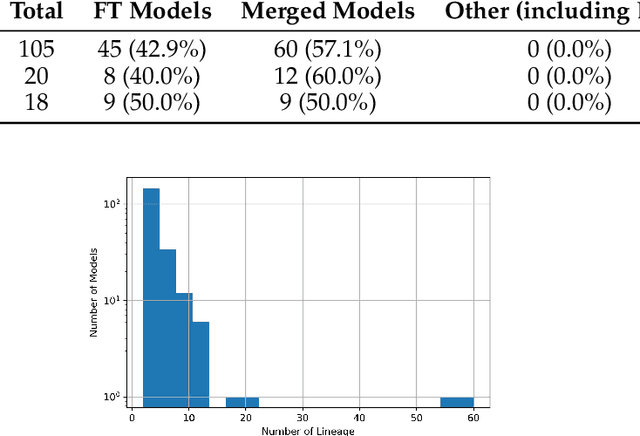

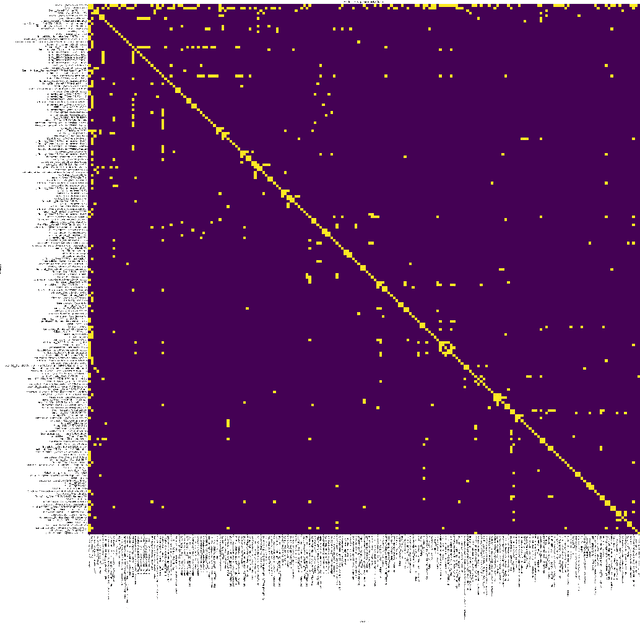
Accurately forecasting the performance of Large Language Models (LLMs) before extensive fine-tuning or merging can substantially reduce both computational expense and development time. Although prior approaches like scaling laws account for global factors such as parameter size or training tokens, they often overlook explicit lineage relationships - i.e., which models are derived or merged from which parents. In this work, we propose a novel Lineage-Regularized Matrix Factorization (LRMF) framework that encodes ancestral ties among LLMs via a graph Laplacian regularizer. By leveraging multi-hop parent-child connections, LRMF consistently outperforms conventional matrix factorization and collaborative filtering methods in both instance-level and benchmark-level performance prediction. Our large-scale study includes 2,934 publicly available Hugging Face models and 21,000+ instances across 6 major benchmarks, showing that lineage constraints yield up to 7-10 percentage points higher correlation with actual performance compared to baselines. Moreover, LRMF effectively addresses the cold-start problem, providing accurate estimates for newly derived or merged models even with minimal data. This lineage-guided strategy thus offers a resource-efficient way to inform hyperparameter tuning, data selection, and model combination in modern LLM development.