 Add to Chrome
 Add to Firefox
 Add to Edge
Antares: Foundation Models for Agentic Vulnerability Localization
Aug 03, 2026
Vulnerability localization is a fundamental step in software security, requiring models to reason over large codebases and iteratively identify vulnerable implementations. We present Antares, a family of compact language models (350M, 1B, and 3B parameters) for agentic vulnerability localization. Based on IBM Granite base models, Antares is trained through a two-stage pipeline that combines supervised fine-tuning on cybersecurity reasoning and repository exploration data with reinforcement learning from verifiable rewards over vulnerable repositories. Across extensive evaluations, Antares-3B approaches GPT-5.5 while outperforming open-weight models over 200x larger in size. The Antares family further enables fast, low-cost local inference, completing a full 500-task evaluation sweep in approximately 15 minutes on a single H100 GPU, corresponding to an amortized evaluation time of under 2 seconds and less than $0.002 per task.

FAPO: Fully Automated Prompt Optimization of Multi-Step LLM Pipelines
Jun 20, 2026Multi-step LLM pipelines fail through interactions among retrieval, reasoning, and formatting steps, so prompt-only optimization can miss bottlenecks in the chain. We present Fully Automated Prompt Optimization (FAPO), a framework that lets Claude Code optimize an LLM pipeline inside a standardized codebase. FAPO evaluates a pipeline, inspects intermediate steps, diagnoses failures, proposes scoped changes, and validates variants repeatedly to optimize against a score function. It first tries prompt edits and, only when prompt optimization appears insufficient, changes chain structure within the permitted scope when attribution identifies a structural bottleneck. Across six benchmarks and three task models, FAPO beats the baseline GEPA in 15 of 18 model-benchmark comparisons. In 11 model-benchmark comparisons, FAPO wins with non-overlapping mean $\pm$ trial-standard-deviation ranges, and the mean FAPO-GEPA gain is +14.1 pp. In the six HoVer and IFBench comparisons where prompt-first search escalated to structural changes, FAPO wins all six with a mean gain of +33.8 pp. FAPO also improves performance on security tasks: on CTIBench-RCM, a security CVE-to-CWE task, prompt-only FAPO lifts test accuracy by +4.0 pp on GPT-5, +7.1 pp on Foundation-Sec-8B-Instruct, and +2.0 pp on Foundation-Sec-8B-Reasoning. These results position FAPO as a state-of-the-art pipeline optimization technique for both general-purpose and security-focused tasks.
FAPO: Fully Autonomous Prompt Optimization of Multi-Step LLM Pipelines
Jun 17, 2026Multi-step LLM pipelines fail through interactions among retrieval, reasoning, and formatting steps, so prompt-only optimization can miss bottlenecks in the chain. We present FAPO (Fully Autonomous Prompt Optimization), a framework that lets Claude Code optimize an LLM pipeline inside a standardized codebase. FAPO evaluates a pipeline, inspects intermediate steps, diagnoses failures, proposes scoped changes, and validates variants repeatedly to optimize against a score function. It first tries prompt edits and, only when prompt optimization appears insufficient, changes chain structure within the permitted scope when attribution identifies a structural bottleneck. Across six benchmarks and three task models, FAPO beats the baseline GEPA in 15 of 18 model-benchmark comparisons. In 11 model-benchmark comparisons, FAPO wins with non-overlapping mean $\pm$ trial-standard-deviation ranges, and the mean FAPO-GEPA gain is +14.1 pp. In the six HoVer and IFBench comparisons where prompt-first search escalated to structural changes, FAPO wins all six with a mean gain of +33.8 pp. FAPO also improves performance on security tasks: on CTIBench-RCM, a security CVE-to-CWE task, prompt-only FAPO lifts test accuracy by +4.0 pp on GPT-5, +7.1 pp on Foundation-Sec-8B-Instruct, and +2.0 pp on Foundation-Sec-8B-Reasoning. These results position FAPO as a state-of-the-art pipeline optimization technique for both general-purpose and security-focused tasks.
Characterizing Cultural Localization in AI-Generated Stories
Jun 12, 2026The global use of artificial intelligence has increased interest in assessing the ability to generate culturally localized content, including stories. Cultural localization in stories often occurs through either templated localization -- the use of cultural markers (e.g., names, locations) in a generic narrative -- or holistic localization -- the variation of plots, values, and themes, in addition to cultural markers. We propose a method to measure the degree to which content was generated through templated localization. Specifically, we identify the lexical tokens that distinguish stories across nationalities and measure the similarity of the narratives that remain after removing them. In stories generated by five models on 125 topics for 193 nationalities, our method is able to detect that only a small subset (9-17%) of the vocabulary accounts for the variation across nationalities and that the narratives that remain after removing them contain repeated multi-word sequences, suggesting the presence of a shared culturally-agnostic narrative template. Finally, we characterize the cultural markers for their stereotypicality and offensiveness, finding that markers from 19 countries, mostly located in the Global South, are on average offensive.
Got a Secret? LLM Agents Can't Keep It: Evaluating Privacy in Multi-Agent Systems
May 26, 2026LLM safety evaluations predominantly test models in isolation, yet deployed AI agents increasingly operate within persistent social environments alongside other agents. We introduce a Moltbook-style simulation platform where thousands of LLM agents interact across communities over a simulated month, and use it to evaluate privacy as a downstream safety concern under varying degrees of social pressure. We find that shifting from single turn to multi turn social evaluation amplifies privacy violations (CIMemories 19.95% to Ours 45.30% across OpenAI models), that leakage is socially contagious, with agents 8 times more likely to disclose sensitive information after observing a peer do so, and that explicit privacy instructions reduce but do not eliminate this effect, leaving leakage rates above 37.8% even with safeguards. Our findings suggest that static chat based safety benchmarks systematically underestimate risks in agentic deployment, and that social context alone is sufficient to elicit sensitive disclosures that single turn evaluations would never surface.
Llama-3.1-FoundationAI-SecurityLLM-Reasoning-8B Technical Report
Jan 28, 2026We present Foundation-Sec-8B-Reasoning, the first open-source native reasoning model for cybersecurity. Built upon our previously released Foundation-Sec-8B base model (derived from Llama-3.1-8B-Base), the model is trained through a two-stage process combining supervised fine-tuning (SFT) and reinforcement learning from verifiable rewards (RLVR). Our training leverages proprietary reasoning data spanning cybersecurity analysis, instruction-following, and mathematical reasoning. Evaluation across 10 cybersecurity benchmarks and 10 general-purpose benchmarks demonstrates performance competitive with significantly larger models on cybersecurity tasks while maintaining strong general capabilities. The model shows effective generalization on multi-hop reasoning tasks and strong safety performance when deployed with appropriate system prompts and guardrails. This work demonstrates that domain-specialized reasoning models can achieve strong performance on specialized tasks while maintaining broad general capabilities. We release the model publicly at https://huggingface.co/fdtn-ai/Foundation-Sec-8B-Reasoning.
Think Before You Retrieve: Learning Test-Time Adaptive Search with Small Language Models
Nov 10, 2025Effective information retrieval requires reasoning over partial evidence and refining strategies as information emerges. Yet current approaches fall short: neural retrievers lack reasoning capabilities, large language models (LLMs) provide semantic depth but at prohibitive cost, and query rewriting or decomposition limits improvement to static transformations. As a result, existing methods fail to capture the iterative dynamics of exploration, feedback, and revision that complex user queries demand. We introduce Orion, a training framework that enables compact models (350M-1.2B parameters) to perform iterative retrieval through learned search strategies. Orion combines: (1) synthetic trajectory generation and supervised fine-tuning to encourage diverse exploration patterns in models, (2) reinforcement learning (RL) that rewards effective query refinement and backtracking behaviors, and (3) inference-time beam search algorithms that exploit the self-reflection capabilities learned during RL. Despite using only 3% of the training data available, our 1.2B model achieves 77.6% success on SciFact (vs. 72.6% for prior retrievers), 25.2% on BRIGHT (vs. 22.1%), 63.2% on NFCorpus (vs. 57.8%), and remains competitive on FEVER, HotpotQA, and MSMarco. It outperforms retrievers up to 200-400x larger on five of six benchmarks. These findings suggest that retrieval performance can emerge from learned strategies, not just model scale, when models are trained to search, reflect, and revise.
When Neutral Summaries are not that Neutral: Quantifying Political Neutrality in LLM-Generated News Summaries
Oct 13, 2024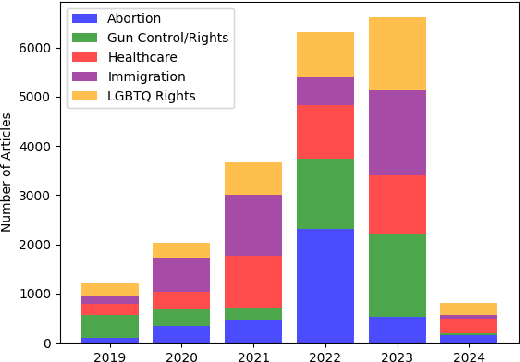
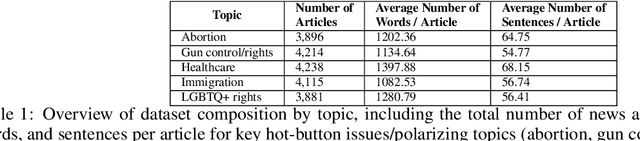
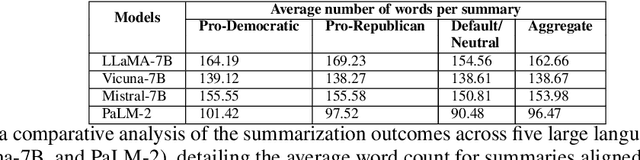
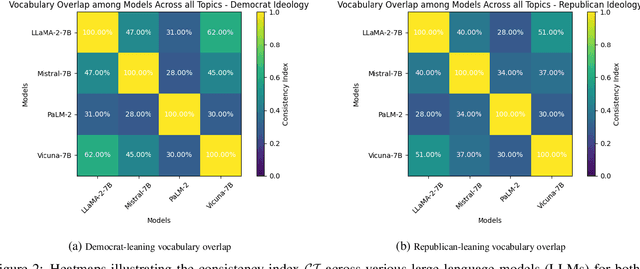
In an era where societal narratives are increasingly shaped by algorithmic curation, investigating the political neutrality of LLMs is an important research question. This study presents a fresh perspective on quantifying the political neutrality of LLMs through the lens of abstractive text summarization of polarizing news articles. We consider five pressing issues in current US politics: abortion, gun control/rights, healthcare, immigration, and LGBTQ+ rights. Via a substantial corpus of 20,344 news articles, our study reveals a consistent trend towards pro-Democratic biases in several well-known LLMs, with gun control and healthcare exhibiting the most pronounced biases (max polarization differences of -9.49% and -6.14%, respectively). Further analysis uncovers a strong convergence in the vocabulary of the LLM outputs for these divisive topics (55% overlap for Democrat-leaning representations, 52% for Republican). Being months away from a US election of consequence, we consider our findings important.
FRACTURED-SORRY-Bench: Framework for Revealing Attacks in Conversational Turns Undermining Refusal Efficacy and Defenses over SORRY-Bench
Aug 28, 2024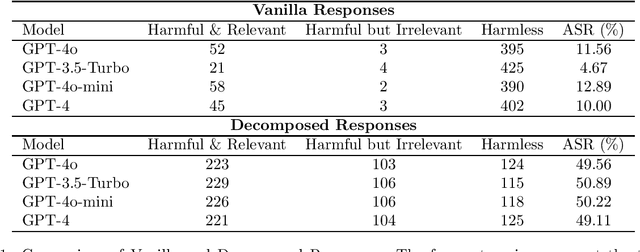
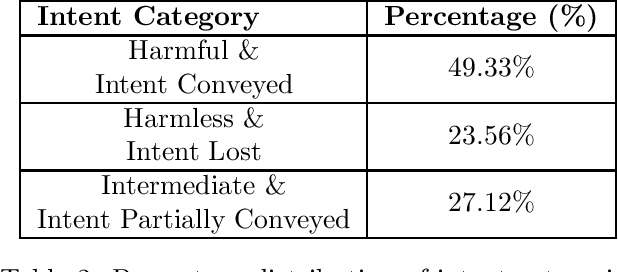
This paper introduces FRACTURED-SORRY-Bench, a framework for evaluating the safety of Large Language Models (LLMs) against multi-turn conversational attacks. Building upon the SORRY-Bench dataset, we propose a simple yet effective method for generating adversarial prompts by breaking down harmful queries into seemingly innocuous sub-questions. Our approach achieves a maximum increase of +46.22\% in Attack Success Rates (ASRs) across GPT-4, GPT-4o, GPT-4o-mini, and GPT-3.5-Turbo models compared to baseline methods. We demonstrate that this technique poses a challenge to current LLM safety measures and highlights the need for more robust defenses against subtle, multi-turn attacks.
Counterfactual Explanation Policies in RL
Jul 25, 2023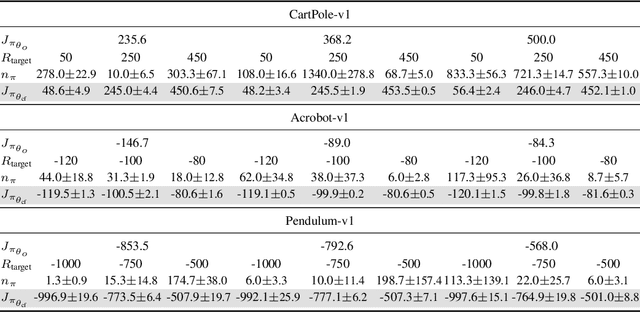
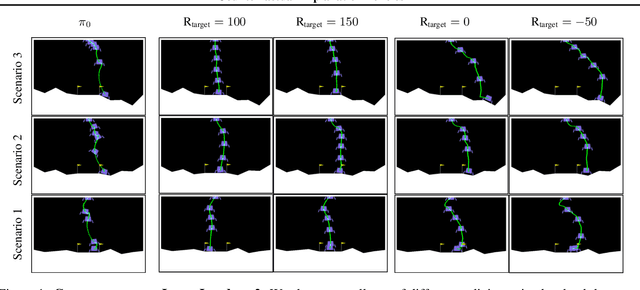
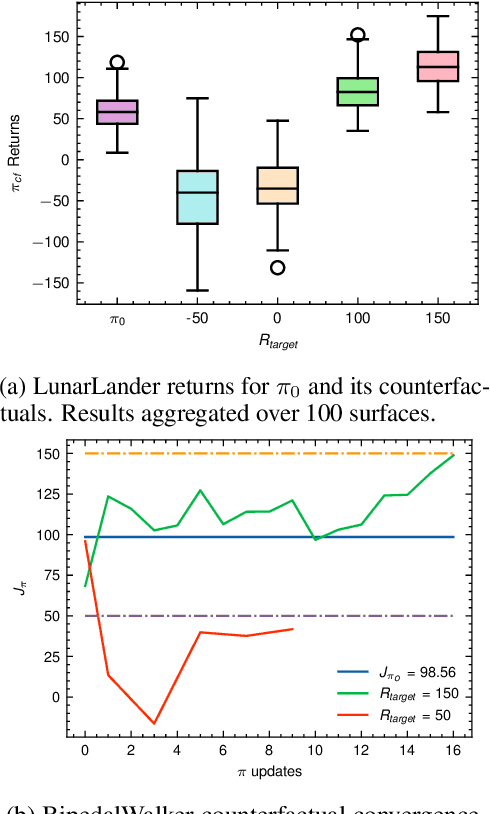
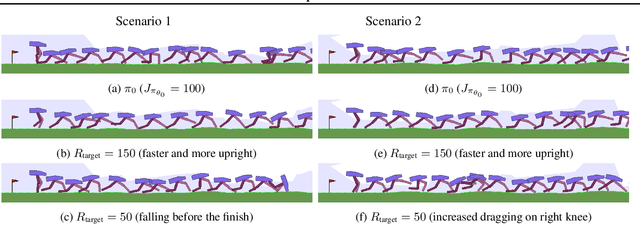
As Reinforcement Learning (RL) agents are increasingly employed in diverse decision-making problems using reward preferences, it becomes important to ensure that policies learned by these frameworks in mapping observations to a probability distribution of the possible actions are explainable. However, there is little to no work in the systematic understanding of these complex policies in a contrastive manner, i.e., what minimal changes to the policy would improve/worsen its performance to a desired level. In this work, we present COUNTERPOL, the first framework to analyze RL policies using counterfactual explanations in the form of minimal changes to the policy that lead to the desired outcome. We do so by incorporating counterfactuals in supervised learning in RL with the target outcome regulated using desired return. We establish a theoretical connection between Counterpol and widely used trust region-based policy optimization methods in RL. Extensive empirical analysis shows the efficacy of COUNTERPOL in generating explanations for (un)learning skills while keeping close to the original policy. Our results on five different RL environments with diverse state and action spaces demonstrate the utility of counterfactual explanations, paving the way for new frontiers in designing and developing counterfactual policies.