 Add to Chrome
 Add to Firefox
 Add to Edge
Open Polymer Challenge: Post-Competition Report
Dec 09, 2025
Machine learning (ML) offers a powerful path toward discovering sustainable polymer materials, but progress has been limited by the lack of large, high-quality, and openly accessible polymer datasets. The Open Polymer Challenge (OPC) addresses this gap by releasing the first community-developed benchmark for polymer informatics, featuring a dataset with 10K polymers and 5 properties: thermal conductivity, radius of gyration, density, fractional free volume, and glass transition temperature. The challenge centers on multi-task polymer property prediction, a core step in virtual screening pipelines for materials discovery. Participants developed models under realistic constraints that include small data, label imbalance, and heterogeneous simulation sources, using techniques such as feature-based augmentation, transfer learning, self-supervised pretraining, and targeted ensemble strategies. The competition also revealed important lessons about data preparation, distribution shifts, and cross-group simulation consistency, informing best practices for future large-scale polymer datasets. The resulting models, analysis, and released data create a new foundation for molecular AI in polymer science and are expected to accelerate the development of sustainable and energy-efficient materials. Along with the competition, we release the test dataset at https://www.kaggle.com/datasets/alexliu99/neurips-open-polymer-prediction-2025-test-data. We also release the data generation pipeline at https://github.com/sobinalosious/ADEPT, which simulates more than 25 properties, including thermal conductivity, radius of gyration, and density.

Low Cost Autonomous Navigation and Control of a Mechanically Balanced Bicycle with Dual Locomotion Mode
Nov 01, 2016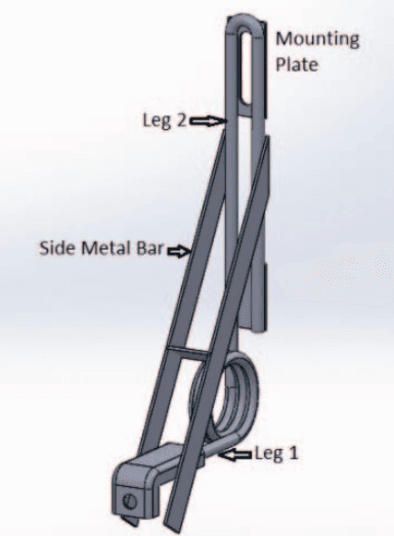
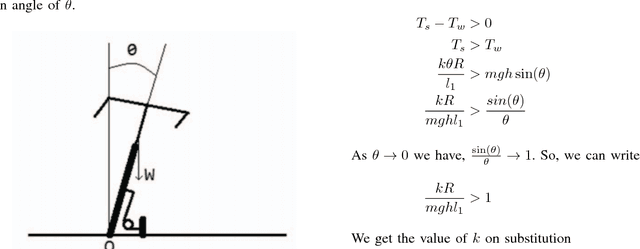
On the lines of the huge and varied efforts in the field of automation with respect to technology development and innovation of vehicles to make them run autonomously, this paper presents an innovation to a bicycle. A normal daily use bicycle was modified at low cost such that it runs autonomously, while maintaining its original form i.e. the manual drive. Hence, a bicycle which could be normally driven by any human and with a press of switch could run autonomously according to the needs of the user has been developed.
* Published in the International Transportation Electrification Conference (ITEC) in 2015 organized by IEEE Industrial Application Society (IAS) and SAE India in Chennai, India