 Add to Chrome
 Add to Firefox
 Add to Edge
Agentic Framework for Deep Learning workload migration via In-Context Learning
Jun 14, 2026
Translating deep learning models from PyTorch's flexible, object-oriented design to JAX's functional, stateless setup is usually a manual and error-prone task. Automated migration is challenging because Large Language Models (LLMs) struggle with strict and dynamic API alignment and are prone to mistakes for exacting operations. We propose a fully autonomous system that combines In-Context Learning (ICL) with oracle-driven self-debugging. First, we curated an ICL context that serves as a strict reference for idiomatic JAX styling and test case generation. Second, instead of depending on the LLM to deduce mathematical outputs, we run the source PyTorch modules to get their actual dynamic tensor states. This creates an unchangeable execution oracle. We then use an autonomous agentic loop to synthesize tests based on the oracle data. The test cases are executed repeatedly, and the traceback is sent back to the LLM for self-correction. Ablations show that combining ICL references with oracle grounding and self-debugging greatly outperforms pure instructional and basic agentic baselines. This improvement does not add an excessive computational overhead. Our lightweight pipeline achieves 91% numerical equivalence (compared to baseline: 9%, instruction + self-debugging: 27%) on neural modules, providing a highly reliable, scalable blueprint for cross-framework migration. This has been validated across several state-of-the-art models including SAM (segment anything), T5, Code Whisper amongst others showing high numerical equivalency. Code: https://github.com/AI-Hypercomputer/accelerator-agents/tree/main/MaxCode

Check-N-Run: A Checkpointing System for Training Recommendation Models
Oct 17, 2020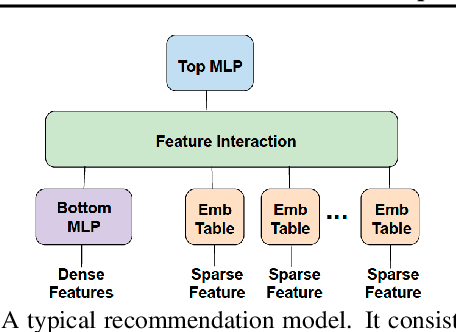
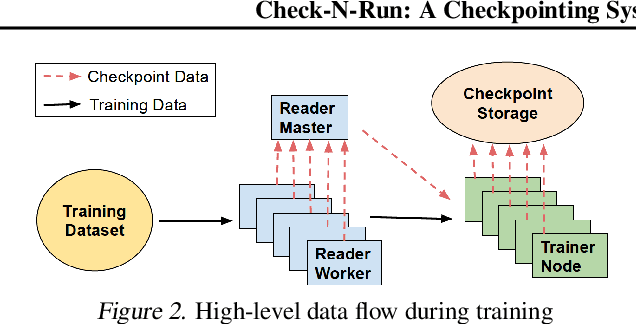
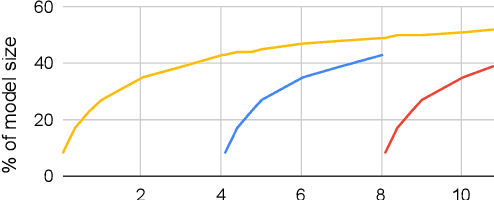
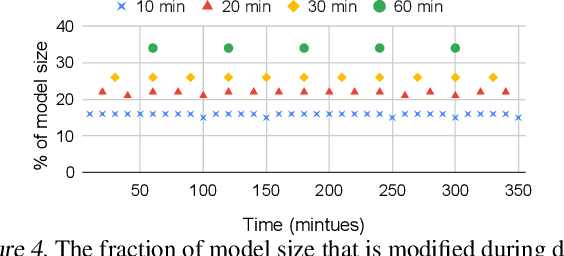
Checkpoints play an important role in training recommendation systems at scale. They are important for many use cases, including failure recovery to ensure rapid training progress, and online training to improve inference prediction accuracy. Checkpoints are typically written to remote, persistent storage. Given the typically large and ever-increasing recommendation model sizes, the checkpoint frequency and effectiveness is often bottlenecked by the storage write bandwidth and capacity, as well as the network bandwidth. We present Check-N-Run, a scalable checkpointing system for training large recommendation models. Check-N-Run uses two primary approaches to address these challenges. First, it applies incremental checkpointing, which tracks and checkpoints the modified part of the model. On top of that, it leverages quantization techniques to significantly reduce the checkpoint size, without degrading training accuracy. These techniques allow Check-N-Run to reduce the required write bandwidth by 6-17x and the required capacity by 2.5-8x on real-world models at Facebook, and thereby significantly improve checkpoint capabilities while reducing the total cost of ownership.