 Add to Chrome
 Add to Firefox
 Add to Edge
EP-GRPO: Entropy-Progress Aligned Group Relative Policy Optimization with Implicit Process Guidance
May 06, 2026
Reinforcement learning with verifiable rewards (RLVR), particularly Group Relative Policy Optimization (GRPO), has advanced LLM reasoning. However, GRPO suffers from three credit assignment failures: uniform token-level granularity that ignores heterogeneous informational value, uniform polarity that penalizes correct steps and rewards incorrect ones, and zero-variance collapse that erases outcome-driven gradients. We systematically quantify these failures, revealing highly non-uniform token informativeness, widespread step-level polarity misalignment, and substantial training waste. To address these limitations, we propose Entropy-Progress Aligned GRPO (EP-GRPO), a framework that mines the model's intrinsic information flow for dense, self-supervised guidance. EP-GRPO integrates entropy-gated modulation to prioritize high entropy decision pivots, implicit process signals from policy divergence anchored to outcome advantages for directional token-level feedback without external reward models, and cumulative entropy mapping that enables progress-aligned advantage normalization, naturally maintaining gradient flow under zero reward variance. Extensive experiments on mathematical reasoning benchmarks demonstrate that EP-GRPO achieves superior accuracy and efficiency compared to GRPO and its variants. The code will be available.

Exploring Boundary-Aware Spatial-Frequency Fusion for Camouflaged Object Detection
Apr 20, 2026Camouflaged Object Detection is challenging due to the high degree of similarity between camouflaged objects and their surrounding backgrounds. Current COD methods mainly rely on edge extraction in the spatial domain and local pixel-level information, neglecting the importance of global structural features. Additionally, they fail to effectively leverage the importance of phase spectrum information within frequency domain features. To this end, we propose a COD framework BASFNet based on boundary-aware frequency domain and spatial domain fusion.This method uses dual guided integration of frequency domain and spatial domain features. A phase-spectrum-based frequency-enhanced edge exploration module (FEEM) and a spatial core segmentation module (SCSM) are introduced to jointly capture the boundary and object features of camouflaged objects. These features are then effectively integrated through a spatial-frequency fusion interaction module (SFFIM). Furthermore, the boundary detection is further optimized through an boundary-aware training strategy. BASFNet outperforms existing state-of-the-art methods on three benchmark datasets, validating the effectiveness of the fusion of frequency and spatial domain information in COD tasks.
ERPO: Token-Level Entropy-Regulated Policy Optimization for Large Reasoning Models
Mar 30, 2026Reinforcement learning from verifiable rewards (RLVR) has significantly advanced the reasoning capabilities of large language models. However, standard Group Relative Policy Optimization (GRPO) typically assigns a uniform, sequence-level advantage to all tokens, thereby overlooking the intrinsic information heterogeneity along reasoning chains. We show that this coarse-grained credit assignment leads to premature entropy collapse and encourages the model to generate redundant, low-quality reasoning paths. Through systematic empirical analysis, we identify Critical Decision Pivots (CDPs): transient high-entropy states where the policy's trajectory is most sensitive to perturbations. These pivots represent the "forks in the road" where effective multi-path exploration is most crucial yet often suppressed by uniform advantage signals. Building on these insights, we propose Entropy-Regulated Policy Optimization (ERPO), which transitions the optimization focus from coarse sequences to fine-grained token dynamics. ERPO introduces three synergistic components: (i) Entropy-aware Gating, which adaptively amplifies exploration at CDPs to facilitate diverse path discovery; (ii) Bucket-based Implicit Normalization, which mitigates difficulty bias by aligning token progress windows; and (iii) Result-anchored Advantage Synthesis, which re-weights token-level signals via outcome-driven anchors. Extensive experiments on competitive mathematical benchmarks (e.g., MATH, AIME) demonstrate that ERPO significantly outperforms GRPO. Notably, ERPO not only boosts reasoning accuracy but also yields significantly more concise and robust derivation paths, establishing a new efficiency-accuracy frontier for large reasoning models.
Enhancing the Traditional Chinese Medicine Capabilities of Large Language Model through Reinforcement Learning from AI Feedback
Nov 01, 2024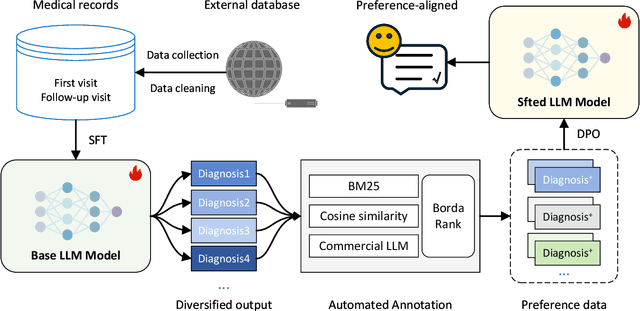
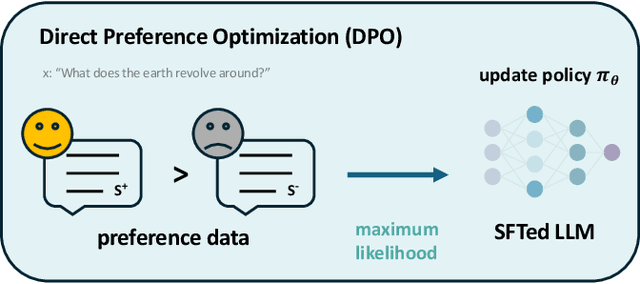


Although large language models perform well in understanding and responding to user intent, their performance in specialized domains such as Traditional Chinese Medicine (TCM) remains limited due to lack of expertise. In addition, high-quality data related to TCM is scarce and difficult to obtain, making large language models ineffective in handling TCM tasks. In this work, we propose a framework to improve the performance of large language models for TCM tasks using only a small amount of data. First, we use medical case data for supervised fine-tuning of the large model, making it initially capable of performing TCM tasks. Subsequently, we further optimize the model's performance using reinforcement learning from AI feedback (RLAIF) to align it with the preference data. The ablation study also demonstrated the performance gain is attributed to both supervised fine-tuning and the direct policy optimization. The experimental results show that the model trained with a small amount of data achieves a significant performance improvement on a representative TCM task.
Adaptive optical signal-to-noise ratio recovery for long-distance optical fiber transmission
Aug 02, 2024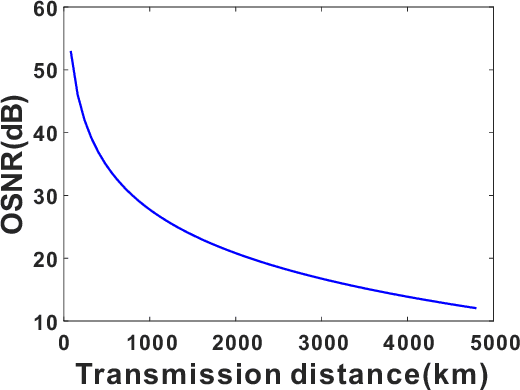
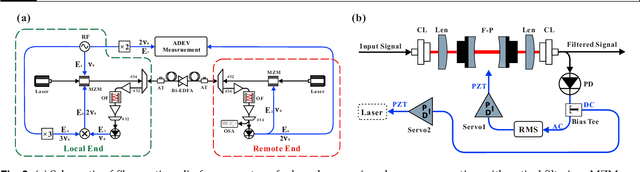
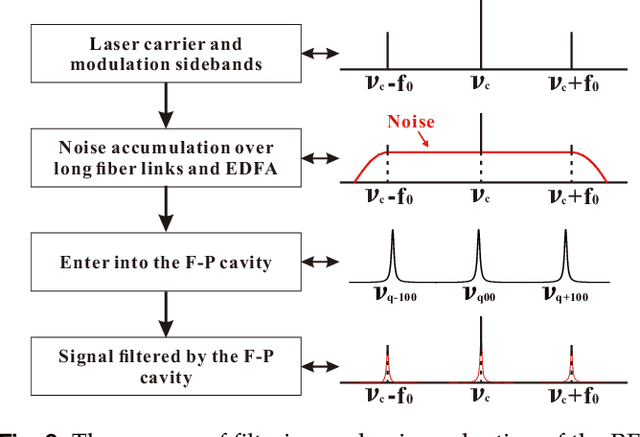
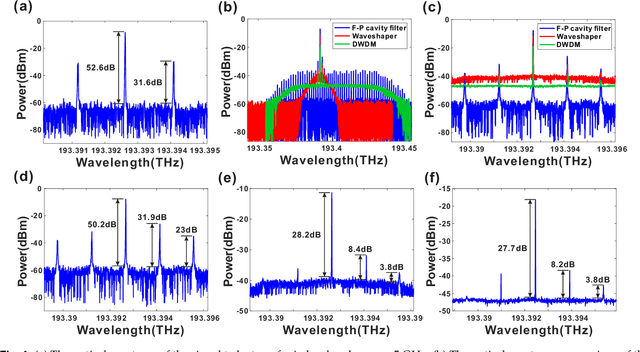
In long-distance fiber optic transmission, the optic fiber link and erbium-doped fiber amplifiers can introduce excessive noise, which reduces the optical signal-to-noise ratio (OSNR). The narrow-band optical filters can be used to eliminate noise and thereby improve OSNR. However, there is a relative frequency drift between the signal and the narrow-band filter, which leads to filtered signal instability. This paper proposes an adaptive OSNR recovery scheme based on a Fabry-Perot (F-P) cavity with mode width of 6 MHz. Utilizing the comb filtering of F-P cavity, the noise around the carrier and sidebands of the signal is filtered out simultaneously. To avoid frequency mismatch, we propose a double-servo scheme to suppress relative frequency drift between the signal and the F-P cavity. We constructed a stable radio frequency transfer system based on passive phase compensation and compared our scheme with other OSNR recovery schemes based on optical filters. Compared to the schemes based on dense wavelength division multiplexing (DWDM) and Waveshaper, our scheme demonstrates an improvement in OSNR of carrier by at least 12 dB and sidebands by at least 23.5 dB. The short-term transfer stability (1 s) is improved by one order of magnitude compared to DWDM and half an order of magnitude compared to Waveshper. This scheme can be applied to the recovery of signals with low OSNR in long-distance fiber optic transmission, improving signal quaility and extending the transmission distance limit.