 Add to Chrome
 Add to Firefox
 Add to Edge
LeHome: A Simulation Environment for Deformable Object Manipulation in Household Scenarios
Apr 24, 2026
Household environments present one of the most common, impactful yet challenging application domains for robotics. Within household scenarios, manipulating deformable objects is particularly difficult, both in simulation and real-world execution, due to varied categories and shapes, complex dynamics, and diverse material properties, as well as the lack of reliable deformable-object support in existing simulations. We introduce LeHome, a comprehensive simulation environment designed for deformable object manipulation in household scenarios. LeHome covers a wide spectrum of deformable objects, such as garments and food items, offering high-fidelity dynamics and realistic interactions that existing simulators struggle to simulate accurately. Moreover, LeHome supports multiple robotic embodiments and emphasizes low-cost robots as a core focus, enabling end-to-end evaluation of household tasks on resource-constrained hardware. By bridging the gap between realistic deformable object simulation and practical robotic platforms, LeHome provides a scalable testbed for advancing household robotics. Webpage: https://lehome-web.github.io/ .

Explainable AI in Big Data Fraud Detection
Dec 17, 2025Big Data has become central to modern applications in finance, insurance, and cybersecurity, enabling machine learning systems to perform large-scale risk assessments and fraud detection. However, the increasing dependence on automated analytics introduces important concerns about transparency, regulatory compliance, and trust. This paper examines how explainable artificial intelligence (XAI) can be integrated into Big Data analytics pipelines for fraud detection and risk management. We review key Big Data characteristics and survey major analytical tools, including distributed storage systems, streaming platforms, and advanced fraud detection models such as anomaly detectors, graph-based approaches, and ensemble classifiers. We also present a structured review of widely used XAI methods, including LIME, SHAP, counterfactual explanations, and attention mechanisms, and analyze their strengths and limitations when deployed at scale. Based on these findings, we identify key research gaps related to scalability, real-time processing, and explainability for graph and temporal models. To address these challenges, we outline a conceptual framework that integrates scalable Big Data infrastructure with context-aware explanation mechanisms and human feedback. The paper concludes with open research directions in scalable XAI, privacy-aware explanations, and standardized evaluation methods for explainable fraud detection systems.
How Do Recommendation Models Amplify Popularity Bias? An Analysis from the Spectral Perspective
Apr 18, 2024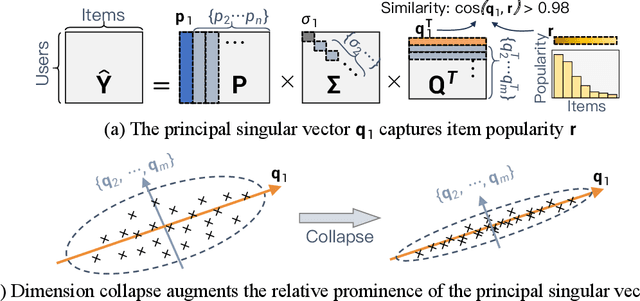
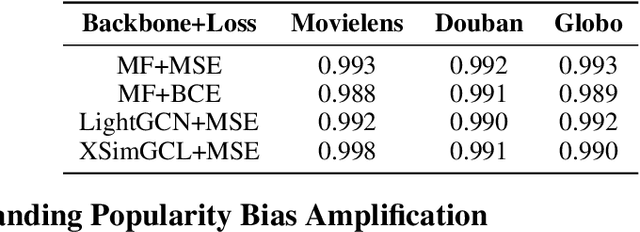
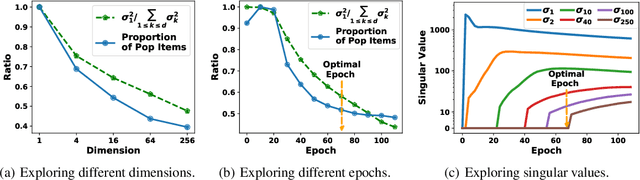
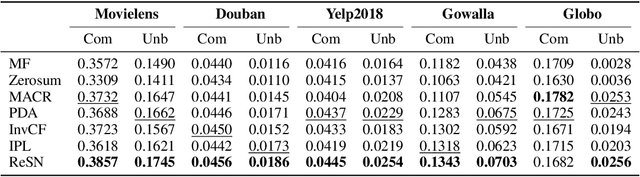
Recommendation Systems (RS) are often plagued by popularity bias. Specifically,when recommendation models are trained on long-tailed datasets, they not only inherit this bias but often exacerbate it. This effect undermines both the precision and fairness of RS and catalyzes the so-called Matthew Effect. Despite the widely recognition of this issue, the fundamental causes remain largely elusive. In our research, we delve deeply into popularity bias amplification. Our comprehensive theoretical and empirical investigations lead to two core insights: 1) Item popularity is memorized in the principal singular vector of the score matrix predicted by the recommendation model; 2) The dimension collapse phenomenon amplifies the impact of principal singular vector on model predictions, intensifying the popularity bias. Based on these insights, we propose a novel method to mitigate this bias by imposing penalties on the magnitude of the principal singular value. Considering the heavy computational burden in directly evaluating the gradient of the principal singular value, we develop an efficient algorithm that harnesses the inherent properties of the singular vector. Extensive experiments across seven real-world datasets and three testing scenarios have been conducted to validate the superiority of our method.