 Add to Chrome
 Add to Firefox
 Add to Edge
Explainable AI in Big Data Fraud Detection
Dec 17, 2025
Big Data has become central to modern applications in finance, insurance, and cybersecurity, enabling machine learning systems to perform large-scale risk assessments and fraud detection. However, the increasing dependence on automated analytics introduces important concerns about transparency, regulatory compliance, and trust. This paper examines how explainable artificial intelligence (XAI) can be integrated into Big Data analytics pipelines for fraud detection and risk management. We review key Big Data characteristics and survey major analytical tools, including distributed storage systems, streaming platforms, and advanced fraud detection models such as anomaly detectors, graph-based approaches, and ensemble classifiers. We also present a structured review of widely used XAI methods, including LIME, SHAP, counterfactual explanations, and attention mechanisms, and analyze their strengths and limitations when deployed at scale. Based on these findings, we identify key research gaps related to scalability, real-time processing, and explainability for graph and temporal models. To address these challenges, we outline a conceptual framework that integrates scalable Big Data infrastructure with context-aware explanation mechanisms and human feedback. The paper concludes with open research directions in scalable XAI, privacy-aware explanations, and standardized evaluation methods for explainable fraud detection systems.

Evaluating Gender, Racial, and Age Biases in Large Language Models: A Comparative Analysis of Occupational and Crime Scenarios
Sep 22, 2024
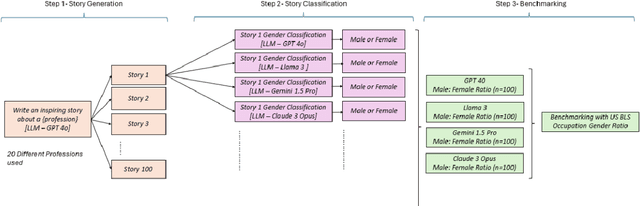
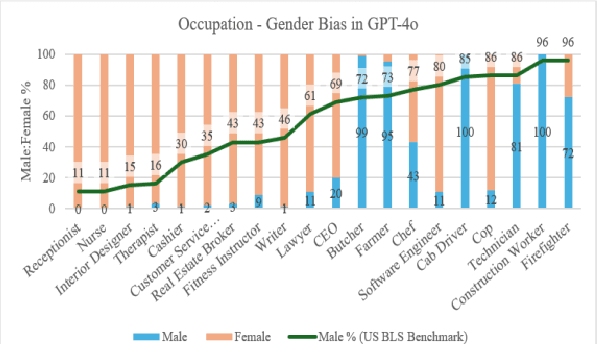

Recent advancements in Large Language Models(LLMs) have been notable, yet widespread enterprise adoption remains limited due to various constraints. This paper examines bias in LLMs-a crucial issue affecting their usability, reliability, and fairness. Researchers are developing strategies to mitigate bias, including debiasing layers, specialized reference datasets like Winogender and Winobias, and reinforcement learning with human feedback (RLHF). These techniques have been integrated into the latest LLMs. Our study evaluates gender bias in occupational scenarios and gender, age, and racial bias in crime scenarios across four leading LLMs released in 2024: Gemini 1.5 Pro, Llama 3 70B, Claude 3 Opus, and GPT-4o. Findings reveal that LLMs often depict female characters more frequently than male ones in various occupations, showing a 37% deviation from US BLS data. In crime scenarios, deviations from US FBI data are 54% for gender, 28% for race, and 17% for age. We observe that efforts to reduce gender and racial bias often lead to outcomes that may over-index one sub-class, potentially exacerbating the issue. These results highlight the limitations of current bias mitigation techniques and underscore the need for more effective approaches.
Compositionality and Bounds for Optimal Value Functions in Reinforcement Learning
Feb 19, 2023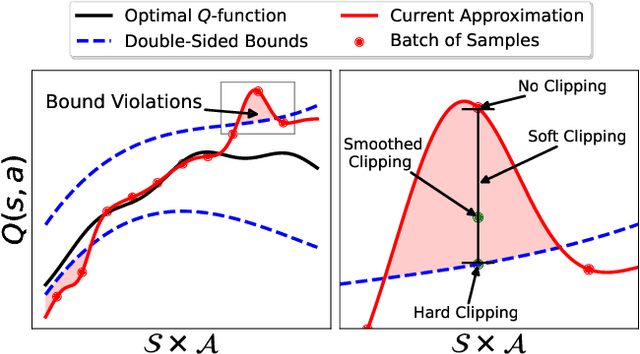

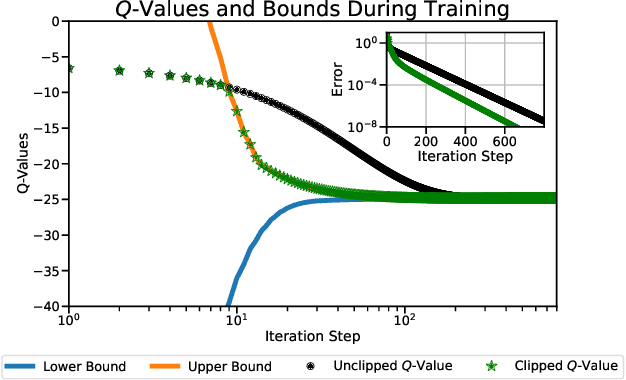
An agent's ability to reuse solutions to previously solved problems is critical for learning new tasks efficiently. Recent research using composition of value functions in reinforcement learning has shown that agents can utilize solutions of primitive tasks to obtain solutions for exponentially many new tasks. However, previous work has relied on restrictive assumptions on the dynamics, the method of composition, and the structure of reward functions. Here we consider the case of general composition functions without any restrictions on the structure of reward functions, applicable to both deterministic and stochastic dynamics. For this general setup, we provide bounds on the corresponding optimal value functions and characterize the value of corresponding policies. The theoretical results derived lead to improvements in training for both entropy-regularized and standard reinforcement learning, which we validate with numerical simulations.