 Add to Chrome
 Add to Firefox
 Add to Edge
Gradient Step Plug-and-Play Model for Dental Cone-Beam CT Reconstruction
May 27, 2026
The goal of this work is to reduce the effect of photon noise in dental cone-beam CT reconstruction. We consider an inverse problem formulation and develop a databased prior. To this end, we simulate fan-beam acquisitions and add photon noise to the projection data. The prior is obtained by training a gradient-step denoiser using reconstructed simulated acquisitions. The trained model is integrated into a plug-and-play gradient-step algorithm to reconstruct images from simulated projections. Experiments on synthetic data demonstrate the denoising capabilities of the trained model, while qualitative evaluations on real images showcase the algorithm's performance and generalization ability.

Simulation of diffraction and scattering using the Wigner Distribution Function
Mar 12, 2024X-ray phase-contrast imaging enhances soft tissue visualization by leveraging the phase shift of X-rays passing through materials. It permits to minimize radiation exposure due to high contrast, as well as high resolution imaging limited by the wavelength of the X-rays. Phase retrieval extracts the phase shift computationally, but simulated images fail to recreate low-frequency noise observed in experimental images. To this end, we propose a new method to simulate phase contrast images using the Wigner Distribution Function. This permits the simulation of wave and particle effects simultaneously and simulates images photon by photon. Here, we give a first demonstration of the method by simulating the Gaussian double-slit experiment. It has the potential for realistic simulation of low-dose imaging.
Systematic Review on Learning-based Spectral CT
Apr 15, 2023
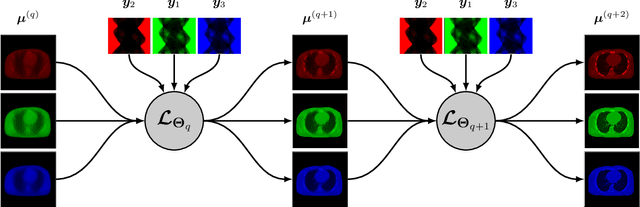
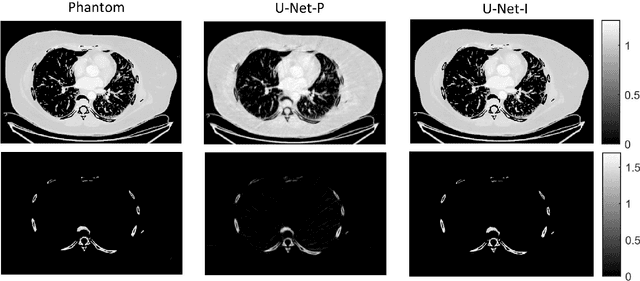
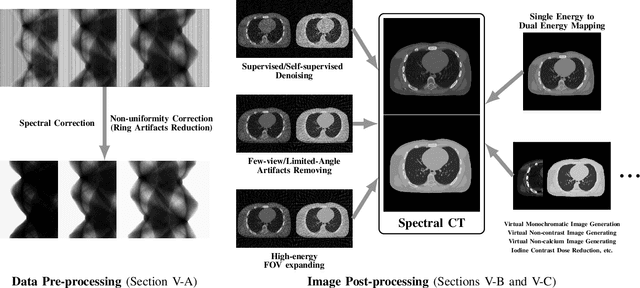
Spectral computed tomography (CT) has recently emerged as an advanced version of medical CT and significantly improves conventional (single-energy) CT. Spectral CT has two main forms: dual-energy computed tomography (DECT) and photon-counting computed tomography (PCCT), which offer image improvement, material decomposition, and feature quantification relative to conventional CT. However, the inherent challenges of spectral CT, evidenced by data and image artifacts, remain a bottleneck for clinical applications. To address these problems, machine learning techniques have been widely applied to spectral CT. In this review, we present the state-of-the-art data-driven techniques for spectral CT.