 Add to Chrome
 Add to Firefox
 Add to Edge
STAGE: Controlled Objective Admission for Multi-Preference LLM Alignment
Aug 17, 2026
Multi-preference alignment is often framed as scalarization: combine reward dimensions, then optimize. This leaves a temporal decision underspecified: when should each preference dimension enter policy optimization? We propose \methodname, a stability-guided active-set controller for controlled objective admission. \methodname starts from a small active set, retains admitted objectives, and expands when reward-deviation gates indicate low recent deviation or a patience budget is exhausted. A probing phase estimates a hard-to-easy order, and adaptive weighting emphasizes underperforming active dimensions. Automatic evaluations with 15 training preferences and 16 held-out benchmark columns show that \methodname obtains higher averages than simultaneous scalarization and shared-budget adapted baselines. Component ablations and expansion dynamics further support cumulative retention, gated admission, and probing-derived ordering as useful design choices in this setting. These results position objective-entry timing as a concrete control variable in reward-vector RLHF.

Data Quality Awareness: A Journey from Traditional Data Management to Data Science Systems
Nov 05, 2024
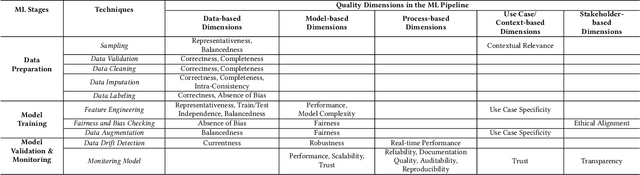
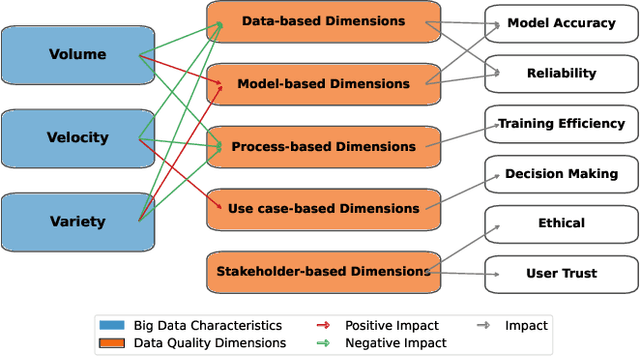
Artificial intelligence (AI) has transformed various fields, significantly impacting our daily lives. A major factor in AI success is high-quality data. In this paper, we present a comprehensive review of the evolution of data quality (DQ) awareness from traditional data management systems to modern data-driven AI systems, which are integral to data science. We synthesize the existing literature, highlighting the quality challenges and techniques that have evolved from traditional data management to data science including big data and ML fields. As data science systems support a wide range of activities, our focus in this paper lies specifically in the analytics aspect driven by machine learning. We use the cause-effect connection between the quality challenges of ML and those of big data to allow a more thorough understanding of emerging DQ challenges and the related quality awareness techniques in data science systems. To the best of our knowledge, our paper is the first to provide a review of DQ awareness spanning traditional and emergent data science systems. We hope that readers will find this journey through the evolution of data quality awareness insightful and valuable.