 Add to Chrome
 Add to Firefox
 Add to Edge
The Denario project: Deep knowledge AI agents for scientific discovery
Oct 30, 2025
We present Denario, an AI multi-agent system designed to serve as a scientific research assistant. Denario can perform many different tasks, such as generating ideas, checking the literature, developing research plans, writing and executing code, making plots, and drafting and reviewing a scientific paper. The system has a modular architecture, allowing it to handle specific tasks, such as generating an idea, or carrying out end-to-end scientific analysis using Cmbagent as a deep-research backend. In this work, we describe in detail Denario and its modules, and illustrate its capabilities by presenting multiple AI-generated papers generated by it in many different scientific disciplines such as astrophysics, biology, biophysics, biomedical informatics, chemistry, material science, mathematical physics, medicine, neuroscience and planetary science. Denario also excels at combining ideas from different disciplines, and we illustrate this by showing a paper that applies methods from quantum physics and machine learning to astrophysical data. We report the evaluations performed on these papers by domain experts, who provided both numerical scores and review-like feedback. We then highlight the strengths, weaknesses, and limitations of the current system. Finally, we discuss the ethical implications of AI-driven research and reflect on how such technology relates to the philosophy of science. We publicly release the code at https://github.com/AstroPilot-AI/Denario. A Denario demo can also be run directly on the web at https://huggingface.co/spaces/astropilot-ai/Denario, and the full app will be deployed on the cloud.

A Database of Ultrastable MOFs Reassembled from Stable Fragments with Machine Learning Models
Oct 25, 2022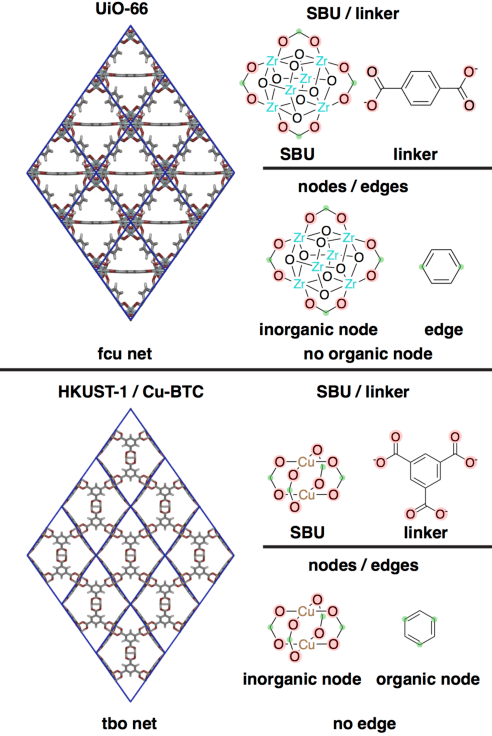
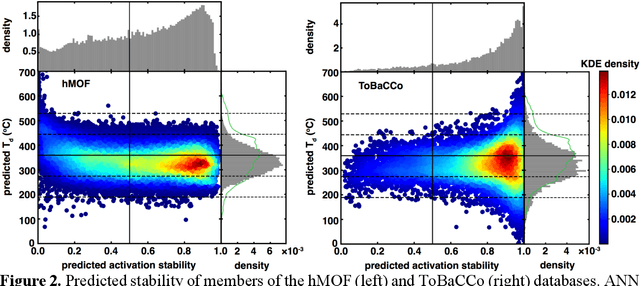
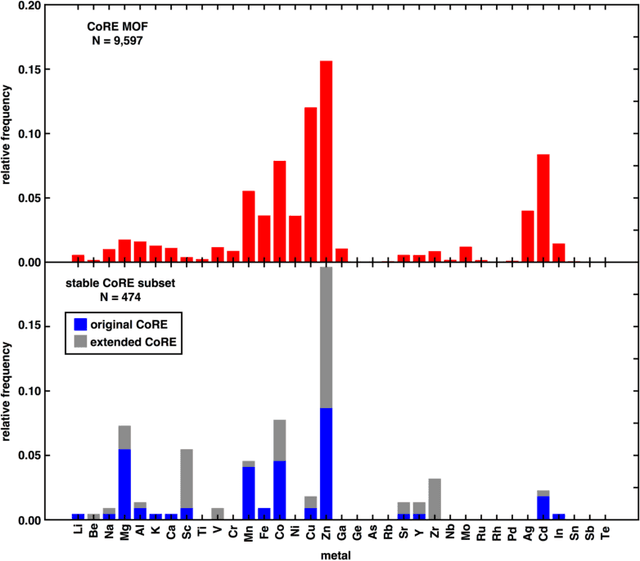
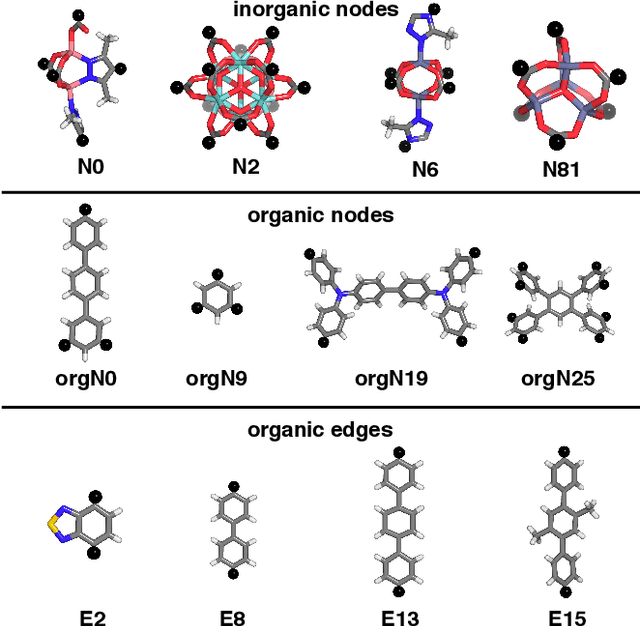
High-throughput screening of large hypothetical databases of metal-organic frameworks (MOFs) can uncover new materials, but their stability in real-world applications is often unknown. We leverage community knowledge and machine learning (ML) models to identify MOFs that are thermally stable and stable upon activation. We separate these MOFs into their building blocks and recombine them to make a new hypothetical MOF database of over 50,000 structures that samples orders of magnitude more connectivity nets and inorganic building blocks than prior databases. This database shows an order of magnitude enrichment of ultrastable MOF structures that are stable upon activation and more than one standard deviation more thermally stable than the average experimentally characterized MOF. For the nearly 10,000 ultrastable MOFs, we compute bulk elastic moduli to confirm these materials have good mechanical stability, and we report methane deliverable capacities. Our work identifies privileged metal nodes in ultrastable MOFs that optimize gas storage and mechanical stability simultaneously.