 Add to Chrome
 Add to Firefox
 Add to Edge
The Denario project: Deep knowledge AI agents for scientific discovery
Oct 30, 2025
We present Denario, an AI multi-agent system designed to serve as a scientific research assistant. Denario can perform many different tasks, such as generating ideas, checking the literature, developing research plans, writing and executing code, making plots, and drafting and reviewing a scientific paper. The system has a modular architecture, allowing it to handle specific tasks, such as generating an idea, or carrying out end-to-end scientific analysis using Cmbagent as a deep-research backend. In this work, we describe in detail Denario and its modules, and illustrate its capabilities by presenting multiple AI-generated papers generated by it in many different scientific disciplines such as astrophysics, biology, biophysics, biomedical informatics, chemistry, material science, mathematical physics, medicine, neuroscience and planetary science. Denario also excels at combining ideas from different disciplines, and we illustrate this by showing a paper that applies methods from quantum physics and machine learning to astrophysical data. We report the evaluations performed on these papers by domain experts, who provided both numerical scores and review-like feedback. We then highlight the strengths, weaknesses, and limitations of the current system. Finally, we discuss the ethical implications of AI-driven research and reflect on how such technology relates to the philosophy of science. We publicly release the code at https://github.com/AstroPilot-AI/Denario. A Denario demo can also be run directly on the web at https://huggingface.co/spaces/astropilot-ai/Denario, and the full app will be deployed on the cloud.

ActiNet: Activity intensity classification of wrist-worn accelerometers using self-supervised deep learning
Oct 02, 2025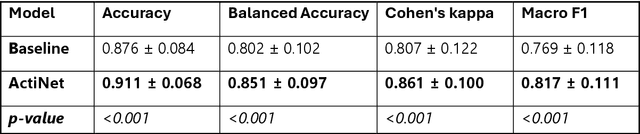
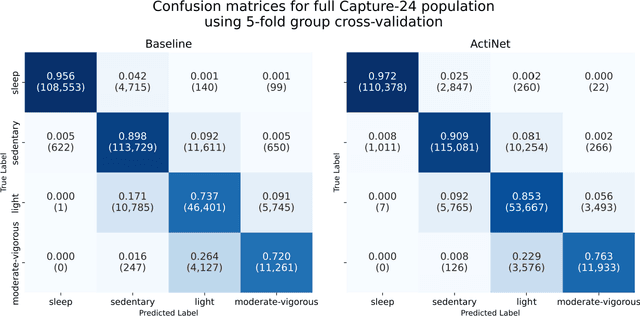

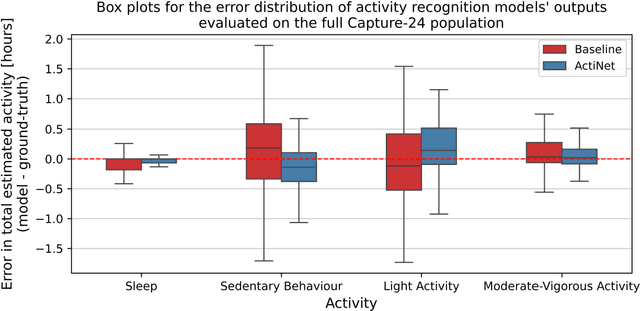
The use of reliable and accurate human activity recognition (HAR) models on passively collected wrist-accelerometer data is essential in large-scale epidemiological studies that investigate the association between physical activity and health outcomes. While the use of self-supervised learning has generated considerable excitement in improving HAR, it remains unknown the extent to which these models, coupled with hidden Markov models (HMMs), would make a tangible improvement to classification performance, and the effect this may have on the predicted daily activity intensity compositions. Using 151 CAPTURE-24 participants' data, we trained the ActiNet model, a self-supervised, 18-layer, modified ResNet-V2 model, followed by hidden Markov model (HMM) smoothing to classify labels of activity intensity. The performance of this model, evaluated using 5-fold stratified group cross-validation, was then compared to a baseline random forest (RF) + HMM, established in existing literature. Differences in performance and classification outputs were compared with different subgroups of age and sex within the Capture-24 population. The ActiNet model was able to distinguish labels of activity intensity with a mean macro F1 score of 0.82, and mean Cohen's kappa score of 0.86. This exceeded the performance of the RF + HMM, trained and validated on the same dataset, with mean scores of 0.77 and 0.81, respectively. These findings were consistent across subgroups of age and sex. These findings encourage the use of ActiNet for the extraction of activity intensity labels from wrist-accelerometer data in future epidemiological studies.