 Add to Chrome
 Add to Firefox
 Add to Edge
Finer Parameter Steps for Low-Rank PEFT: A Controlled Study with CP Tensor Adapters
May 29, 2026
Low-rank adapters are usually compared by sweeping a small set of ranks, but the rank also fixes the resolution of the parameter budget. For a $2048{\times}2048$ OPT attention projection, increasing LoRA by one rank stores $4096$ trainable scalars, leaving large gaps between feasible low-budget adapter sizes. This paper asks whether a tensorized adapter with finer capacity increments changes the observed accuracy--budget trade-off. We instantiate this question with fixed-component canonical polyadic (CP) tensor adapters. Under a $32{\times}64{\times}32{\times}64$ tensorization, one normalized CP component stores $193$ trainable scalars per projection, about $21$ times smaller than one LoRA rank step. We compare CP adapters and LoRA on OPT-1.3B across SST-2, RTE, and BoolQ under matched target modules, training protocol, data caps, and seed schedules. CP trains stably and fills the gaps between LoRA ranks, but the effect is task-dependent: SST-2 reaches an early low-budget plateau, BoolQ benefits from additional CP components before saturating slightly below LoRA, and RTE remains LoRA-favored. Finer parameter steps are therefore useful for diagnosing PEFT budget sensitivity, but they do not by themselves guarantee a better accuracy--budget curve.

Tensor Train Decomposition Based Noise Reduction and Enhanced Parameter Estimation for FMCW MIMO Radar Systems
May 27, 2026Frequency modulated continuous wave (FMCW) radar is widely used in autonomous driving and industrial inspection due to its high-resolution target location and velocity estimation capability. However, the plethora of connected devices in automotive applications introduces electromagnetic interference and brings challenges to location-aware services, primarily due to the issue of low signal-to-noise ratio (SNR) caused by mixed noise contamination. Conventional matrix-based signal processing methods exhibit performance deterioration when handling higher-order signals under low SNR conditions. To address this challenge, this paper proposes a tensor decomposition-based framework that jointly performs noise reduction and parameter estimation for four-dimensional signals in FMCW multiple-input multiple-output (MIMO) radar systems. Specifically, the framework exploits the inherent low-rank structure and multidimensional correlations of the received signals through tensor train decomposition to effectively separate noise subspace. A data smoothing processor then reconstructs an augmented signal tensor to resolve rank deficiency caused by coherent signals. Finally, an enhanced rotational subspace algorithm is employed to jointly decouple the distance, velocity, and angle parameters by exploiting the structural fitting to the restored signal. Both simulation and field experiments under real-world noise demonstrate that our proposed framework achieves significant noise reduction while improving target SNR and parameter estimation accuracy. These advancements make the proposed framework a robust solution for high-precision MIMO FMCW radar applications in dynamic, noise-polluted environments.
Optimal Robust Adaptive Beamforming for a General-Rank Signal Model via Equivalence of Maximin and Minimax SINR Problems
Apr 16, 2026The globally optimal robust adaptive beamforming (RAB) solution is studied for worst-case signal-to-interference-plus-noise ratio (SINR) maximization (the maximin SINR problem) under convex and closed uncertainty sets for the desired signal covariance and interference-plus-noise covariance (INC) matrices, considering a general-rank signal model. First, the corresponding minimax SINR problem is reformulated as a convex optimization problem. In particular, this problem becomes a semidefinite programming (SDP) problem when the uncertainty sets can be represented by finitely many linear matrix inequality constraints. It is then shown that, for a general-rank signal model, the maximin and minimax SINR problems are equivalent when the uncertainty sets are convex and closed, in the sense that they share the same optimal value and the same set of optimal solutions. The requirement of closedness is weaker than the compactness assumption previously used to establish the equivalence between minimax and maximin SINR problems for the rank-one signal model, a state-of-the-art result reported approximately two decades ago. Consequently, an optimal solution to the minimax SINR problem is also globally optimal for the maximin SINR problem, and this solution can be obtained by solving the equivalent SDP of the minimax problem in a single step. In contrast, existing iterative approximation algorithms for the maximin SINR problem yield only locally optimal solutions. Simulation results demonstrate that these approximation algorithms return suboptimal values that can be strictly smaller than the optimal value of the minimax problem, and that the beamformer output SINR obtained via the minimax formulation is higher than that achieved by beamformers derived from the maximin problem using approximation algorithms.
Anisotropic Tensor Deconvolution of Hyperspectral Images
Jan 16, 2026Hyperspectral image (HSI) deconvolution is a challenging ill-posed inverse problem, made difficult by the data's high dimensionality.We propose a parameter-parsimonious framework based on a low-rank Canonical Polyadic Decomposition (CPD) of the entire latent HSI $\mathbf{\mathcal{X}} \in \mathbb{R}^{P\times Q \times N}$.This approach recasts the problem from recovering a large-scale image with $PQN$ variables to estimating the CPD factors with $(P+Q+N)R$ variables.This model also enables a structure-aware, anisotropic Total Variation (TV) regularization applied only to the spatial factors, preserving the smooth spectral signatures.An efficient algorithm based on the Proximal Alternating Linearized Minimization (PALM) framework is developed to solve the resulting non-convex optimization problem.Experiments confirm the model's efficiency, showing a numerous parameter reduction of over two orders of magnitude and a compelling trade-off between model compactness and reconstruction accuracy.
Privacy-Preserving Quantized Federated Learning with Diverse Precision
Jul 01, 2025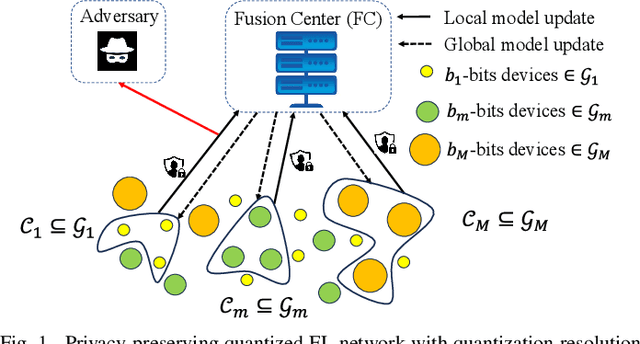
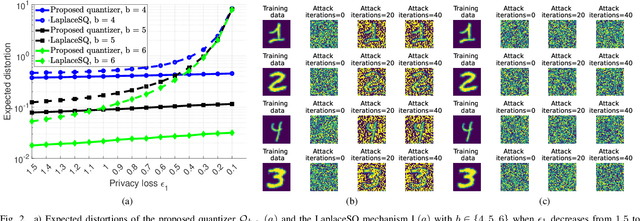
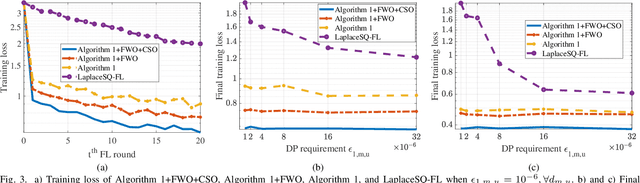
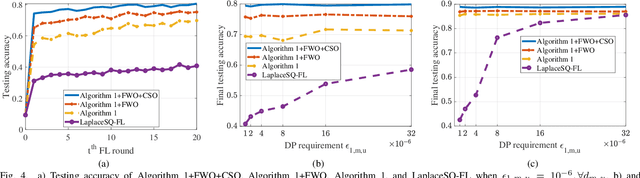
Federated learning (FL) has emerged as a promising paradigm for distributed machine learning, enabling collaborative training of a global model across multiple local devices without requiring them to share raw data. Despite its advancements, FL is limited by factors such as: (i) privacy risks arising from the unprotected transmission of local model updates to the fusion center (FC) and (ii) decreased learning utility caused by heterogeneity in model quantization resolution across participating devices. Prior work typically addresses only one of these challenges because maintaining learning utility under both privacy risks and quantization heterogeneity is a non-trivial task. In this paper, our aim is therefore to improve the learning utility of a privacy-preserving FL that allows clusters of devices with different quantization resolutions to participate in each FL round. Specifically, we introduce a novel stochastic quantizer (SQ) that is designed to simultaneously achieve differential privacy (DP) and minimum quantization error. Notably, the proposed SQ guarantees bounded distortion, unlike other DP approaches. To address quantization heterogeneity, we introduce a cluster size optimization technique combined with a linear fusion approach to enhance model aggregation accuracy. Numerical simulations validate the benefits of our approach in terms of privacy protection and learning utility compared to the conventional LaplaceSQ-FL algorithm.
Robust Activity Detection for Massive Random Access
May 21, 2025Massive machine-type communications (mMTC) are fundamental to the Internet of Things (IoT) framework in future wireless networks, involving the connection of a vast number of devices with sporadic transmission patterns. Traditional device activity detection (AD) methods are typically developed for Gaussian noise, but their performance may deteriorate when these conditions are not met, particularly in the presence of heavy-tailed impulsive noise. In this paper, we propose robust statistical techniques for AD that do not rely on the Gaussian assumption and replace the Gaussian loss function with robust loss functions that can effectively mitigate the impact of heavy-tailed noise and outliers. First, we prove that the coordinate-wise (conditional) objective function is geodesically convex and derive a fixed-point (FP) algorithm for minimizing it, along with convergence guarantees. Building on the FP algorithm, we propose two robust algorithms for solving the full (unconditional) objective function: a coordinate-wise optimization algorithm (RCWO) and a greedy covariance learning-based matching pursuit algorithm (RCL-MP). Numerical experiments demonstrate that the proposed methods significantly outperform existing algorithms in scenarios with non-Gaussian noise, achieving higher detection accuracy and robustness.
SINR Maximizing Distributionally Robust Adaptive Beamforming
May 21, 2025


This paper addresses the robust adaptive beamforming (RAB) problem via the worst-case signal-to-interference-plus-noise ratio (SINR) maximization over distributional uncertainty sets for the random interference-plus-noise covariance (INC) matrix and desired signal steering vector. Our study explores two distinct uncertainty sets for the INC matrix and three for the steering vector. The uncertainty sets of the INC matrix account for the support and the positive semidefinite (PSD) mean of the distribution, as well as a similarity constraint on the mean. The uncertainty sets for the steering vector consist of the constraints on the first- and second-order moments of its associated probability distribution. The RAB problem is formulated as the minimization of the worst-case expected value of the SINR denominator over any distribution within the uncertainty set of the INC matrix, subject to the condition that the expected value of the numerator is greater than or equal to one for every distribution within the uncertainty set of the steering vector. By leveraging the strong duality of linear conic programming, this RAB problem is reformulated as a quadratic matrix inequality problem. Subsequently, it is addressed by iteratively solving a sequence of linear matrix inequality relaxation problems, incorporating a penalty term for the rank-one PSD matrix constraint. We further analyze the convergence of the iterative algorithm. The proposed robust beamforming approach is validated through simulation examples, which illustrate improved performance in terms of the array output SINR.
AI-Empowered Integrated Sensing and Communications
Apr 17, 2025Integrating sensing and communication (ISAC) can help overcome the challenges of limited spectrum and expensive hardware, leading to improved energy and cost efficiency. While full cooperation between sensing and communication can result in significant performance gains, achieving optimal performance requires efficient designs of unified waveforms and beamformers for joint sensing and communication. Sophisticated statistical signal processing and multi-objective optimization techniques are necessary to balance the competing design requirements of joint sensing and communication tasks. Since model-based analytical approaches may be suboptimal or overly complex, deep learning emerges as a powerful tool for developing data-driven signal processing algorithms, particularly when optimal algorithms are unknown or when known algorithms are too complex for real-time implementation. Unified waveform and beamformer design problems for ISAC fall into this category, where fundamental design trade-offs exist between sensing and communication performance metrics, and the underlying models may be inadequate or incomplete. This article explores the application of artificial intelligence (AI) in ISAC designs to enhance efficiency and reduce complexity. We emphasize the integration benefits through AI-driven ISAC designs, prioritizing the development of unified waveforms, constellations, and beamforming strategies for both sensing and communication. To illustrate the practical potential of AI-driven ISAC, we present two case studies on waveform and beamforming design, demonstrating how unsupervised learning and neural network-based optimization can effectively balance performance, complexity, and implementation constraints.
Pilot Contamination Aware Transformer for Downlink Power Control in Cell-Free Massive MIMO Networks
Nov 28, 2024Learning-based downlink power control in cell-free massive multiple-input multiple-output (CFmMIMO) systems offers a promising alternative to conventional iterative optimization algorithms, which are computationally intensive due to online iterative steps. Existing learning-based methods, however, often fail to exploit the intrinsic structure of channel data and neglect pilot allocation information, leading to suboptimal performance, especially in large-scale networks with many users. This paper introduces the pilot contamination-aware power control (PAPC) transformer neural network, a novel approach that integrates pilot allocation data into the network, effectively handling pilot contamination scenarios. PAPC employs the attention mechanism with a custom masking technique to utilize structural information and pilot data. The architecture includes tailored preprocessing and post-processing stages for efficient feature extraction and adherence to power constraints. Trained in an unsupervised learning framework, PAPC is evaluated against the accelerated proximal gradient (APG) algorithm, showing comparable spectral efficiency fairness performance while significantly improving computational efficiency. Simulations demonstrate PAPC's superior performance over fully connected networks (FCNs) that lack pilot information, its scalability to large-scale CFmMIMO networks, and its computational efficiency improvement over APG. Additionally, by employing padding techniques, PAPC adapts to the dynamically varying number of users without retraining.
AdaBoost-Based Efficient Channel Estimation and Data Detection in One-Bit Massive MIMO
Mar 01, 2024The use of one-bit analog-to-digital converter (ADC) has been considered as a viable alternative to high resolution counterparts in realizing and commercializing massive multiple-input multiple-output (MIMO) systems. However, the issue of discarding the amplitude information by one-bit quantizers has to be compensated. Thus, carefully tailored methods need to be developed for one-bit channel estimation and data detection as the conventional ones cannot be used. To address these issues, the problems of one-bit channel estimation and data detection for MIMO orthogonal frequency division multiplexing (OFDM) system that operates over uncorrelated frequency selective channels are investigated here. We first develop channel estimators that exploit Gaussian discriminant analysis (GDA) classifier and approximated versions of it as the so-called weak classifiers in an adaptive boosting (AdaBoost) approach. Particularly, the combination of the approximated GDA classifiers with AdaBoost offers the benefit of scalability with the linear order of computations, which is critical in massive MIMO-OFDM systems. We then take advantage of the same idea for proposing the data detectors. Numerical results validate the efficiency of the proposed channel estimators and data detectors compared to other methods. They show comparable/better performance to that of the state-of-the-art methods, but require dramatically lower computational complexities and run times.