 Add to Chrome
 Add to Firefox
 Add to Edge
Graph Machine Learning: An Opportunity for Power Systems
Aug 17, 2026
Modern power systems face growing operational complexity driven by the integration of renewable energy sources, decentralization, and the need for real-time decision-making across a wide range of timescales. Addressing these challenges traditionally relies on model-based methods that, while accurate, can be too slow for operational demands. Machine learning (ML) has therefore emerged as a faster, data-driven alternative. As grid topology plays a central role in power system operation, graph machine learning (GML) methods offer a natural framework for incorporating topological dependencies as an inductive bias. We survey nearly 800 papers at the intersection of GML and power systems, covering forecasting, state estimation, optimization, control, fault diagnosis, and cybersecurity. Power systems constitute an unusually rich benchmark setting for GML, as they combine hard physical constraints, multi-scale dynamics, safety-critical requirements, and scarce labeled data within a single, well-defined domain. Conversely, power systems can benefit from utilizing GML to complement classical solvers, as GML provide scalable, topology-aware approximations with promising generalization and computational efficiency. We identify open challenges, including limited real-world deployment and the need for interpretable models in safety-critical settings. Despite the rapidly growing number of publications, standardized benchmarks and open datasets remain scarce, leaving many results difficult to reproduce and undermining the long-term scientific credibility of the field. We further derive a structured requirements catalog for ML-ready power grid benchmarks, intended to guide future dataset development and improve reproducibility across studies. We call on the community to prioritize dedicated benchmark studies and the release of open datasets and models.

A Benchmark for Electrical Load Forecasting Across Grid Levels: Time-Series Transformers Outperform Established Methods
Jul 17, 2026Accurate load forecasting at multiple grid levels is essential for future smart grids, ranging from aggregated control area forecasts for balancing supply and demand to forecasts of individual end-consumer loads for demand-side management and energy management systems. We present a comprehensive benchmark for load forecasting across grid levels, comprising three datasets that represent a transmission system operator control area, low-voltage grid feeders, and individual end consumers. We evaluate ten methods for short-term load forecasting and find that Transformer-based approaches consistently outperform established methods, reducing forecast error by 6.6-10.7 %. To analyze the impact of architectural design, we introduce YAformer, a flexible Transformer architecture that integrates modifications from prior work and is optimized via hyperparameter optimization. However, the standard Transformer achieves superior performance, suggesting that these architectural modifications are not required for accurate load forecasting. We further evaluate the Transformer-based time-series foundation model Chronos-2, which demonstrates competitive zero-shot performance on two datasets but fails to accurately capture special events in the TSO data. Detailed analyses reveal model-specific strengths and weaknesses, and ablation studies highlight the importance of long input contexts, covariates and continuous retraining - aspects that are often overlooked in the time-series forecasting literature.
Explainable time-series forecasting with sampling-free SHAP for Transformers
Dec 23, 2025
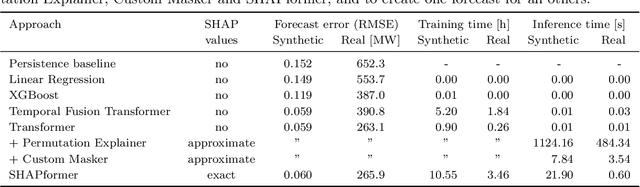
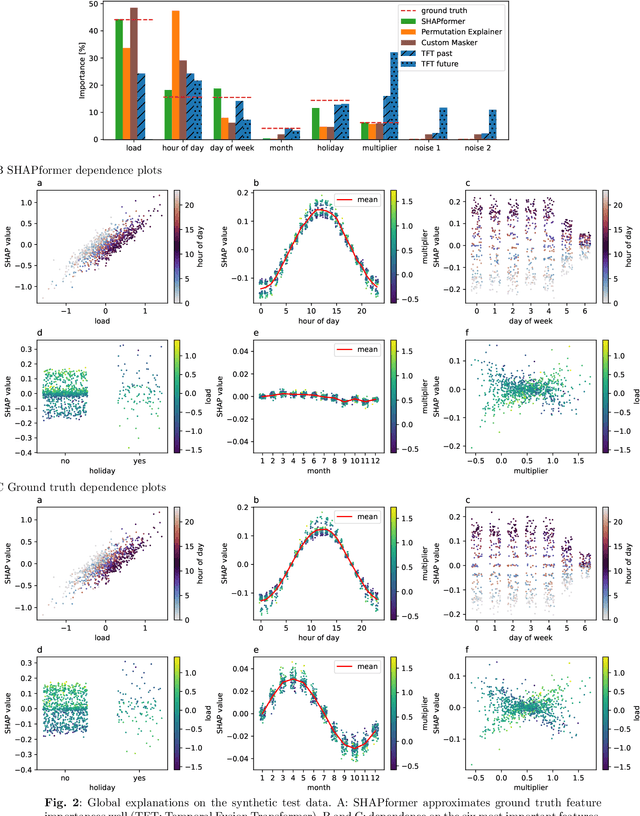
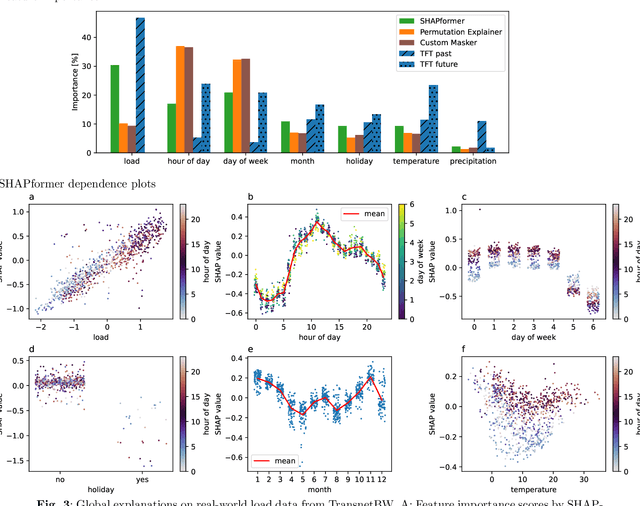
Time-series forecasts are essential for planning and decision-making in many domains. Explainability is key to building user trust and meeting transparency requirements. Shapley Additive Explanations (SHAP) is a popular explainable AI framework, but it lacks efficient implementations for time series and often assumes feature independence when sampling counterfactuals. We introduce SHAPformer, an accurate, fast and sampling-free explainable time-series forecasting model based on the Transformer architecture. It leverages attention manipulation to make predictions based on feature subsets. SHAPformer generates explanations in under one second, several orders of magnitude faster than the SHAP Permutation Explainer. On synthetic data with ground truth explanations, SHAPformer provides explanations that are true to the data. Applied to real-world electrical load data, it achieves competitive predictive performance and delivers meaningful local and global insights, such as identifying the past load as the key predictor and revealing a distinct model behavior during the Christmas period.
Probabilistic Forecasting of Day-Ahead Electricity Prices and their Volatility with LSTMs
Oct 05, 2023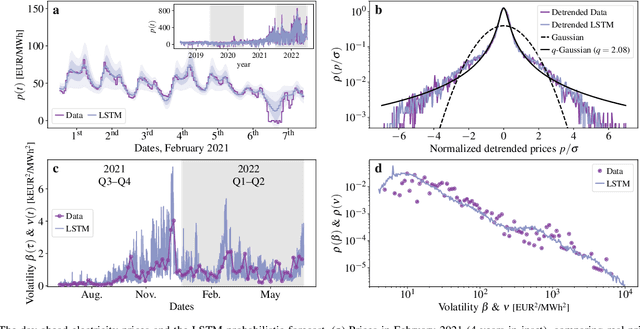
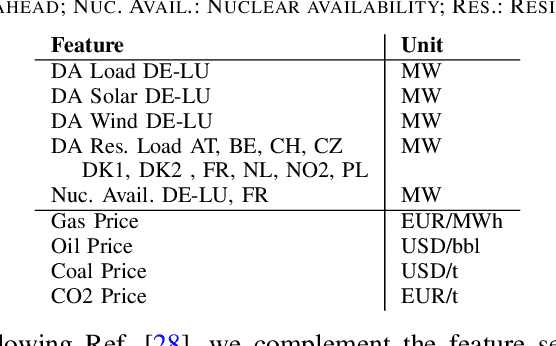
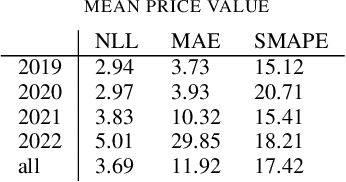
Accurate forecasts of electricity prices are crucial for the management of electric power systems and the development of smart applications. European electricity prices have risen substantially and became highly volatile after the Russian invasion of Ukraine, challenging established forecasting methods. Here, we present a Long Short-Term Memory (LSTM) model for the German-Luxembourg day-ahead electricity prices addressing these challenges. The recurrent structure of the LSTM allows the model to adapt to trends, while the joint prediction of both mean and standard deviation enables a probabilistic prediction. Using a physics-inspired approach - superstatistics - to derive an explanation for the statistics of prices, we show that the LSTM model faithfully reproduces both prices and their volatility.
Identifying drivers and mitigators for congestion and redispatch in the German electric power system with explainable AI
Jul 24, 2023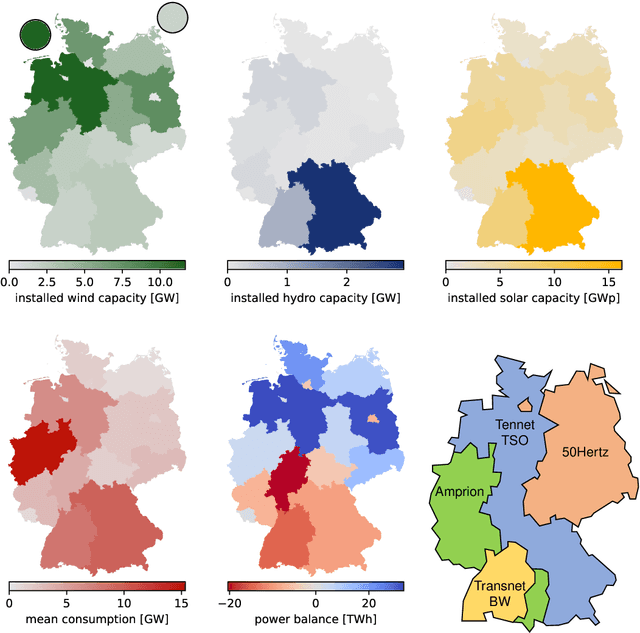
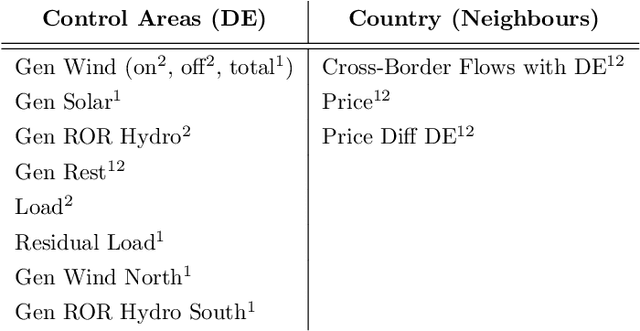
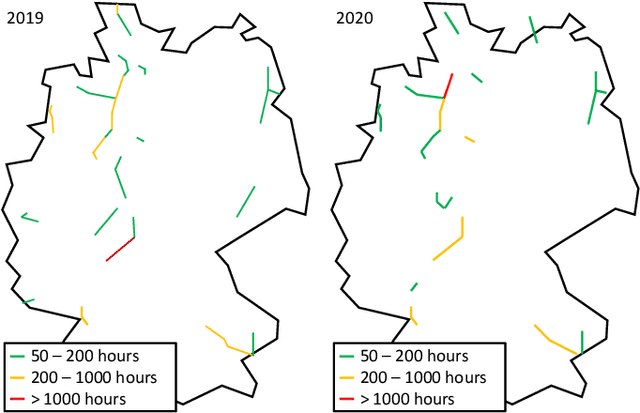
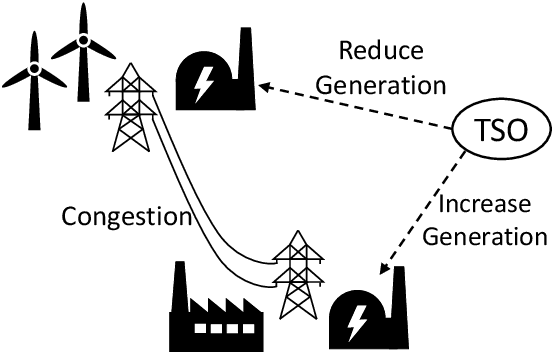
The transition to a sustainable energy supply challenges the operation of electric power systems in manifold ways. Transmission grid loads increase as wind and solar power are often installed far away from the consumers. In extreme cases, system operators must intervene via countertrading or redispatch to ensure grid stability. In this article, we provide a data-driven analysis of congestion in the German transmission grid. We develop an explainable machine learning model to predict the volume of redispatch and countertrade on an hourly basis. The model reveals factors that drive or mitigate grid congestion and quantifies their impact. We show that, as expected, wind power generation is the main driver, but hydropower and cross-border electricity trading also play an essential role. Solar power, on the other hand, has no mitigating effect. Our results suggest that a change to the market design would alleviate congestion.
MICP-L: Fast parallel simulative Range Sensor to Mesh registration for Robot Localization
Oct 25, 2022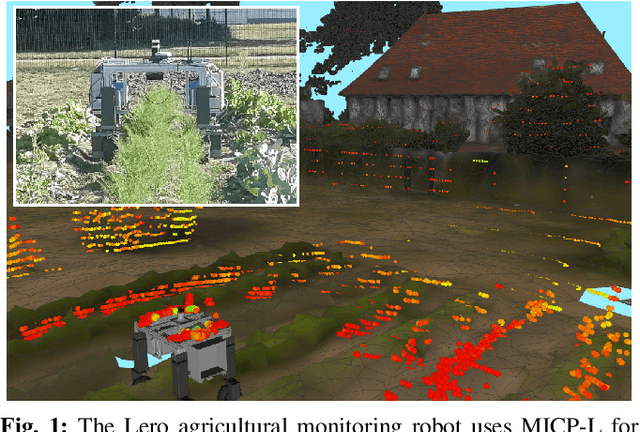
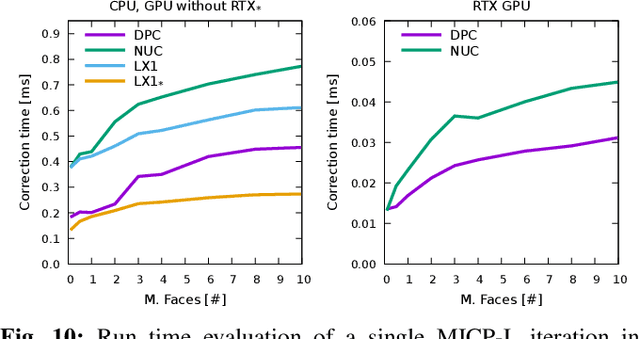
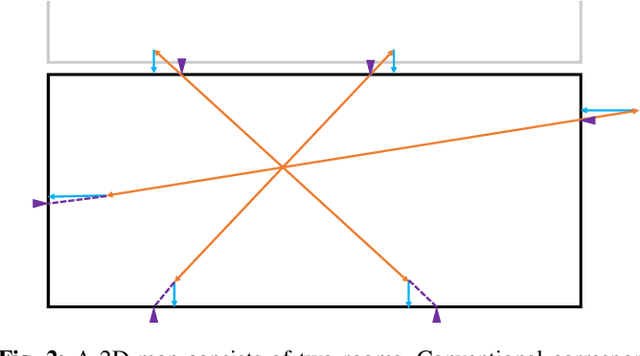
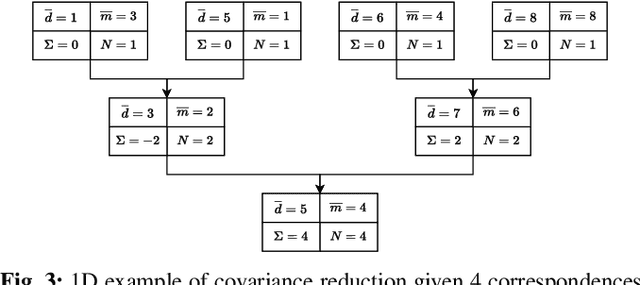
Triangle mesh-based maps have proven to be a powerful 3D representation of the environment, allowing robots to navigate using universal methods, indoors as well as in challenging outdoor environments with tunnels, hills and varying slopes. However, any robot that navigates autonomously necessarily requires stable, accurate, and continuous localization in such a mesh map where it plans its paths and missions. We present MICP-L, a novel and very fast \textit{Mesh ICP Localization} method that can register one or more range sensors directly on a triangle mesh map to continuously localize a robot, determining its 6D pose in the map. Correspondences between a range sensor and the mesh are found through simulations accelerated with the latest RTX hardware. With MICP-L, a correction can be performed quickly and in parallel even with combined data from different range sensor models. With this work, we aim to significantly advance the development in the field of mesh-based environment representation for autonomous robotic applications. MICP-L is open source and fully integrated with ROS and tf.
Revealing interactions between HVDC cross-area flows and frequency stability with explainable AI
Apr 22, 2022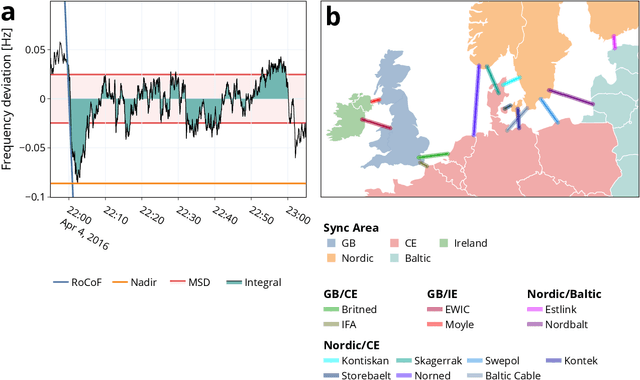
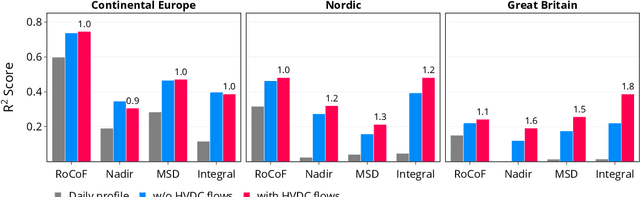
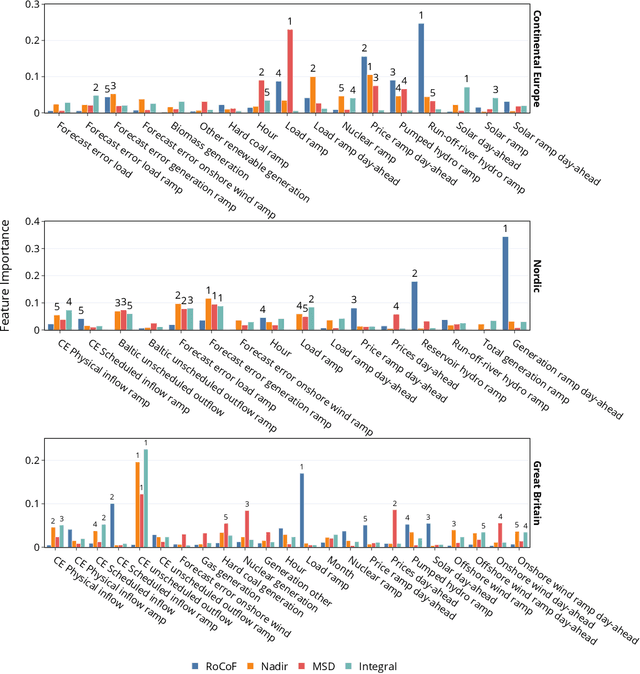
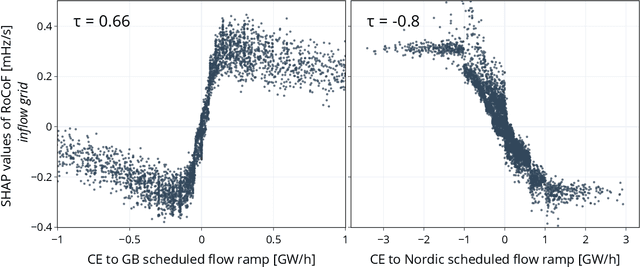
The energy transition introduces more volatile energy sources into the power grids. In this context, power transfer between different synchronous areas through High Voltage Direct Current (HVDC) links becomes increasingly important. Such links can balance volatile generation by enabling long-distance transport or by leveraging their fast control behavior. Here, we investigate the interaction of power imbalances - represented through the power grid frequency - and power flows on HVDC links between synchronous areas in Europe. We use explainable machine learning to identify key dependencies and disentangle the interaction of critical features. Our results show that market-based HVDC flows introduce deterministic frequency deviations, which however can be mitigated through strict ramping limits. Moreover, varying HVDC operation modes strongly affect the interaction with the grid. In particular, we show that load-frequency control via HVDC links can both have control-like or disturbance-like impacts on frequency stability.