 Add to Chrome
 Add to Firefox
 Add to Edge
Tomo-center: an AI-based rotation-axis center finder for synchrotron micro- and nano-tomography
Jul 10, 2026
Accurate determination of the rotation-axis position is a prerequisite for artifact-free reconstruction in parallel-beam synchrotron micro-tomography. Traditional approaches such as Vo's method rely on sinogram features that can fail for low-contrast or weakly absorbing specimens. We present a learning-based method that treats center selection as a binary classification problem, using a DINOv2-pretrained vision transformer aggregated with attention-based multiple-instance learning, fine-tuned end-to-end on tomographic images. At inference time, the proposed algorithm was applied to a stack of tomograms reconstructed at a sweep of candidate centers to select the optimal center for reconstruction. We tested the estimation accuracy of the proposed method on two independent data sources and consistently achieved a mean absolute error of below 1 pixel. We also tested the method robustness to sparse or noisy acquisitions with the same datasets and demonstrated consistent performance when the number of projections was reduced by a factor of up to 10 or the blank scan factor of the underlying Poisson's noise was increased to 10. We also illustrated the interpretability of the proposed method by mapping out the relative contributions of continuous spatial features to the overall classification task. This method, delivered as tomo-center, an open-source command-line tool, has been integrated into several tomography software packages to assist experiments during the routine beamline operations.

Deep learning-based spatio-temporal fusion for high-fidelity ultra-high-speed x-ray radiography
Nov 27, 2024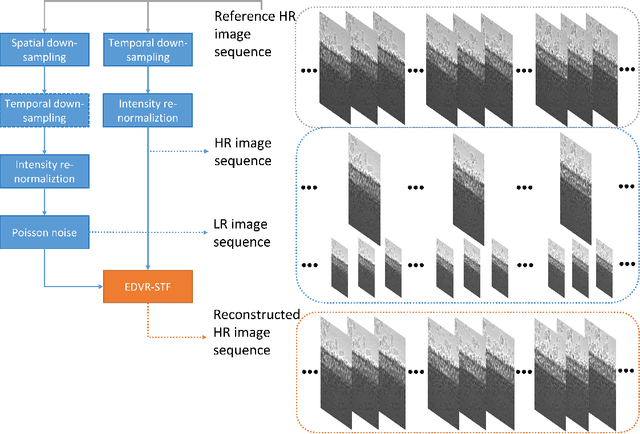
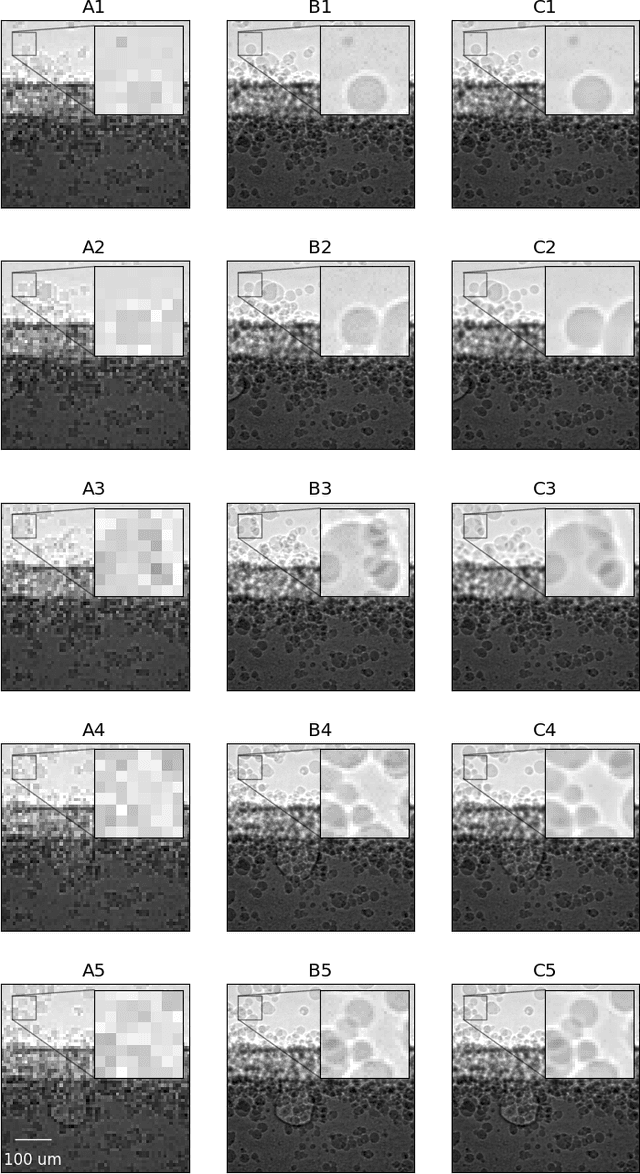
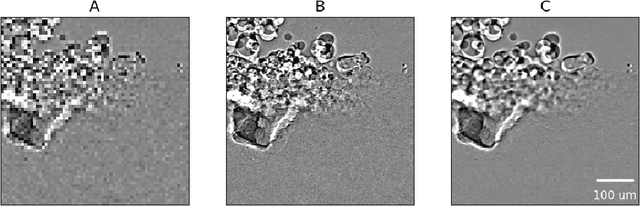
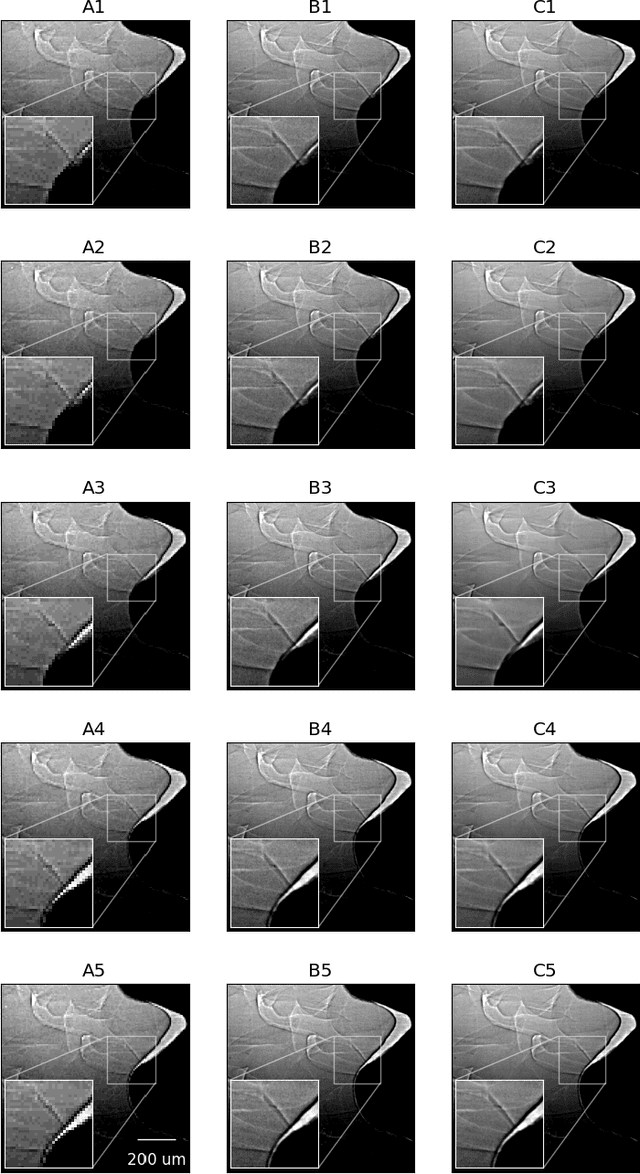
Full-field ultra-high-speed (UHS) x-ray imaging experiments have been well established to characterize various processes and phenomena. However, the potential of UHS experiments through the joint acquisition of x-ray videos with distinct configurations has not been fully exploited. In this paper, we investigate the use of a deep learning-based spatio-temporal fusion (STF) framework to fuse two complementary sequences of x-ray images and reconstruct the target image sequence with high spatial resolution, high frame rate, and high fidelity. We applied a transfer learning strategy to train the model and compared the peak signal-to-noise ratio (PSNR), average absolute difference (AAD), and structural similarity (SSIM) of the proposed framework on two independent x-ray datasets with those obtained from a baseline deep learning model, a Bayesian fusion framework, and the bicubic interpolation method. The proposed framework outperformed the other methods with various configurations of the input frame separations and image noise levels. With 3 subsequent images from the low resolution (LR) sequence of a 4-time lower spatial resolution and another 2 images from the high resolution (HR) sequence of a 20-time lower frame rate, the proposed approach achieved an average PSNR of 37.57 dB and 35.15 dB, respectively. When coupled with the appropriate combination of high-speed cameras, the proposed approach will enhance the performance and therefore scientific value of the UHS x-ray imaging experiments.
Bayesian Joint Spike-and-Slab Graphical Lasso
May 18, 2018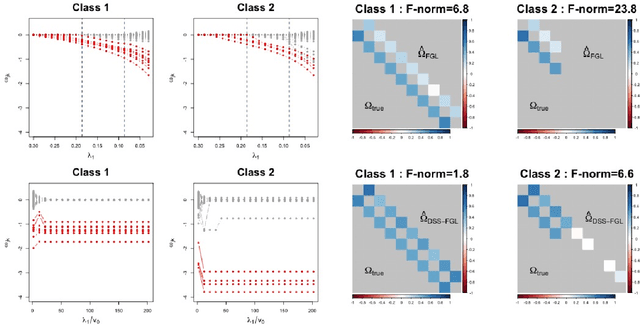
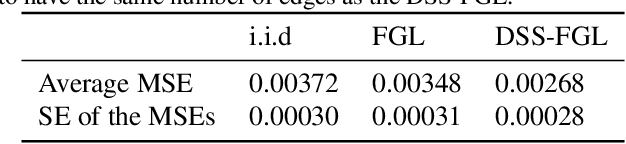
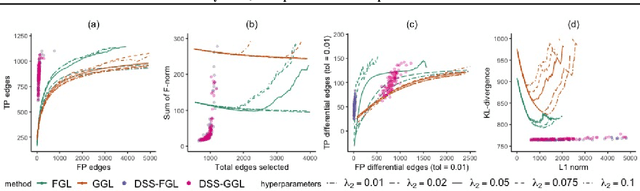
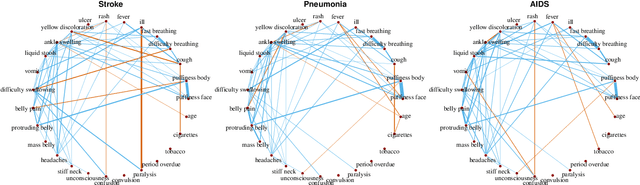
In this article, we propose a new class of priors for Bayesian inference with multiple Gaussian graphical models. We introduce fully Bayesian treatments of two popular procedures, the group graphical lasso and the fused graphical lasso, and extend them to a continuous spike-and-slab framework to allow self-adaptive shrinkage and model selection simultaneously. We develop an EM algorithm that performs fast and dynamic explorations of posterior modes. Our approach selects sparse models efficiently with substantially smaller bias than would be induced by alternative regularization procedures. The performance of the proposed methods are demonstrated through simulation and two real data examples.