 Add to Chrome
 Add to Firefox
 Add to Edge
Tomo-center: an AI-based rotation-axis center finder for synchrotron micro- and nano-tomography
Jul 10, 2026
Accurate determination of the rotation-axis position is a prerequisite for artifact-free reconstruction in parallel-beam synchrotron micro-tomography. Traditional approaches such as Vo's method rely on sinogram features that can fail for low-contrast or weakly absorbing specimens. We present a learning-based method that treats center selection as a binary classification problem, using a DINOv2-pretrained vision transformer aggregated with attention-based multiple-instance learning, fine-tuned end-to-end on tomographic images. At inference time, the proposed algorithm was applied to a stack of tomograms reconstructed at a sweep of candidate centers to select the optimal center for reconstruction. We tested the estimation accuracy of the proposed method on two independent data sources and consistently achieved a mean absolute error of below 1 pixel. We also tested the method robustness to sparse or noisy acquisitions with the same datasets and demonstrated consistent performance when the number of projections was reduced by a factor of up to 10 or the blank scan factor of the underlying Poisson's noise was increased to 10. We also illustrated the interpretability of the proposed method by mapping out the relative contributions of continuous spatial features to the overall classification task. This method, delivered as tomo-center, an open-source command-line tool, has been integrated into several tomography software packages to assist experiments during the routine beamline operations.

Murine AI excels at cats and cheese: Structural differences between human and mouse neurons and their implementation in generative AIs
Oct 28, 2024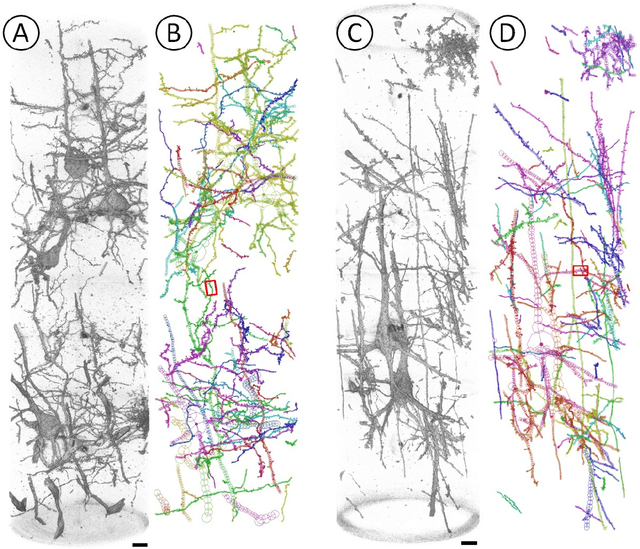
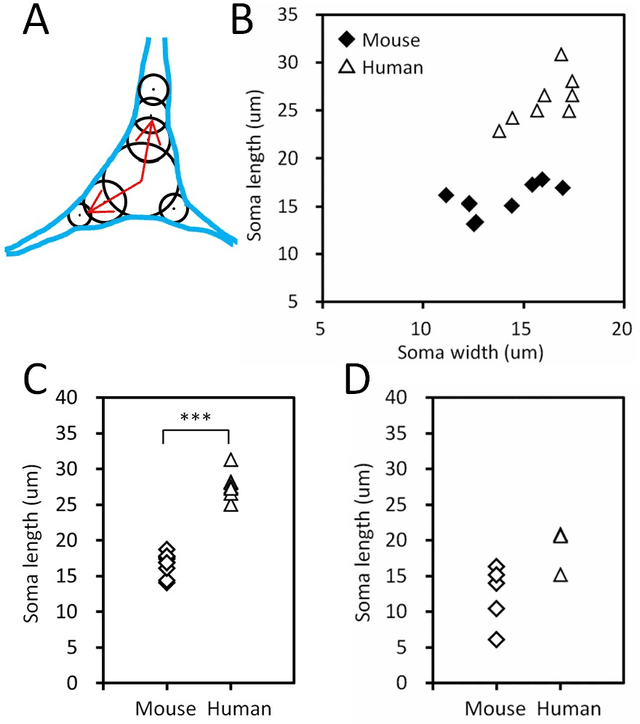
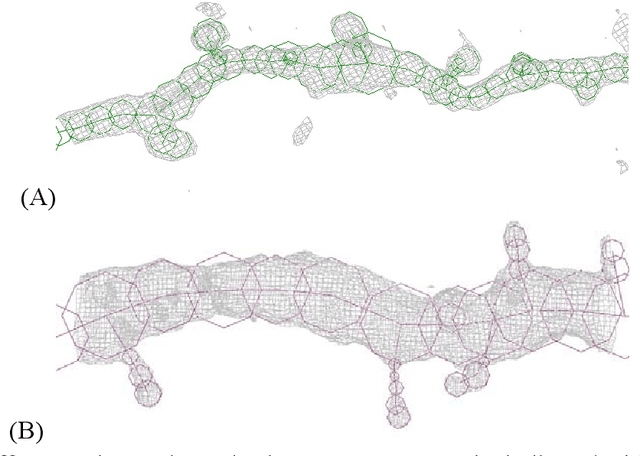
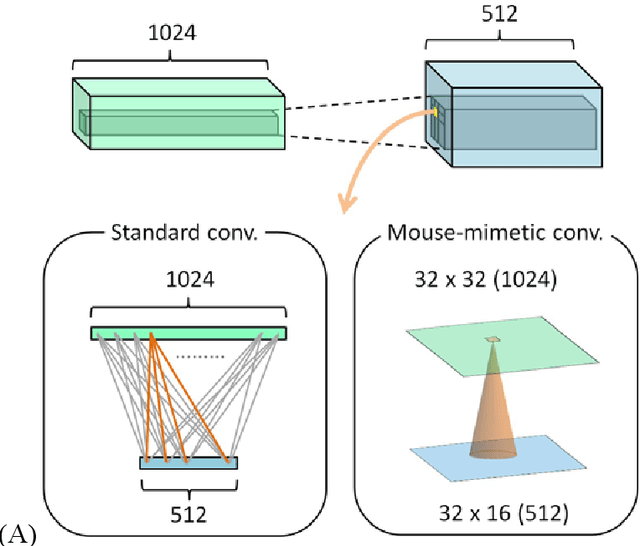
Mouse and human brains have different functions that depend on their neuronal networks. In this study, we analyzed nanometer-scale three-dimensional structures of brain tissues of the mouse medial prefrontal cortex and compared them with structures of the human anterior cingulate cortex. The obtained results indicated that mouse neuronal somata are smaller and neurites are thinner than those of human neurons. These structural features allow mouse neurons to be integrated in the limited space of the brain, though thin neurites should suppress distal connections according to cable theory. We implemented this mouse-mimetic constraint in convolutional layers of a generative adversarial network (GAN) and a denoising diffusion implicit model (DDIM), which were then subjected to image generation tasks using photo datasets of cat faces, cheese, human faces, and birds. The mouse-mimetic GAN outperformed a standard GAN in the image generation task using the cat faces and cheese photo datasets, but underperformed for human faces and birds. The mouse-mimetic DDIM gave similar results, suggesting that the nature of the datasets affected the results. Analyses of the four datasets indicated differences in their image entropy, which should influence the number of parameters required for image generation. The preferences of the mouse-mimetic AIs coincided with the impressions commonly associated with mice. The relationship between the neuronal network and brain function should be investigated by implementing other biological findings in artificial neural networks.
X-ray nano-holotomography reconstruction with simultaneous probe retrieval
Jul 29, 2024In conventional tomographic reconstruction, the pre-processing step includes flat-field correction, where each sample projection on the detector is divided by a reference image taken without the sample. When using coherent X-rays as probe, this approach overlooks the phase component of the illumination field (probe), leading to artifacts in phase-retrieved projection images, which are then propagated to the reconstructed 3D sample representation. The problem intensifies in nano-holotomography with focusing optics, that due to various imperfections creates high-frequency components in the probe function. Here, we present a new iterative reconstruction scheme for holotomography, simultaneously retrieving the complex-valued probe function. Implemented on GPUs, this algorithm results in 3D reconstruction resolving twice thinner layers in a 3D ALD standard sample measured using nano-holotomography.
Scalable and accurate multi-GPU based image reconstruction of large-scale ptychography data
Jun 14, 2021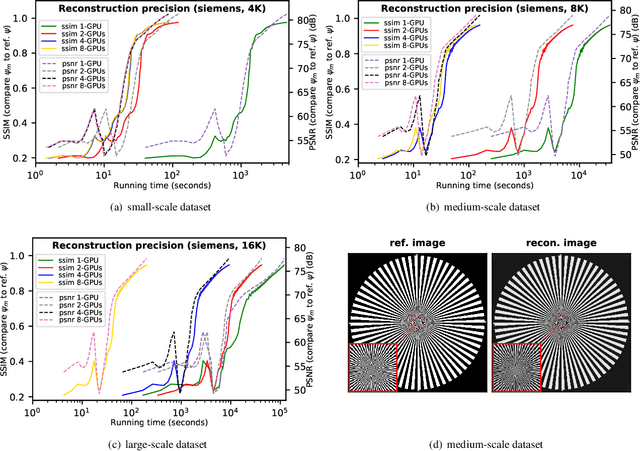
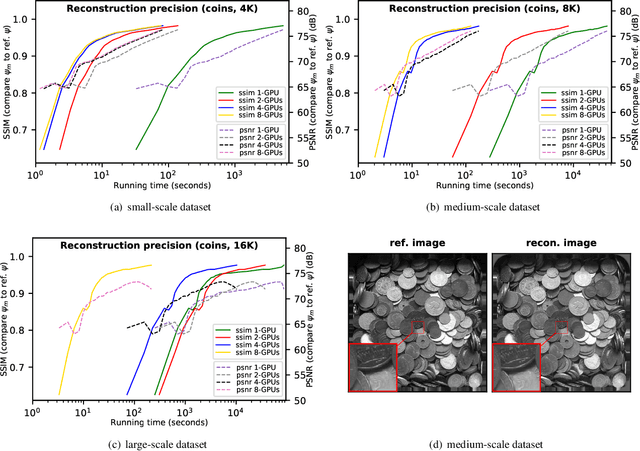
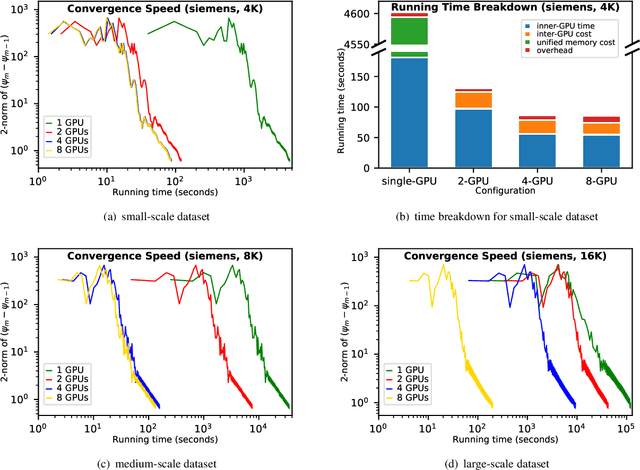
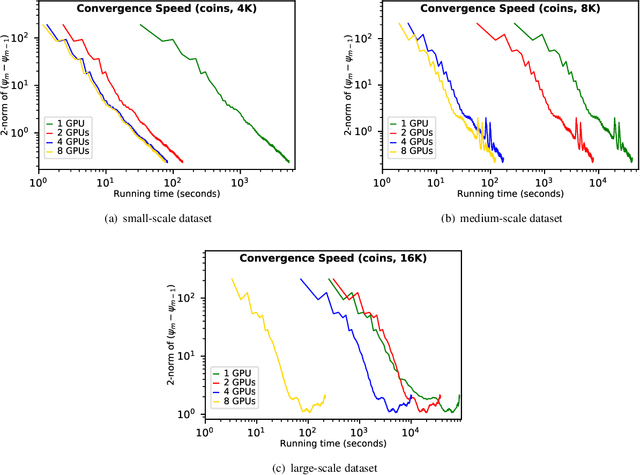
While the advances in synchrotron light sources, together with the development of focusing optics and detectors, allow nanoscale ptychographic imaging of materials and biological specimens, the corresponding experiments can yield terabyte-scale large volumes of data that can impose a heavy burden on the computing platform. While Graphical Processing Units (GPUs) provide high performance for such large-scale ptychography datasets, a single GPU is typically insufficient for analysis and reconstruction. Several existing works have considered leveraging multiple GPUs to accelerate the ptychographic reconstruction. However, they utilize only Message Passing Interface (MPI) to handle the communications between GPUs. It poses inefficiency for the configuration that has multiple GPUs in a single node, especially while processing a single large projection, since it provides no optimizations to handle the heterogeneous GPU interconnections containing both low-speed links, e.g., PCIe, and high-speed links, e.g., NVLink. In this paper, we provide a multi-GPU implementation that can effectively solve large-scale ptychographic reconstruction problem with optimized performance on intra-node multi-GPU. We focus on the conventional maximum-likelihood reconstruction problem using conjugate-gradient (CG) for the solution and propose a novel hybrid parallelization model to address the performance bottlenecks in CG solver. Accordingly, we develop a tool called PtyGer (Ptychographic GPU(multiple)-based reconstruction), implementing our hybrid parallelization model design. The comprehensive evaluation verifies that PtyGer can fully preserve the original algorithm's accuracy while achieving outstanding intra-node GPU scalability.