 Add to Chrome
 Add to Firefox
 Add to Edge
DAIF: A Data-Driven Intermediate Fusion Framework for Multimodal Supervised Learning via Approximate Message Passing
Aug 03, 2026
Multimodal supervised learning seeks to leverage multiple heterogeneous data sources to improve predictive performance. A central challenge is determining the fusion granularity across modalities: over-integration may amplify noise while under-integration fails to exploit cross-modal dependence. Existing approaches rely on pre-specified fusion architectures, from early to late fusion, that may not adapt to the underlying dependence structure among modalities. We propose DAIF, a data adaptive intermediate fusion framework that combines random matrix theory and non-parametric dependence measures to learn fusion structure directly from data. We operate under a Bayesian multimodal factor model where the prior on the latent factors determines the cross-modal dependence. Our method clusters modalities based on estimated intermodal dependence, then performs clusterwise empirical Bayes estimation of the priors. These estimated priors are used to construct denoisers within an approximate message passing (AMP) framework, yielding denoised low-dimensional features that borrow strength across related modalities while preserving modality-specific signal. The resulting embeddings are used for downstream supervised prediction. We evaluate the framework through simulations under varying dependence structures and signal regimes, comparing against several benchmark methods, and demonstrate its practical utility on two multimodal datasets, namely a trimodal TEA-seq dataset (Swanson et al., 2021) and TCGA-BRCA dataset (Goldman et al., 2020). In the first example, we predict the expression level of a T-cell differentiation marker protein and in the second case we analyze patient survival prediction based on multimodal information. Our method competes with or outperforms the state-of-the-art techniques in both prediction problems, demonstrating its versatility across diverse supervised learning tasks.

Transfer Learning in High-Dimensional Clustering: Minimax Thresholds and Applications in Single-Cell Data
Jul 27, 2026Clustering is a fundamental problem in statistics, with applications across many scientific disciplines. In many modern applications involving clustering, the primary dataset (the target data) is accompanied by related datasets (the source data). Transferring information from such sources may improve clustering accuracy in the target, making transfer learning for clustering practically important. Despite recent progress, the conditions under which source data improve target clustering remain unclear in high-dimensional settings, even for the canonical Gaussian mixture model. In this paper, we study the clustering problem in a two-community Gaussian mixture model where relatedness is captured by the geometric alignment of the target and source cluster means. We develop a minimax-optimal transfer-assisted clustering procedure and characterize, up to logarithmic factors, the phase transition for consistent target clustering in terms of the signal-to-noise ratios, sample sizes, ambient dimension, and degree of alignment between the datasets. The technique is also extended to adaptively choose between the target-only or the source assisted clustering depending on the target signal strength. Furthermore, we also extend our techniques to accommodate multiple communities and and multiple source datasets. Extensive simulations and an analysis of a human lung single-cell RNA-sequencing atlas demonstrate the practical effectiveness of our methods.
Privacy utility trade offs for parameter estimation in degree heterogeneous higher order networks
Feb 03, 2026In sensitive applications involving relational datasets, protecting information about individual links from adversarial queries is of paramount importance. In many such settings, the available data are summarized solely through the degrees of the nodes in the network. We adopt the $β$ model, which is the prototypical statistical model adopted for this form of aggregated relational information, and study the problem of minimax-optimal parameter estimation under both local and central differential privacy constraints. We establish finite sample minimax lower bounds that characterize the precise dependence of the estimation risk on the network size and the privacy parameters, and we propose simple estimators that achieve these bounds up to constants and logarithmic factors under both local and central differential privacy frameworks. Our results provide the first comprehensive finite sample characterization of privacy utility trade offs for parameter estimation in $β$ models, addressing the classical graph case and extending the analysis to higher order hypergraph models. We further demonstrate the effectiveness of our methods through experiments on synthetic data and a real world communication network.
Clustering by Denoising: Latent plug-and-play diffusion for single-cell data
Oct 26, 2025Single-cell RNA sequencing (scRNA-seq) enables the study of cellular heterogeneity. Yet, clustering accuracy, and with it downstream analyses based on cell labels, remain challenging due to measurement noise and biological variability. In standard latent spaces (e.g., obtained through PCA), data from different cell types can be projected close together, making accurate clustering difficult. We introduce a latent plug-and-play diffusion framework that separates the observation and denoising space. This separation is operationalized through a novel Gibbs sampling procedure: the learned diffusion prior is applied in a low-dimensional latent space to perform denoising, while to steer this process, noise is reintroduced into the original high-dimensional observation space. This unique "input-space steering" ensures the denoising trajectory remains faithful to the original data structure. Our approach offers three key advantages: (1) adaptive noise handling via a tunable balance between prior and observed data; (2) uncertainty quantification through principled uncertainty estimates for downstream analysis; and (3) generalizable denoising by leveraging clean reference data to denoise noisier datasets, and via averaging, improve quality beyond the training set. We evaluate robustness on both synthetic and real single-cell genomics data. Our method improves clustering accuracy on synthetic data across varied noise levels and dataset shifts. On real-world single-cell data, our method demonstrates improved biological coherence in the resulting cell clusters, with cluster boundaries that better align with known cell type markers and developmental trajectories.
How Private is Your Attention? Bridging Privacy with In-Context Learning
Apr 22, 2025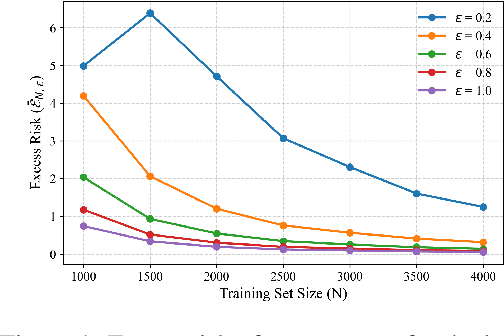
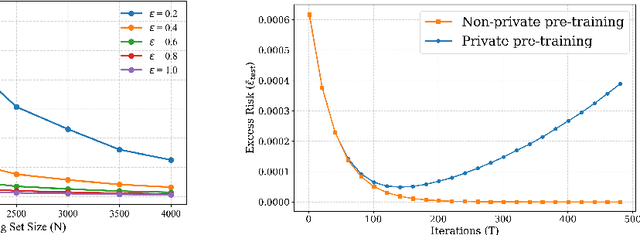
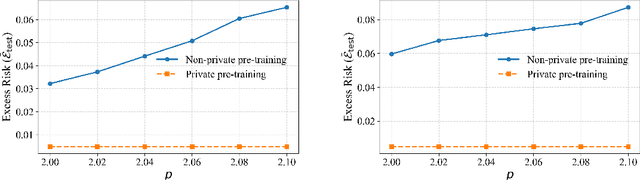
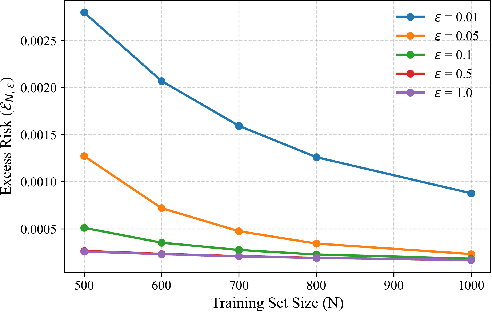
In-context learning (ICL)-the ability of transformer-based models to perform new tasks from examples provided at inference time-has emerged as a hallmark of modern language models. While recent works have investigated the mechanisms underlying ICL, its feasibility under formal privacy constraints remains largely unexplored. In this paper, we propose a differentially private pretraining algorithm for linear attention heads and present the first theoretical analysis of the privacy-accuracy trade-off for ICL in linear regression. Our results characterize the fundamental tension between optimization and privacy-induced noise, formally capturing behaviors observed in private training via iterative methods. Additionally, we show that our method is robust to adversarial perturbations of training prompts, unlike standard ridge regression. All theoretical findings are supported by extensive simulations across diverse settings.
Degree Heterogeneity in Higher-Order Networks: Inference in the Hypergraph $\boldsymbolβ$-Model
Jul 07, 2023The $\boldsymbol{\beta}$-model for random graphs is commonly used for representing pairwise interactions in a network with degree heterogeneity. Going beyond pairwise interactions, Stasi et al. (2014) introduced the hypergraph $\boldsymbol{\beta}$-model for capturing degree heterogeneity in networks with higher-order (multi-way) interactions. In this paper we initiate the rigorous study of the hypergraph $\boldsymbol{\beta}$-model with multiple layers, which allows for hyperedges of different sizes across the layers. To begin with, we derive the rates of convergence of the maximum likelihood (ML) estimate and establish their minimax rate optimality. We also derive the limiting distribution of the ML estimate and construct asymptotically valid confidence intervals for the model parameters. Next, we consider the goodness-of-fit problem in the hypergraph $\boldsymbol{\beta}$-model. Specifically, we establish the asymptotic normality of the likelihood ratio (LR) test under the null hypothesis, derive its detection threshold, and also its limiting power at the threshold. Interestingly, the detection threshold of the LR test turns out to be minimax optimal, that is, all tests are asymptotically powerless below this threshold. The theoretical results are further validated in numerical experiments. In addition to developing the theoretical framework for estimation and inference for hypergraph $\boldsymbol{\beta}$-models, the above results fill a number of gaps in the graph $\boldsymbol{\beta}$-model literature, such as the minimax optimality of the ML estimates and the non-null properties of the LR test, which, to the best of our knowledge, have not been studied before.
Bayes optimal learning in high-dimensional linear regression with network side information
Jun 09, 2023Supervised learning problems with side information in the form of a network arise frequently in applications in genomics, proteomics and neuroscience. For example, in genetic applications, the network side information can accurately capture background biological information on the intricate relations among the relevant genes. In this paper, we initiate a study of Bayes optimal learning in high-dimensional linear regression with network side information. To this end, we first introduce a simple generative model (called the Reg-Graph model) which posits a joint distribution for the supervised data and the observed network through a common set of latent parameters. Next, we introduce an iterative algorithm based on Approximate Message Passing (AMP) which is provably Bayes optimal under very general conditions. In addition, we characterize the limiting mutual information between the latent signal and the data observed, and thus precisely quantify the statistical impact of the network side information. Finally, supporting numerical experiments suggest that the introduced algorithm has excellent performance in finite samples.