 Add to Chrome
 Add to Firefox
 Add to Edge
Forget Less, Generalize More: Unifying Temporal and Structural Adaptation for Dynamic Graphs
May 28, 2026
Representation learning on dynamic graphs requires capturing complex dependencies that evolve across both time and structure. Existing approaches typically adopt fixed temporal decay schemes or predetermined structural propagation depths, limiting their ability to generalize across graphs with diverse interaction frequencies and topological characteristics. We propose Dual-Scale Retentive Dynamics (DSRD), a unified framework that maintains a retentive representation state encoding both temporal memory and structural context. DSRD introduces two key components: (i) a retentive state with dual-scale adaptation that jointly models temporal dynamics and structural propagation within a single recurrent formulation, and (ii) adaptive decay kernels with learnable time-sensitivity parameters that automatically balance short-term responsiveness and long-term retention based on the underlying interaction patterns. We provide theoretical analysis establishing the equivalence between event-wise parallel aggregation and efficient recurrent state updates, as well as stability and boundedness guarantees for the learned dynamics. Extensive experiments on 14 real-world benchmarks demonstrate that DSRD consistently achieves state-of-the-art performance on both link prediction and node classification tasks, with strong generalization across transductive and inductive settings.

Leveraging Large Language Models for Semantic Query Processing in a Scholarly Knowledge Graph
May 24, 2024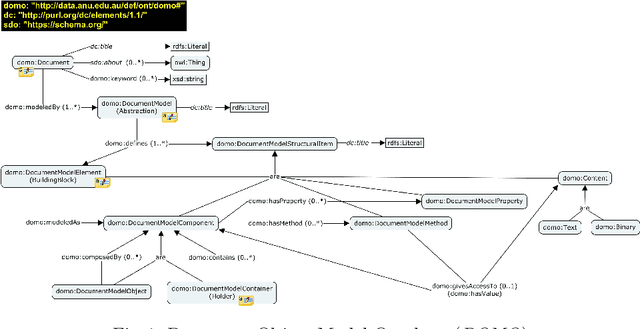
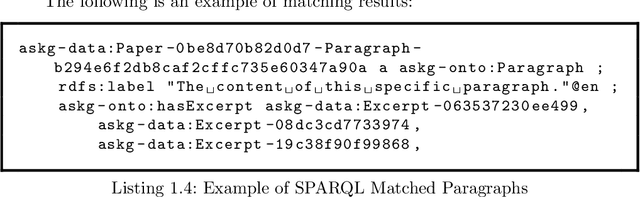
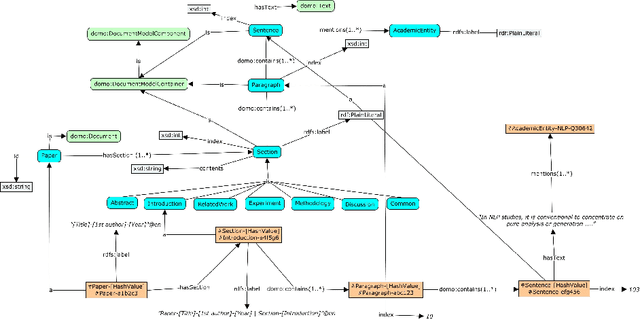
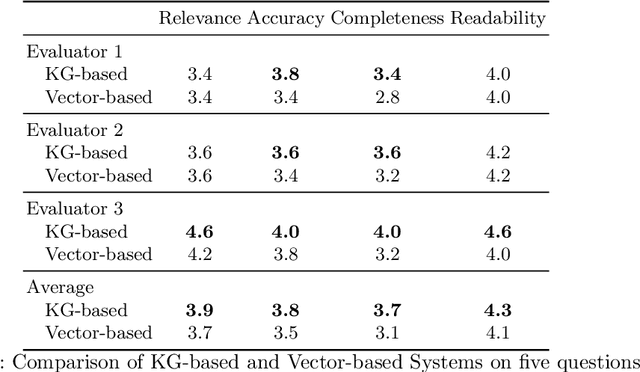
The proposed research aims to develop an innovative semantic query processing system that enables users to obtain comprehensive information about research works produced by Computer Science (CS) researchers at the Australian National University (ANU). The system integrates Large Language Models (LLMs) with the ANU Scholarly Knowledge Graph (ASKG), a structured repository of all research-related artifacts produced at ANU in the CS field. Each artifact and its parts are represented as textual nodes stored in a Knowledge Graph (KG). To address the limitations of traditional scholarly KG construction and utilization methods, which often fail to capture fine-grained details, we propose a novel framework that integrates the Deep Document Model (DDM) for comprehensive document representation and the KG-enhanced Query Processing (KGQP) for optimized complex query handling. DDM enables a fine-grained representation of the hierarchical structure and semantic relationships within academic papers, while KGQP leverages the KG structure to improve query accuracy and efficiency with LLMs. By combining the ASKG with LLMs, our approach enhances knowledge utilization and natural language understanding capabilities. The proposed system employs an automatic LLM-SPARQL fusion to retrieve relevant facts and textual nodes from the ASKG. Initial experiments demonstrate that our framework is superior to baseline methods in terms of accuracy retrieval and query efficiency. We showcase the practical application of our framework in academic research scenarios, highlighting its potential to revolutionize scholarly knowledge management and discovery. This work empowers researchers to acquire and utilize knowledge from documents more effectively and provides a foundation for developing precise and reliable interactions with LLMs.