 Add to Chrome
 Add to Firefox
 Add to Edge
From Global Benchmarks to Local Evaluations: Benchmarking LLMs for the German Public Sector
Aug 18, 2026
Public institutions face a persistent challenge in selecting LLMs suited to their specific context. Existing benchmarks, however, are of limited use as they primarily reflect English-language and US-centric settings, and often only evaluate task performance. In this paper, we present first results of MÖVE, a holistic evaluation framework for the German public sector, examining three rarely considered governance dimensions: energy consumption, provider transparency, and knowledge of German-party positions. Our results reveal significant trade-offs, with no single model excelling across all dimensions: estimated energy consumption varies more than 60-fold and is not explained by model size alone, information disclosure varies systematically across providers, and European models do not exhibit stronger knowledge of German party positions. Model selection for public institutions thus cannot rely on performance rankings alone. Instead, evaluations should also reflect the governance requirements of the deployment context.

MÖVE: A Holistic LLM Benchmark for the German Public Sector
Jun 11, 2026We present MÖVE (Modelle für die Öffentliche Verwaltung Evaluieren), a holistic benchmark for evaluating large language models (LLMs) in the context of the German public sector. While LLMs are increasingly adopted in public administration, model selection remains largely ad hoc, and existing benchmarks offer limited guidance: they are predominantly English-centric, US-centric in content, and focus exclusively on task performance. MÖVE addresses these gaps by evaluating 39 models across two complementary dimensions. Performance criteria cover summarization, question answering, and topic extraction. Governance criteria assess hallucination tendencies, energy consumption, provider transparency, and alignment with German constitutional values and knowledge about positions by German political parties. In total, we utilize ten German-language datasets, including gold- and silverstandard datasets that we constructed to reflect public-administration domains. We employ a multi-metric evaluation strategy combining classical NLP metrics, embedding-based methods, and LLM-as-a-judge approaches. Our results show that no single model dominates across all criteria: top performers differ between tasks, and model size alone is a poor predictor of quality. We further evaluate the benchmark itself, analyzing its statistical precision, LLM judge reliability, the impact of our private datasets on model rankings, the sensitivity of our results to prompt formulation, and the validity of our energy consumption estimates. MÖVE is designed as a living benchmark under active development; results are publicly available at https://moeve.bundesdruckerei.de/.
Online Handbook of Argumentation for AI: Volume 2
Jun 23, 2021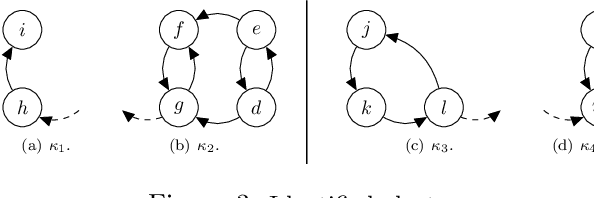
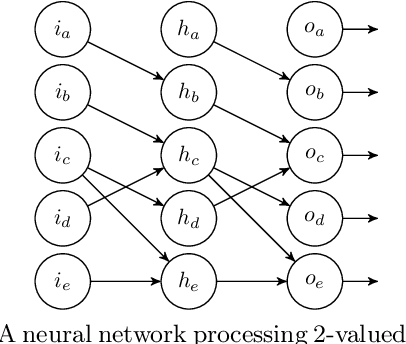
This volume contains revised versions of the papers selected for the second volume of the Online Handbook of Argumentation for AI (OHAAI). Previously, formal theories of argument and argument interaction have been proposed and studied, and this has led to the more recent study of computational models of argument. Argumentation, as a field within artificial intelligence (AI), is highly relevant for researchers interested in symbolic representations of knowledge and defeasible reasoning. The purpose of this handbook is to provide an open access and curated anthology for the argumentation research community. OHAAI is designed to serve as a research hub to keep track of the latest and upcoming PhD-driven research on the theory and application of argumentation in all areas related to AI.
QURATOR: Innovative Technologies for Content and Data Curation
Apr 25, 2020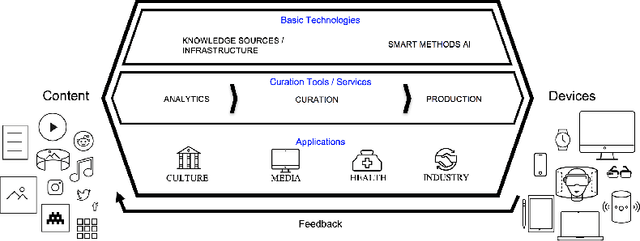
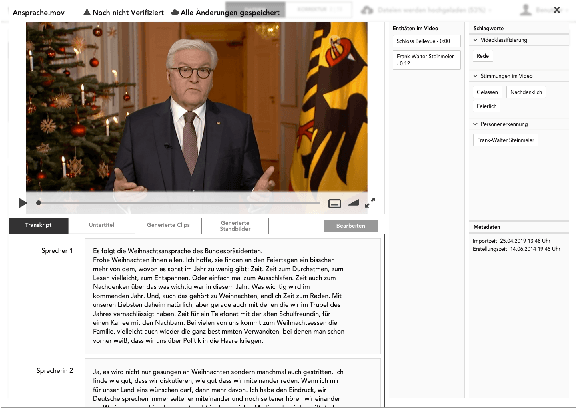
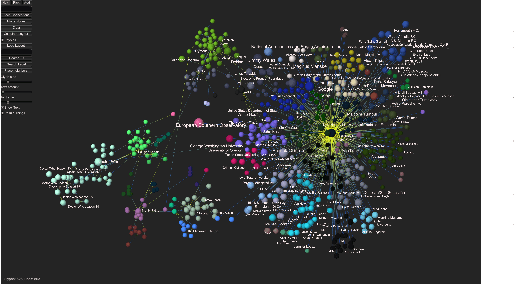

In all domains and sectors, the demand for intelligent systems to support the processing and generation of digital content is rapidly increasing. The availability of vast amounts of content and the pressure to publish new content quickly and in rapid succession requires faster, more efficient and smarter processing and generation methods. With a consortium of ten partners from research and industry and a broad range of expertise in AI, Machine Learning and Language Technologies, the QURATOR project, funded by the German Federal Ministry of Education and Research, develops a sustainable and innovative technology platform that provides services to support knowledge workers in various industries to address the challenges they face when curating digital content. The project's vision and ambition is to establish an ecosystem for content curation technologies that significantly pushes the current state of the art and transforms its region, the metropolitan area Berlin-Brandenburg, into a global centre of excellence for curation technologies.