 Add to Chrome
 Add to Firefox
 Add to Edge
Rethinking IRSTD: Single-Point Supervision Guided Encoder-only Framework is Enough for Infrared Small Target Detection
Apr 07, 2026
Infrared small target detection (IRSTD) aims to separate small targets from clutter backgrounds. Extensive research is dedicated to the pixel-level supervision-guided "encoder-decoder" segmentation paradigm. Although having achieved promising performance, they neglect the fact that small targets only occupy a few pixels and are usually accompanied with blurred boundary caused by clutter backgrounds. Based on this observation, we argue that the first principle of IRSTD should be target localization instead of separating all target region accompanied with indistinguishable background noise. In this paper, we reformulate IRSTD as a centroid regression task and propose a novel Single-Point Supervision guided Infrared Probabilistic Response Encoding method (namely, SPIRE), which is indeed challenging due to the mismatch between reduced supervision network and equivalent output. Specifically, we first design a Point-Response Prior Supervision (PRPS), which transforms single-point annotations into probabilistic response map consistent with infrared point-target response characteristics, with a High-Resolution Probabilistic Encoder (HRPE) that enables encoder-only, end-to-end regression without decoder reconstruction. By preserving high-resolution features and increasing effective supervision density, SPIRE alleviates optimization instability under sparse target distributions. Finally, extensive experiments on various IRSTD benchmarks, including SIRST-UAVB and SIRST4 demonstrate that SPIRE achieves competitive target-level detection performance with consistently low false alarm rate (Fa) and significantly reduced computational cost. Code is publicly available at: https://github.com/NIRIXIANG/SPIRE-IRSTD.

Single-Point Supervised High-Resolution Dynamic Network for Infrared Small Target Detection
Aug 04, 2024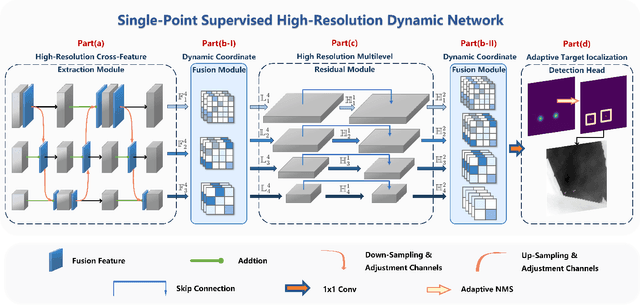
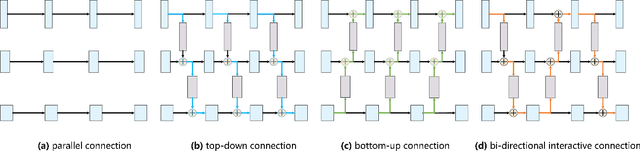
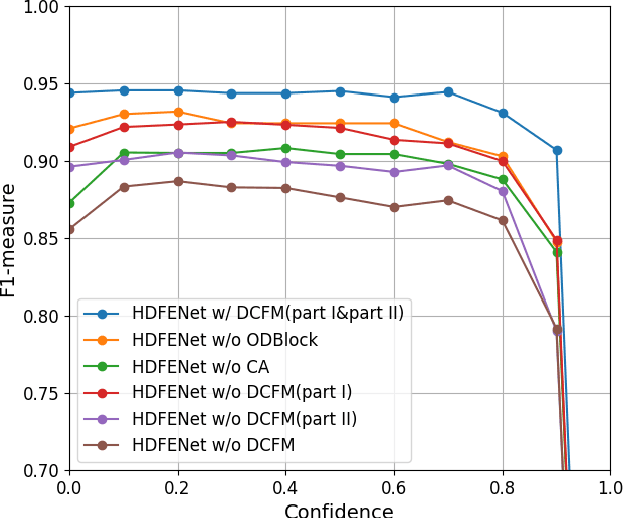
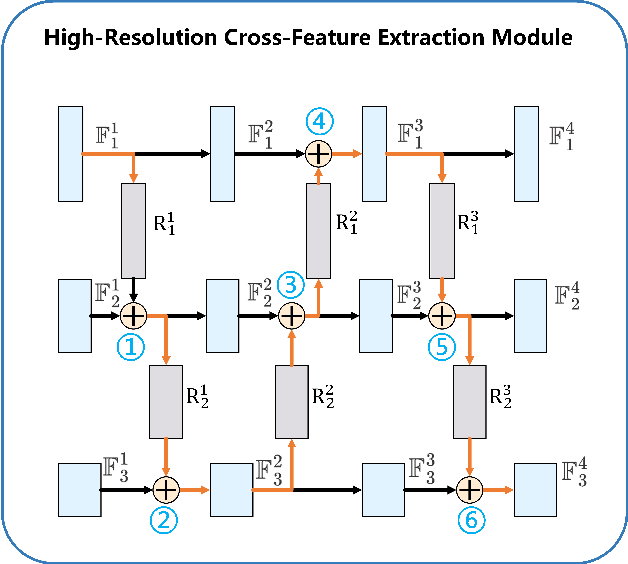
Infrared small target detection (IRSTD) tasks are extremely challenging for two main reasons: 1) it is difficult to obtain accurate labelling information that is critical to existing methods, and 2) infrared (IR) small target information is easily lost in deep networks. To address these issues, we propose a single-point supervised high-resolution dynamic network (SSHD-Net). In contrast to existing methods, we achieve state-of-the-art (SOTA) detection performance using only single-point supervision. Specifically, we first design a high-resolution cross-feature extraction module (HCEM), that achieves bi-directional feature interaction through stepped feature cascade channels (SFCC). It balances network depth and feature resolution to maintain deep IR small-target information. Secondly, the effective integration of global and local features is achieved through the dynamic coordinate fusion module (DCFM), which enhances the anti-interference ability in complex backgrounds. In addition, we introduce the high-resolution multilevel residual module (HMRM) to enhance the semantic information extraction capability. Finally, we design the adaptive target localization detection head (ATLDH) to improve detection accuracy. Experiments on the publicly available datasets NUDT-SIRST and IRSTD-1k demonstrate the effectiveness of our method. Compared to other SOTA methods, our method can achieve better detection performance with only a single point of supervision.