 Add to Chrome
 Add to Firefox
 Add to Edge
A satellite foundation model for improved wealth monitoring
Apr 25, 2026
Poverty statistics guide social policy, but in many low- and middle-income countries, censuses and household surveys that collect these data are costly, infrequent, quickly outdated, and sometimes error-prone. Satellite imagery offers global coverage and the possibility of predicting economic livelihoods at scale, yet existing approaches to predicting livelihoods with imagery or other non-traditional data often fail to reliably identify local-level variation and, as we show, degrade under temporal shift. Here we introduce Tempov, a satellite foundation model pretrained by self-supervision on three million bi-temporal Landsat pairs and adapted with parameter-efficient fine-tuning to sparse survey labels. The model enables large-scale, high-resolution wealth mapping and dynamic measurement, including zero-shot nowcasting up to a decade after observed labels, retrospective hindcasting, and decadal change tracking, while outperforming existing neural network and geospatial foundation-model baselines. In low-label regimes, Tempov achieves competitive accuracy with only 10% of survey samples, indicating substantially reduced dependence on expensive label collection. The model further generalizes across populous countries within and outside Africa, and scales to a unified Africa-wide model with strong continent-level performance ($R^2=0.63$, $r^2=0.68$), from which we generate high-resolution decadal maps of wealth and wealth changes for the African continent. Analysis of these maps shows large variation in recent economic performance both within and across countries. Our open-source approach provides a pathway to timely, scalable, low-cost monitoring of wealth and poverty from routinely collected satellite data.

The Llama 4 Herd: Architecture, Training, Evaluation, and Deployment Notes
Jan 15, 2026This document consolidates publicly reported technical details about Metas Llama 4 model family. It summarizes (i) released variants (Scout and Maverick) and the broader herd context including the previewed Behemoth teacher model, (ii) architectural characteristics beyond a high-level MoE description covering routed/shared-expert structure, early-fusion multimodality, and long-context design elements reported for Scout (iRoPE and length generalization strategies), (iii) training disclosures spanning pre-training, mid-training for long-context extension, and post-training methodology (lightweight SFT, online RL, and lightweight DPO) as described in release materials, (iv) developer-reported benchmark results for both base and instruction-tuned checkpoints, and (v) practical deployment constraints observed across major serving environments, including provider-specific context limits and quantization packaging. The manuscript also summarizes licensing obligations relevant to redistribution and derivative naming, and reviews publicly described safeguards and evaluation practices. The goal is to provide a compact technical reference for researchers and practitioners who need precise, source-backed facts about Llama 4.
HarvestNet: A Dataset for Detecting Smallholder Farming Activity Using Harvest Piles and Remote Sensing
Aug 23, 2023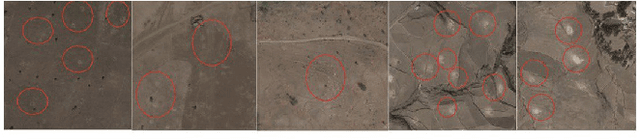
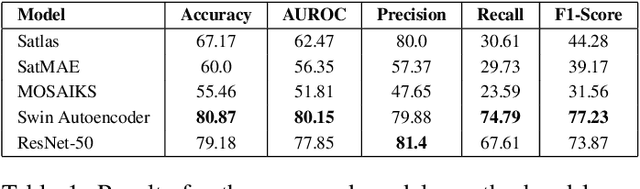
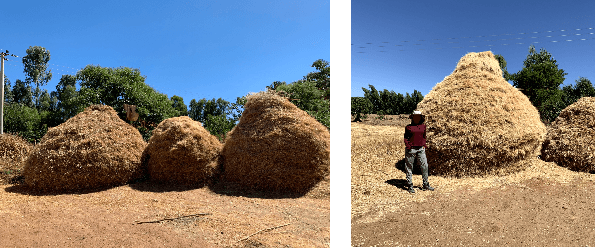

Small farms contribute to a large share of the productive land in developing countries. In regions such as sub-Saharan Africa, where 80% of farms are small (under 2 ha in size), the task of mapping smallholder cropland is an important part of tracking sustainability measures such as crop productivity. However, the visually diverse and nuanced appearance of small farms has limited the effectiveness of traditional approaches to cropland mapping. Here we introduce a new approach based on the detection of harvest piles characteristic of many smallholder systems throughout the world. We present HarvestNet, a dataset for mapping the presence of farms in the Ethiopian regions of Tigray and Amhara during 2020-2023, collected using expert knowledge and satellite images, totaling 7k hand-labeled images and 2k ground collected labels. We also benchmark a set of baselines including SOTA models in remote sensing with our best models having around 80% classification performance on hand labelled data and 90%, 98% accuracy on ground truth data for Tigray, Amhara respectively. We also perform a visual comparison with a widely used pre-existing coverage map and show that our model detects an extra 56,621 hectares of cropland in Tigray. We conclude that remote sensing of harvest piles can contribute to more timely and accurate cropland assessments in food insecure region.
Deep Representation Learning of Tissue Metabolome and Computed Tomography Images Annotates Non-invasive Classification and Prognosis Prediction of NSCLC
May 26, 2023The rich chemical information from tissue metabolomics provides a powerful means to elaborate tissue physiology or tumor characteristics at cellular and tumor microenvironment levels. However, the process of obtaining such information requires invasive biopsies, is costly, and can delay clinical patient management. Conversely, computed tomography (CT) is a clinical standard of care but does not intuitively harbor histological or prognostic information. Furthermore, the ability to embed metabolome information into CT to subsequently use the learned representation for classification or prognosis has yet to be described. This study develops a deep learning-based framework -- tissue-metabolomic-radiomic-CT (TMR-CT) by combining 48 paired CT images and tumor/normal tissue metabolite intensities to generate ten image embeddings to infer metabolite-derived representation from CT alone. In clinical NSCLC settings, we ascertain whether TMR-CT achieves state-of-the-art results in solving histology classification/prognosis tasks in an unseen international CT dataset of 742 patients. TMR-CT non-invasively determines histological classes - adenocarcinoma/ squamous cell carcinoma with an F1-score=0.78 and further asserts patients' prognosis with a c-index=0.72, surpassing the performance of radiomics models and clinical features. Additionally, our work shows the potential to generate informative biology-inspired CT-led features to explore connections between hard-to-obtain tissue metabolic profiles and routine lesion-derived image data.