 Add to Chrome
 Add to Firefox
 Add to Edge
IDEA2: Expert-in-the-loop competency question elicitation for collaborative ontology engineering
Apr 01, 2026
Competency question (CQ) elicitation represents a critical but resource-intensive bottleneck in ontology engineering. This foundational phase is often hampered by the communication gap between domain experts, who possess the necessary knowledge, and ontology engineers, who formalise it. This paper introduces IDEA2, a novel, semi-automated workflow that integrates Large Language Models (LLMs) within a collaborative, expert-in-the-loop process to address this challenge. The methodology is characterised by a core iterative loop: an initial LLM-based extraction of CQs from requirement documents, a co-creational review and feedback phase by domain experts on an accessible collaborative platform, and an iterative, feedback-driven reformulation of rejected CQs by an LLM until consensus is achieved. To ensure transparency and reproducibility, the entire lifecycle of each CQ is tracked using a provenance model that captures the full lineage of edits, anonymised feedback, and generation parameters. The workflow was validated in 2 real-world scenarios (scientific data, cultural heritage), demonstrating that IDEA2 can accelerate the requirements engineering process, improve the acceptance and relevance of the resulting CQs, and exhibit high usability and effectiveness among domain experts. We release all code and experiments at https://github.com/KE-UniLiv/IDEA2

Semantic Web and Creative AI -- A Technical Report from ISWS 2023
Jan 30, 2025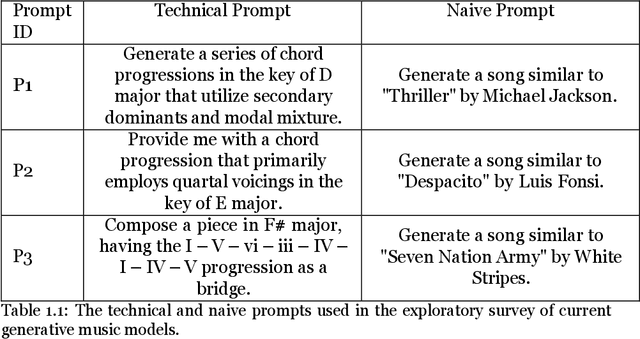


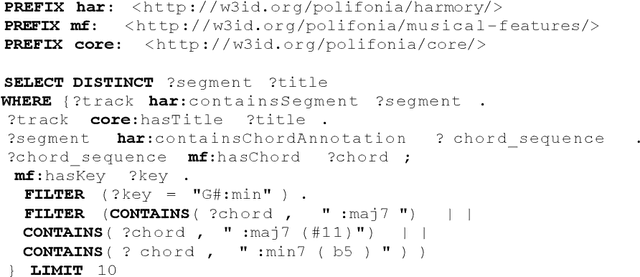
The International Semantic Web Research School (ISWS) is a week-long intensive program designed to immerse participants in the field. This document reports a collaborative effort performed by ten teams of students, each guided by a senior researcher as their mentor, attending ISWS 2023. Each team provided a different perspective to the topic of creative AI, substantiated by a set of research questions as the main subject of their investigation. The 2023 edition of ISWS focuses on the intersection of Semantic Web technologies and Creative AI. ISWS 2023 explored various intersections between Semantic Web technologies and creative AI. A key area of focus was the potential of LLMs as support tools for knowledge engineering. Participants also delved into the multifaceted applications of LLMs, including legal aspects of creative content production, humans in the loop, decentralised approaches to multimodal generative AI models, nanopublications and AI for personal scientific knowledge graphs, commonsense knowledge in automatic story and narrative completion, generative AI for art critique, prompt engineering, automatic music composition, commonsense prototyping and conceptual blending, and elicitation of tacit knowledge. As Large Language Models and semantic technologies continue to evolve, new exciting prospects are emerging: a future where the boundaries between creative expression and factual knowledge become increasingly permeable and porous, leading to a world of knowledge that is both informative and inspiring.
An Experiment in Retrofitting Competency Questions for Existing Ontologies
Nov 09, 2023


Competency Questions (CQs) are a form of ontology functional requirements expressed as natural language questions. Inspecting CQs together with the axioms in an ontology provides critical insights into the intended scope and applicability of the ontology. CQs also underpin a number of tasks in the development of ontologies e.g. ontology reuse, ontology testing, requirement specification, and the definition of patterns that implement such requirements. Although CQs are integral to the majority of ontology engineering methodologies, the practice of publishing CQs alongside the ontological artefacts is not widely observed by the community. In this context, we present an experiment in retrofitting CQs from existing ontologies. We propose RETROFIT-CQs, a method to extract candidate CQs directly from ontologies using Generative AI. In the paper we present the pipeline that facilitates the extraction of CQs by leveraging Large Language Models (LLMs) and we discuss its application to a number of existing ontologies.