 Add to Chrome
 Add to Firefox
 Add to Edge
Return of the Schema: Building Complete Datasets for Machine Learning and Reasoning on Knowledge Graphs
Feb 16, 2026
Datasets for the experimental evaluation of knowledge graph refinement algorithms typically contain only ground facts, retaining very limited schema level knowledge even when such information is available in the source knowledge graphs. This limits the evaluation of methods that rely on rich ontological constraints, reasoning or neurosymbolic techniques and ultimately prevents assessing their performance in large-scale, real-world knowledge graphs. In this paper, we present \resource{} the first resource that provides a workflow for extracting datasets including both schema and ground facts, ready for machine learning and reasoning services, along with the resulting curated suite of datasets. The workflow also handles inconsistencies detected when keeping both schema and facts and also leverage reasoning for entailing implicit knowledge. The suite includes newly extracted datasets from KGs with expressive schemas while simultaneously enriching existing datasets with schema information. Each dataset is serialized in OWL making it ready for reasoning services. Moreover, we provide utilities for loading datasets in tensor representations typical of standard machine learning libraries.

GRainsaCK: a Comprehensive Software Library for Benchmarking Explanations of Link Prediction Tasks on Knowledge Graphs
Aug 12, 2025
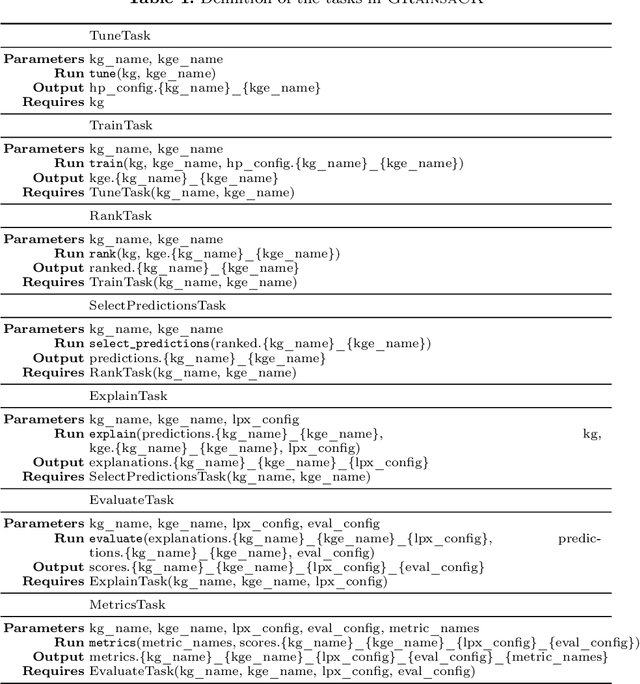
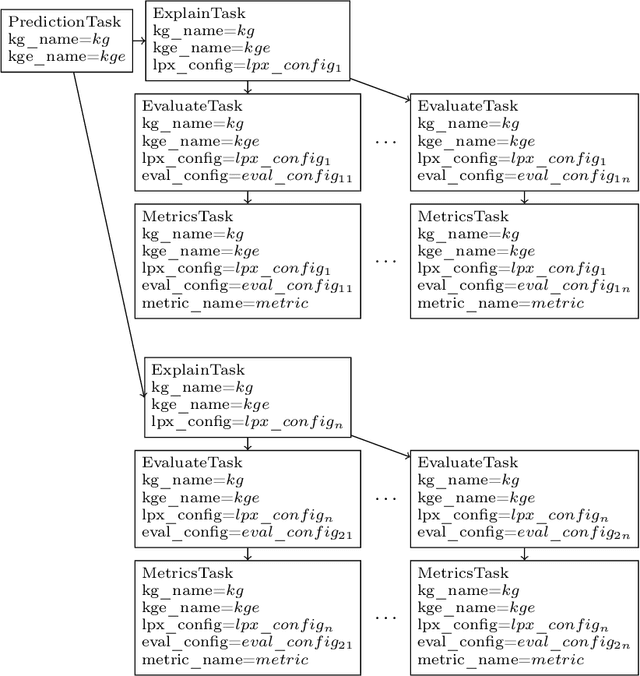

Since Knowledge Graphs are often incomplete, link prediction methods are adopted for predicting missing facts. Scalable embedding based solutions are mostly adopted for this purpose, however, they lack comprehensibility, which may be crucial in several domains. Explanation methods tackle this issue by identifying supporting knowledge explaining the predicted facts. Regretfully, evaluating/comparing quantitatively the resulting explanations is challenging as there is no standard evaluation protocol and overall benchmarking resource. We fill this important gap by proposing GRainsaCK, a reusable software resource that fully streamlines all the tasks involved in benchmarking explanations, i.e., from model training to evaluation of explanations along the same evaluation protocol. Moreover, GRainsaCK furthers modularity/extensibility by implementing the main components as functions that can be easily replaced. Finally, fostering its reuse, we provide extensive documentation including a tutorial.
Semantic Web and Creative AI -- A Technical Report from ISWS 2023
Jan 30, 2025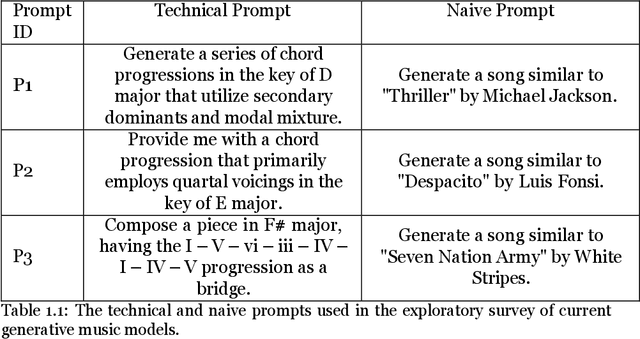


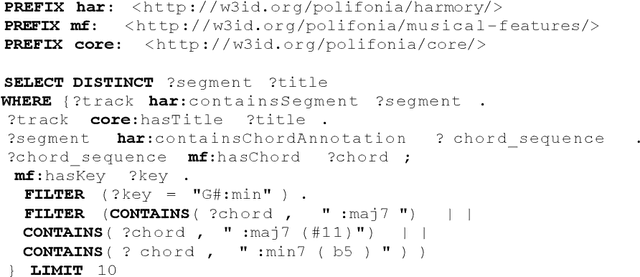
The International Semantic Web Research School (ISWS) is a week-long intensive program designed to immerse participants in the field. This document reports a collaborative effort performed by ten teams of students, each guided by a senior researcher as their mentor, attending ISWS 2023. Each team provided a different perspective to the topic of creative AI, substantiated by a set of research questions as the main subject of their investigation. The 2023 edition of ISWS focuses on the intersection of Semantic Web technologies and Creative AI. ISWS 2023 explored various intersections between Semantic Web technologies and creative AI. A key area of focus was the potential of LLMs as support tools for knowledge engineering. Participants also delved into the multifaceted applications of LLMs, including legal aspects of creative content production, humans in the loop, decentralised approaches to multimodal generative AI models, nanopublications and AI for personal scientific knowledge graphs, commonsense knowledge in automatic story and narrative completion, generative AI for art critique, prompt engineering, automatic music composition, commonsense prototyping and conceptual blending, and elicitation of tacit knowledge. As Large Language Models and semantic technologies continue to evolve, new exciting prospects are emerging: a future where the boundaries between creative expression and factual knowledge become increasingly permeable and porous, leading to a world of knowledge that is both informative and inspiring.