 Add to Chrome
 Add to Firefox
 Add to Edge
Beyond Mortality: Advancements in Post-Mortem Iris Recognition through Data Collection and Computer-Aided Forensic Examination
Mar 27, 2026
Post-mortem iris recognition brings both hope to the forensic community (a short-term but accurate and fast means of verifying identity) as well as concerns to society (its potential illicit use in post-mortem impersonation). These hopes and concerns have grown along with the volume of research in post-mortem iris recognition. Barriers to further progress in post-mortem iris recognition include the difficult nature of data collection, and the resulting small number of approaches designed specifically for comparing iris images of deceased subjects. This paper makes several unique contributions to mitigate these barriers. First, we have collected and we offer a new dataset of NIR (compliant with ISO/IEC 19794-6 where possible) and visible-light iris images collected after demise from 259 subjects, with the largest PMI (post-mortem interval) being 1,674 hours. For one subject, the data has been collected before and after death, the first such case ever published. Second, the collected dataset was combined with publicly-available post-mortem samples to assess the current state of the art in automatic forensic iris recognition with five iris recognition methods and data originating from 338 deceased subjects. These experiments include analyses of how selected demographic factors influence recognition performance. Thirdly, this study implements a model for detecting post-mortem iris images, which can be considered as presentation attacks. Finally, we offer an open-source forensic tool integrating three post-mortem iris recognition methods with explainability elements added to make the comparison process more human-interpretable.

Interpretable Deep Learning-Based Forensic Iris Segmentation and Recognition
Dec 20, 2021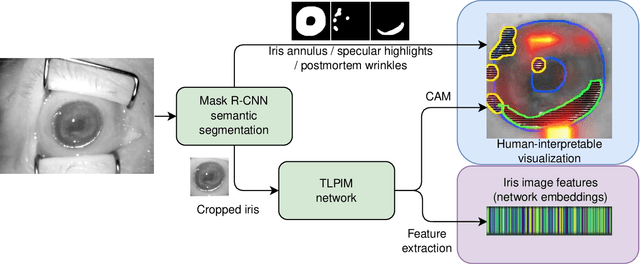
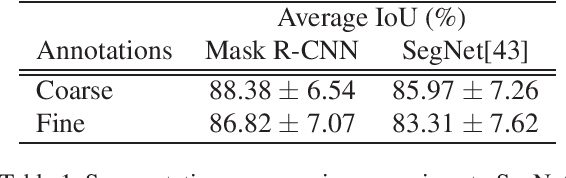
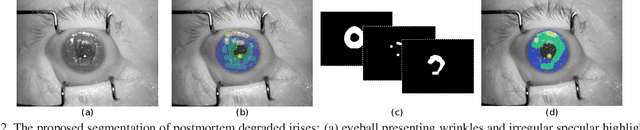
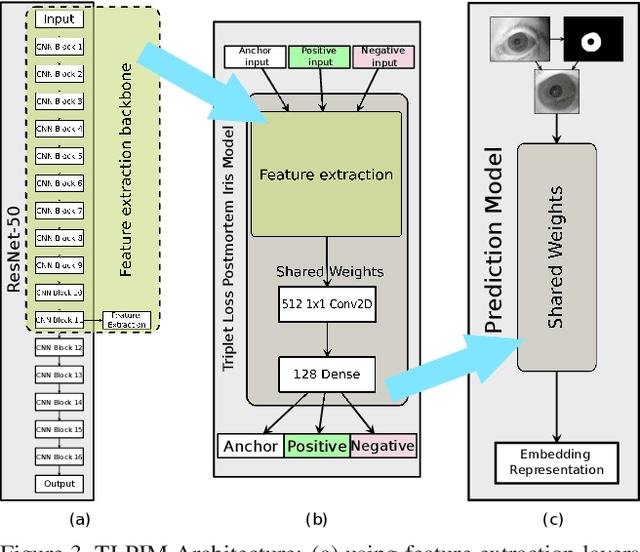
Iris recognition of living individuals is a mature biometric modality that has been adopted globally from governmental ID programs, border crossing, voter registration and de-duplication, to unlocking mobile phones. On the other hand, the possibility of recognizing deceased subjects with their iris patterns has emerged recently. In this paper, we present an end-to-end deep learning-based method for postmortem iris segmentation and recognition with a special visualization technique intended to support forensic human examiners in their efforts. The proposed postmortem iris segmentation approach outperforms the state of the art and in addition to iris annulus, as in case of classical iris segmentation methods - detects abnormal regions caused by eye decomposition processes, such as furrows or irregular specular highlights present on the drying and wrinkling cornea. The method was trained and validated with data acquired from 171 cadavers, kept in mortuary conditions, and tested on subject-disjoint data acquired from 259 deceased subjects. To our knowledge, this is the largest corpus of data used in postmortem iris recognition research to date. The source code of the proposed method are offered with the paper. The test data will be available through the National Archive of Criminal Justice Data (NACJD) archives.