 Add to Chrome
 Add to Firefox
 Add to Edge
Physics-Distilled Neural Network enabled by Large Language Models for Manufacturing Process-Property Predictive Modeling
Jun 10, 2026
Predicting process-property relationships in manufacturing is often challenged by high experimental costs and the limited interpretability of complex 'black-box' models. This paper proposes a novel knowledge distillation framework designed to achieve high-accuracy predictions in data-scarce scenarios. The framework integrates analytical physics priors, which are systematically extracted from scientific literature via Large Language Models, into a privileged teacher model. We employ a Graph-Masked Attention layer to capture the complex physical dependencies among input variables showing strict setpoints or a combination of static and high-frequency temporal signatures. This privileged knowledge is distilled into a lightweight student predictor for inference. The feasibility and robustness of the framework are evaluated through a comprehensive experiment across five diverse manufacturing processes. To ensure statistical reliability, given the small dataset sizes, a repeated K-fold cross-validation technique is employed to quantify model stability and generalization. Results indicate that the proposed framework consistently achieves high predictive accuracy across all evaluated domains. Most importantly, the architecture demonstrates significant fault tolerance by maintaining robust predictive performance even in scenarios where LLM-derived analytical priors are suboptimal or incomplete. Furthermore, the student predictor achieves an inference frequency exceeding 6000 Hz, which facilitates real-time edge deployment on standard industrial hardware. This work provides a scalable solution for bridging the gap between theoretical physics and real-time industrial monitoring in data-limited environments.

GPT-Micro: A large language paradigm for accelerated, inexpensive, and thermodynamics-consistent discovery of constitutive models in manufacturing
Jun 06, 2026Constitutive modeling of the relationship between process-imposed material states and fundamental material properties is critical to control of material microstructure in manufacturing processes. The limited accuracy resulting from the typical reliance on fallible human expertise and intuition for postulation and revision of the models functional form results in incremental and time consuming model discovery. Conventional Machine Learning (ML) incurs significant cost and time of data generation. Model discovery using Large Language Models (LLMs) suffers from the above issues and/or ignores the inviolability of fundamental thermodynamics laws. This work creates a novel GPT-Micro paradigm for autonomous, data sparse, and thermodynamics-compliant discovery of de-novo constitutive models. This framework seamlessly integrates semantic knowledge extraction from literature, enforcement of thermodynamics-based conservation laws, and sparse datasets, with LLM-driven generation and refinement of model hypotheses. Validation is performed for a long-intractable constitutive modeling problem in a printed electronics process testbed. This reveals significant and simultaneous advantages over the state-of-the-art including: (a) More than 70 percent reduction in data burden relative to ML-based modeling without loss in accuracy; (b) 400X reduction in discovery time after data generation, from months to hours, relative to human-driven modeling; (c) Discovery of models with novel functional forms without subjective human choice of a starting hypothesis; (d) Enhanced physics-rooted trustworthiness, human interpretability, and mechanistic insight via synthesis of compact, conservation-compliant, and physically complete analytical models. The potential of GPT-Micro to realize rapid, low-cost, physically trustworthy, and interpretable microstructure modeling across the manufacturing landscape is discussed.
LLM-ADAM: A Generalizable LLM Agent Framework for Pre-Print Anomaly Detection in Additive Manufacturing
May 05, 2026Additive manufacturing (AM) continues to transform modern manufacturing by enabling flexible, on-demand production of complex geometries across diverse industries. Fused filament fabrication (FFF) has extended AM to laboratories, classrooms, and small production environments, but this accessibility shifts process-planning responsibility to users who may lack manufacturing expertise. A syntactically valid slicer profile can still encode thermally or geometrically harmful settings, and subtle G-code edits can alter extrusion, cooling, or adhesion before a print begins. Pre-print G-code screening catches accidental or adversarial machine-program errors before material or machine time is wasted. This paper proposes LLM-ADAM as a generalizable LLM framework for pre-print anomaly detection in AM. The framework decomposes the task into three roles: Extractor-LLM maps a G-code file to a structured process-parameter schema; Reference-LLM converts printer and material documentation into aligned operating ranges; and Judge-LLM interprets a deterministic deviation table and G-code evidence to decide whether a part is non-defective or belongs to an anomaly class. Printers, materials, and LLM backbones are interchangeable test conditions, not fixed assumptions. We evaluate the framework on an N=200 FFF G-code corpus spanning two desktop printer families, two materials, and five classes including non-defective, under-extrusion, over-extrusion, warping, and stringing. The best framework configuration reaches 87.5% accuracy, compared with 59.5% for the strongest engineered single-LLM baseline. The results show that structured decomposition, rather than backbone strength alone, is the dominant source of improvement, with defect classes identified at or near ceiling for leading configurations while residual errors concentrate on conservative false alarms for non-defective samples.
Multimodal RAG-driven Anomaly Detection and Classification in Laser Powder Bed Fusion using Large Language Models
May 20, 2025Additive manufacturing enables the fabrication of complex designs while minimizing waste, but faces challenges related to defects and process anomalies. This study presents a novel multimodal Retrieval-Augmented Generation-based framework that automates anomaly detection across various Additive Manufacturing processes leveraging retrieved information from literature, including images and descriptive text, rather than training datasets. This framework integrates text and image retrieval from scientific literature and multimodal generation models to perform zero-shot anomaly identification, classification, and explanation generation in a Laser Powder Bed Fusion setting. The proposed framework is evaluated on four L-PBF manufacturing datasets from Oak Ridge National Laboratory, featuring various printer makes, models, and materials. This evaluation demonstrates the framework's adaptability and generalizability across diverse images without requiring additional training. Comparative analysis using Qwen2-VL-2B and GPT-4o-mini as MLLM within the proposed framework highlights that GPT-4o-mini outperforms Qwen2-VL-2B and proportional random baseline in manufacturing anomalies classification. Additionally, the evaluation of the RAG system confirms that incorporating retrieval mechanisms improves average accuracy by 12% by reducing the risk of hallucination and providing additional information. The proposed framework can be continuously updated by integrating emerging research, allowing seamless adaptation to the evolving landscape of AM technologies. This scalable, automated, and zero-shot-capable framework streamlines AM anomaly analysis, enhancing efficiency and accuracy.
FDM-Bench: A Comprehensive Benchmark for Evaluating Large Language Models in Additive Manufacturing Tasks
Dec 13, 2024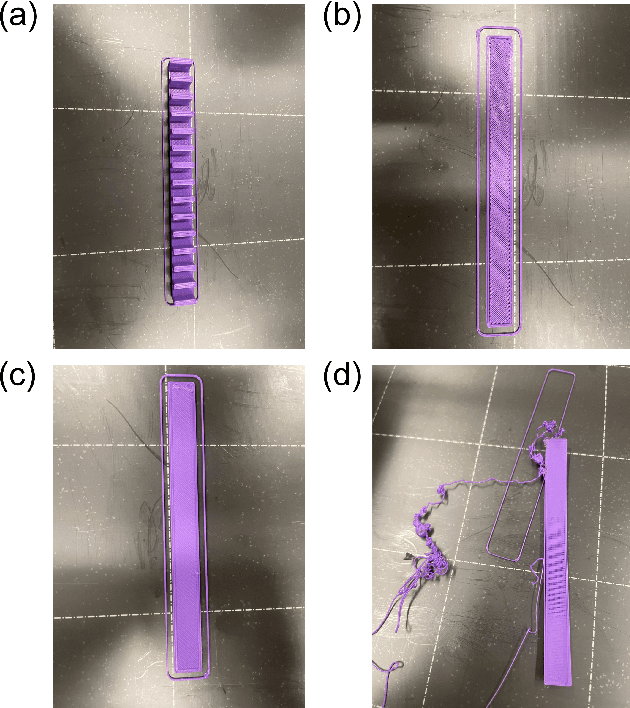
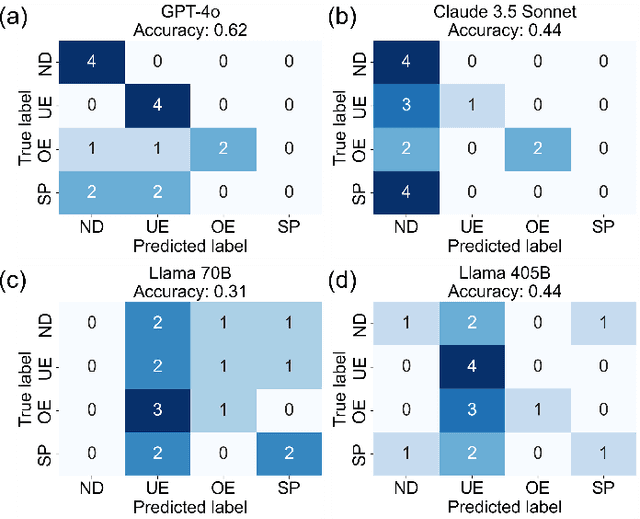
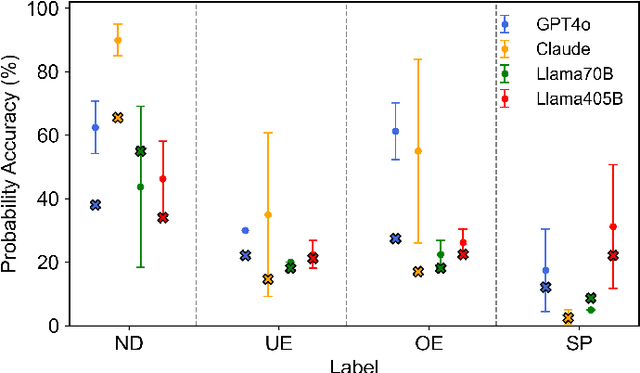
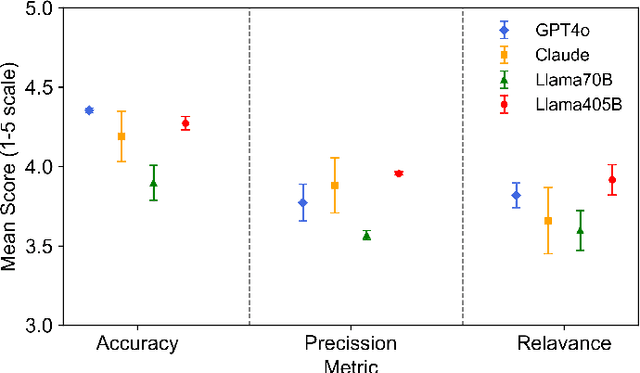
Fused Deposition Modeling (FDM) is a widely used additive manufacturing (AM) technique valued for its flexibility and cost-efficiency, with applications in a variety of industries including healthcare and aerospace. Recent developments have made affordable FDM machines accessible and encouraged adoption among diverse users. However, the design, planning, and production process in FDM require specialized interdisciplinary knowledge. Managing the complex parameters and resolving print defects in FDM remain challenging. These technical complexities form the most critical barrier preventing individuals without technical backgrounds and even professional engineers without training in other domains from participating in AM design and manufacturing. Large Language Models (LLMs), with their advanced capabilities in text and code processing, offer the potential for addressing these challenges in FDM. However, existing research on LLM applications in this field is limited, typically focusing on specific use cases without providing comprehensive evaluations across multiple models and tasks. To this end, we introduce FDM-Bench, a benchmark dataset designed to evaluate LLMs on FDM-specific tasks. FDM-Bench enables a thorough assessment by including user queries across various experience levels and G-code samples that represent a range of anomalies. We evaluate two closed-source models (GPT-4o and Claude 3.5 Sonnet) and two open-source models (Llama-3.1-70B and Llama-3.1-405B) on FDM-Bench. A panel of FDM experts assess the models' responses to user queries in detail. Results indicate that closed-source models generally outperform open-source models in G-code anomaly detection, whereas Llama-3.1-405B demonstrates a slight advantage over other models in responding to user queries. These findings underscore FDM-Bench's potential as a foundational tool for advancing research on LLM capabilities in FDM.
Accelerated and Inexpensive Machine Learning for Manufacturing Processes with Incomplete Mechanistic Knowledge
Apr 29, 2023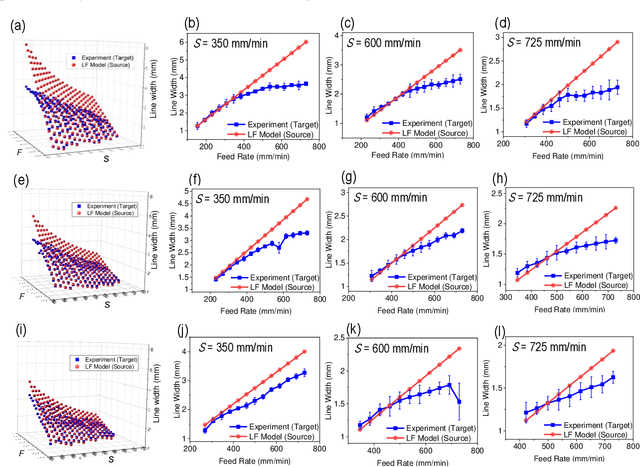

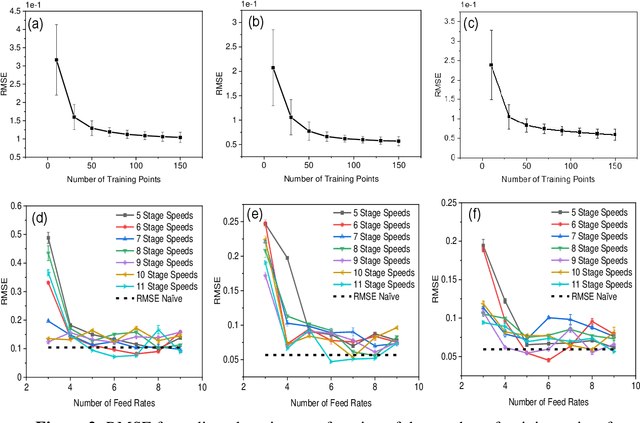
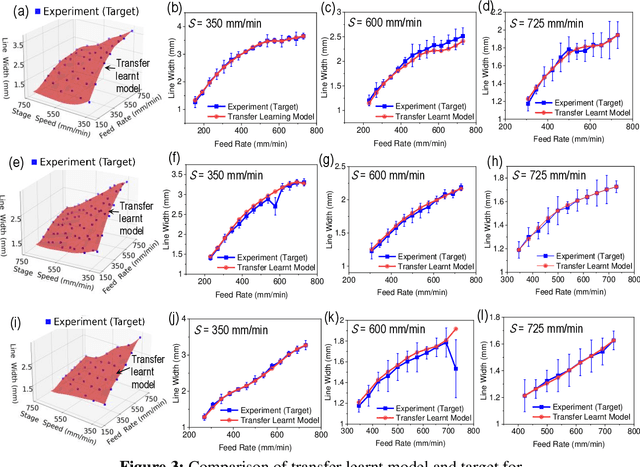
Machine Learning (ML) is of increasing interest for modeling parametric effects in manufacturing processes. But this approach is limited to established processes for which a deep physics-based understanding has been developed over time, since state-of-the-art approaches focus on reducing the experimental and/or computational costs of generating the training data but ignore the inherent and significant cost of developing qualitatively accurate physics-based models for new processes . This paper proposes a transfer learning based approach to address this issue, in which a ML model is trained on a large amount of computationally inexpensive data from a physics-based process model (source) and then fine-tuned on a smaller amount of costly experimental data (target). The novelty lies in pushing the boundaries of the qualitative accuracy demanded of the source model, which is assumed to be high in the literature, and is the root of the high model development cost. Our approach is evaluated for modeling the printed line width in Fused Filament Fabrication. Despite extreme functional and quantitative inaccuracies in the source our approach reduces the model development cost by years, experimental cost by 56-76%, computational cost by orders of magnitude, and prediction error by 16-24%.