 Add to Chrome
 Add to Firefox
 Add to Edge
LLM-ADAM: A Generalizable LLM Agent Framework for Pre-Print Anomaly Detection in Additive Manufacturing
May 05, 2026
Additive manufacturing (AM) continues to transform modern manufacturing by enabling flexible, on-demand production of complex geometries across diverse industries. Fused filament fabrication (FFF) has extended AM to laboratories, classrooms, and small production environments, but this accessibility shifts process-planning responsibility to users who may lack manufacturing expertise. A syntactically valid slicer profile can still encode thermally or geometrically harmful settings, and subtle G-code edits can alter extrusion, cooling, or adhesion before a print begins. Pre-print G-code screening catches accidental or adversarial machine-program errors before material or machine time is wasted. This paper proposes LLM-ADAM as a generalizable LLM framework for pre-print anomaly detection in AM. The framework decomposes the task into three roles: Extractor-LLM maps a G-code file to a structured process-parameter schema; Reference-LLM converts printer and material documentation into aligned operating ranges; and Judge-LLM interprets a deterministic deviation table and G-code evidence to decide whether a part is non-defective or belongs to an anomaly class. Printers, materials, and LLM backbones are interchangeable test conditions, not fixed assumptions. We evaluate the framework on an N=200 FFF G-code corpus spanning two desktop printer families, two materials, and five classes including non-defective, under-extrusion, over-extrusion, warping, and stringing. The best framework configuration reaches 87.5% accuracy, compared with 59.5% for the strongest engineered single-LLM baseline. The results show that structured decomposition, rather than backbone strength alone, is the dominant source of improvement, with defect classes identified at or near ceiling for leading configurations while residual errors concentrate on conservative false alarms for non-defective samples.

Adaptive Unknown Fault Detection and Few-Shot Continual Learning for Condition Monitoring in Ultrasonic Metal Welding
Apr 15, 2026Ultrasonic metal welding (UMW) is widely used in industrial applications but is sensitive to tool wear, surface contamination, and material variability, which can lead to unexpected process faults and unsatisfactory weld quality. Conventional monitoring systems typically rely on supervised learning models that assume all fault types are known in advance, limiting their ability to handle previously unseen process faults. To address this challenge, this paper proposes an adaptive condition monitoring approach that enables unknown fault detection and few-shot continual learning for UMW. Unknown faults are detected by analyzing hidden-layer representations of a multilayer perceptron and leveraging a statistical thresholding strategy. Once detected, the samples from unknown fault types are incorporated into the existing model through a continual learning procedure that selectively updates only the final layers of the network, which enables the model to recognize new fault types while preserving knowledge of existing classes. To accelerate the labeling process, cosine similarity transformation combined with a clustering algorithm groups similar unknown samples, thereby reducing manual labeling effort. Experimental results using a multi-sensor UMW dataset demonstrate that the proposed method achieves 96% accuracy in detecting unseen fault conditions while maintaining reliable classification of known classes. After incorporating a new fault type using only five labeled samples, the updated model achieves 98% testing classification accuracy. These results demonstrate that the proposed approach enables adaptive monitoring with minimal retraining cost and time. The proposed approach provides a scalable solution for continual learning in condition monitoring where new process conditions may constantly emerge over time and is extensible to other manufacturing processes.
QoS-QoE Translation with Large Language Model
Apr 09, 2026QoS-QoE translation is a fundamental problem in multimedia systems because it characterizes how measurable system and network conditions affect user-perceived experience. Although many prior studies have examined this relationship, their findings are often developed for specific setups and remain scattered across papers, experimental settings, and reporting formats, limiting systematic reuse, cross-scenario generalization, and large-scale analysis. To address this gap, we first introduce QoS-QoE Translation dataset, a source-grounded dataset of structured QoS-QoE relationships from the multimedia literature, with a focus on video streaming related tasks. We construct the dataset through an automated pipeline that combines paper curation, QoS-QoE relationship extraction, and iterative data evaluation. Each record preserves the extracted relationship together with parameter definitions, supporting evidence, and contextual metadata. We further evaluate the capability of large language models (LLMs) on QoS-QoE translation, both before and after supervised fine-tuning on our dataset, and show strong performance on both continuous-value and discrete-label prediction in bidirectional translation, from QoS-QoE and QoE-QoS. Our dataset provides a foundation for benchmarking LLMs in QoS-QoE translation and for supporting future LLM-based reasoning for multimedia quality prediction and optimization. The complete dataset and code are publicly available at https://yyu6969.github.io/qos-qoe-translation-page/, for full reproducibility and open access.
FDM-Bench: A Comprehensive Benchmark for Evaluating Large Language Models in Additive Manufacturing Tasks
Dec 13, 2024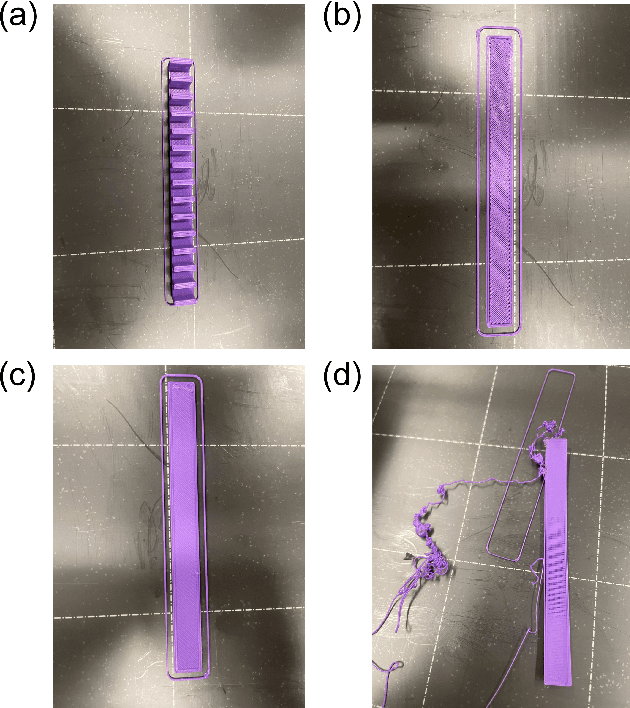
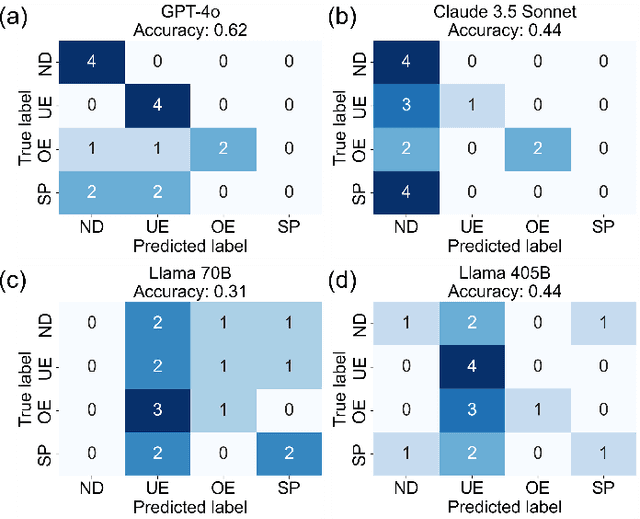
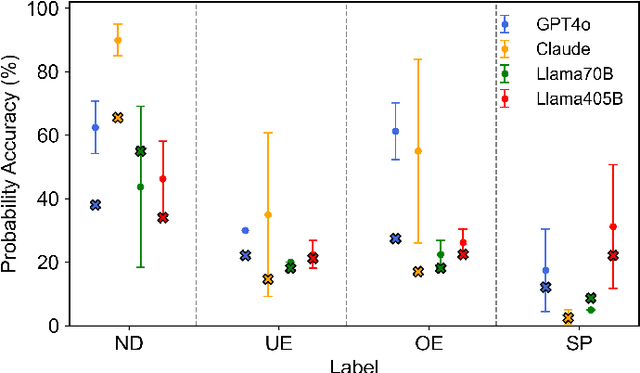
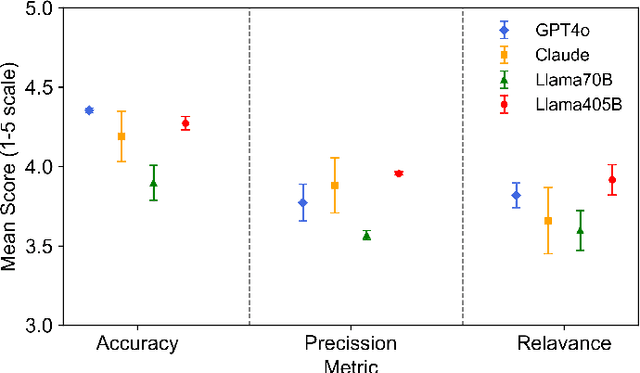
Fused Deposition Modeling (FDM) is a widely used additive manufacturing (AM) technique valued for its flexibility and cost-efficiency, with applications in a variety of industries including healthcare and aerospace. Recent developments have made affordable FDM machines accessible and encouraged adoption among diverse users. However, the design, planning, and production process in FDM require specialized interdisciplinary knowledge. Managing the complex parameters and resolving print defects in FDM remain challenging. These technical complexities form the most critical barrier preventing individuals without technical backgrounds and even professional engineers without training in other domains from participating in AM design and manufacturing. Large Language Models (LLMs), with their advanced capabilities in text and code processing, offer the potential for addressing these challenges in FDM. However, existing research on LLM applications in this field is limited, typically focusing on specific use cases without providing comprehensive evaluations across multiple models and tasks. To this end, we introduce FDM-Bench, a benchmark dataset designed to evaluate LLMs on FDM-specific tasks. FDM-Bench enables a thorough assessment by including user queries across various experience levels and G-code samples that represent a range of anomalies. We evaluate two closed-source models (GPT-4o and Claude 3.5 Sonnet) and two open-source models (Llama-3.1-70B and Llama-3.1-405B) on FDM-Bench. A panel of FDM experts assess the models' responses to user queries in detail. Results indicate that closed-source models generally outperform open-source models in G-code anomaly detection, whereas Llama-3.1-405B demonstrates a slight advantage over other models in responding to user queries. These findings underscore FDM-Bench's potential as a foundational tool for advancing research on LLM capabilities in FDM.
Federated Transfer Learning with Task Personalization for Condition Monitoring in Ultrasonic Metal Welding
Apr 20, 2024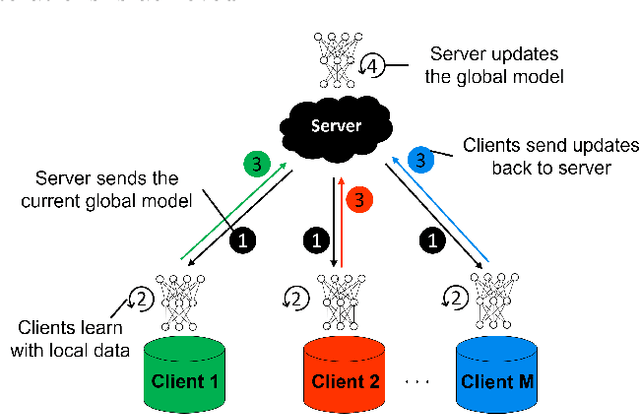
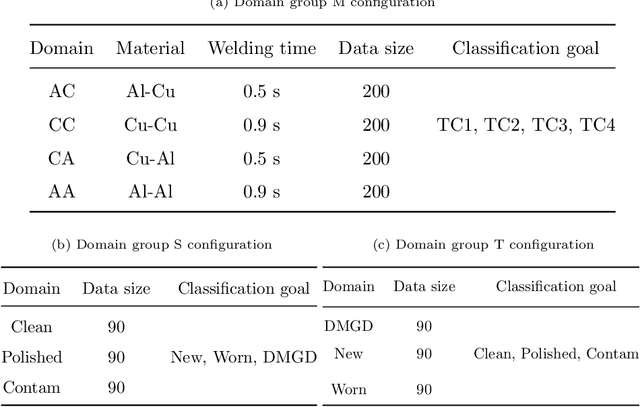
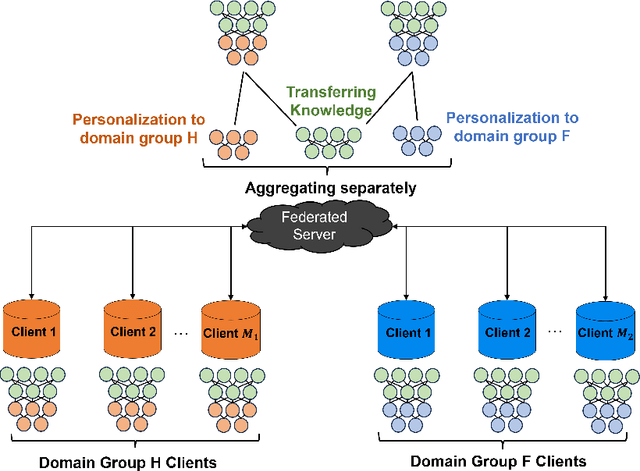
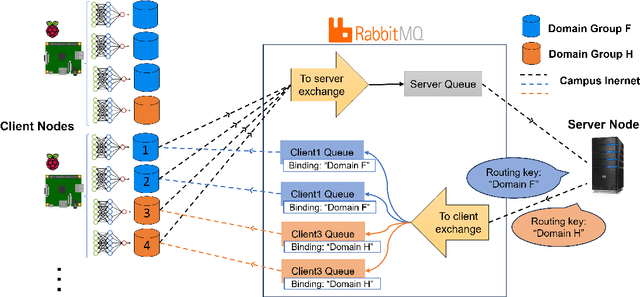
Ultrasonic metal welding (UMW) is a key joining technology with widespread industrial applications. Condition monitoring (CM) capabilities are critically needed in UMW applications because process anomalies significantly deteriorate the joining quality. Recently, machine learning models emerged as a promising tool for CM in many manufacturing applications due to their ability to learn complex patterns. Yet, the successful deployment of these models requires substantial training data that may be expensive and time-consuming to collect. Additionally, many existing machine learning models lack generalizability and cannot be directly applied to new process configurations (i.e., domains). Such issues may be potentially alleviated by pooling data across manufacturers, but data sharing raises critical data privacy concerns. To address these challenges, this paper presents a Federated Transfer Learning with Task Personalization (FTL-TP) framework that provides domain generalization capabilities in distributed learning while ensuring data privacy. By effectively learning a unified representation from feature space, FTL-TP can adapt CM models for clients working on similar tasks, thereby enhancing their overall adaptability and performance jointly. To demonstrate the effectiveness of FTL-TP, we investigate two distinct UMW CM tasks, tool condition monitoring and workpiece surface condition classification. Compared with state-of-the-art FL algorithms, FTL-TP achieves a 5.35%--8.08% improvement of accuracy in CM in new target domains. FTL-TP is also shown to perform excellently in challenging scenarios involving unbalanced data distributions and limited client fractions. Furthermore, by implementing the FTL-TP method on an edge-cloud architecture, we show that this method is both viable and efficient in practice. The FTL-TP framework is readily extensible to various other manufacturing applications.
WeldMon: A Cost-effective Ultrasonic Welding Machine Condition Monitoring System
Aug 05, 2023

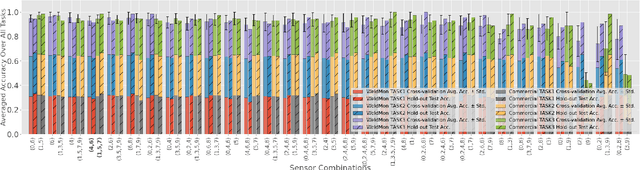
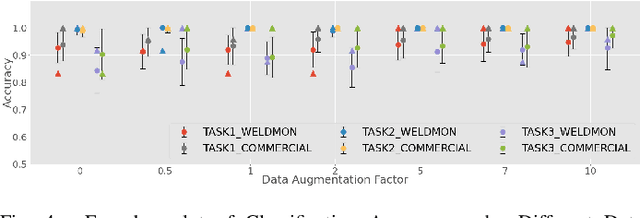
Ultrasonic welding machines play a critical role in the lithium battery industry, facilitating the bonding of batteries with conductors. Ensuring high-quality welding is vital, making tool condition monitoring systems essential for early-stage quality control. However, existing monitoring methods face challenges in cost, downtime, and adaptability. In this paper, we present WeldMon, an affordable ultrasonic welding machine condition monitoring system that utilizes a custom data acquisition system and a data analysis pipeline designed for real-time analysis. Our classification algorithm combines auto-generated features and hand-crafted features, achieving superior cross-validation accuracy (95.8% on average over all testing tasks) compared to the state-of-the-art method (92.5%) in condition classification tasks. Our data augmentation approach alleviates the concept drift problem, enhancing tool condition classification accuracy by 8.3%. All algorithms run locally, requiring only 385 milliseconds to process data for each welding cycle. We deploy WeldMon and a commercial system on an actual ultrasonic welding machine, performing a comprehensive comparison. Our findings highlight the potential for developing cost-effective, high-performance, and reliable tool condition monitoring systems.