 Add to Chrome
 Add to Firefox
 Add to Edge
Three methods, one problem: Classical and AI approaches to no-three-in-line
Dec 22, 2025
The No-Three-In-Line problem asks for the maximum number of points that can be placed on an n by n grid with no three collinear, representing a famous problem in combinatorial geometry. While classical methods like Integer Linear Programming (ILP) guarantee optimal solutions, they face exponential scaling with grid size, and recent advances in machine learning offer promising alternatives for pattern-based approximation. This paper presents the first systematic comparison of classical optimization and AI approaches to this problem, evaluating their performance against traditional algorithms. We apply PatternBoost transformer learning and reinforcement learning (PPO) to this problem for the first time, comparing them against ILP. ILP achieves provably optimal solutions up to 19 by 19 grids, while PatternBoost matches optimal performance up to 14 by 14 grids with 96% test loss reduction. PPO achieves perfect solutions on 10 by 10 grids but fails at 11 by 11 grids, where constraint violations prevent valid configurations. These results demonstrate that classical optimization remains essential for exact solutions while AI methods offer competitive performance on smaller instances, with hybrid approaches presenting the most promising direction for scaling to larger problem sizes.

Forecasting N-Body Dynamics: A Comparative Study of Neural Ordinary Differential Equations and Universal Differential Equations
Dec 12, 2025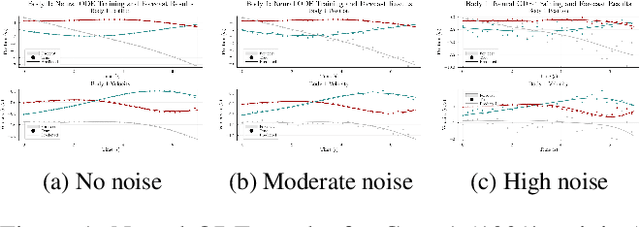
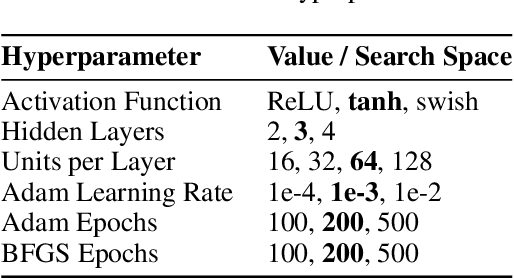
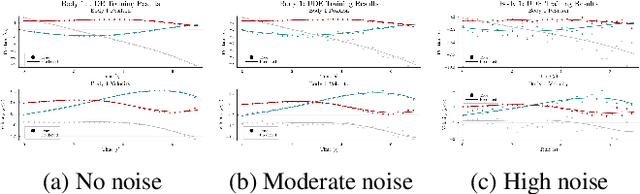
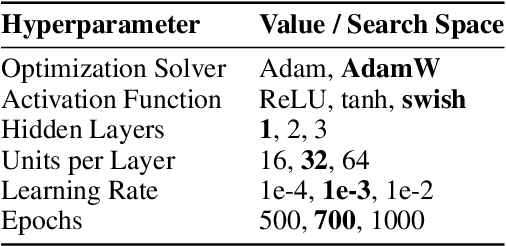
The n body problem, fundamental to astrophysics, simulates the motion of n bodies acting under the effect of their own mutual gravitational interactions. Traditional machine learning models that are used for predicting and forecasting trajectories are often data intensive black box models, which ignore the physical laws, thereby lacking interpretability. Whereas Scientific Machine Learning ( Scientific ML ) directly embeds the known physical laws into the machine learning framework. Through robust modelling in the Julia programming language, our method uses the Scientific ML frameworks: Neural ordinary differential equations (NODEs) and Universal differential equations (UDEs) to predict and forecast the system dynamics. In addition, an essential component of our analysis involves determining the forecasting breakdown point, which is the smallest possible amount of training data our models need to predict future, unseen data accurately. We employ synthetically created noisy data to simulate real-world observational limitations. Our findings indicate that the UDE model is much more data efficient, needing only 20% of data for a correct forecast, whereas the Neural ODE requires 90%.
Physics-Informed Neural ODEs with Scale-Aware Residuals for Learning Stiff Biophysical Dynamics
Nov 13, 2025Neural differential equations offer a powerful framework for modeling continuous-time dynamics, but forecasting stiff biophysical systems remains unreliable. Standard Neural ODEs and physics informed variants often require orders of magnitude more iterations, and even then may converge to suboptimal solutions that fail to preserve oscillatory frequency or amplitude. We introduce PhysicsInformed Neural ODEs with with Scale-Aware Residuals (PI-NODE-SR), a framework that combines a low-order explicit solver (Heun method) residual normalisation to balance contributions between state variables evolving on disparate timescales. This combination stabilises training under realistic iteration budgets and avoids reliance on computationally expensive implicit solvers. On the Hodgkin-Huxley equations, PI-NODE-SR learns from a single oscillation simulated with a stiff solver (Rodas5P) and extrapolates beyond 100 ms, capturing both oscillation frequency and near-correct amplitudes. Remarkably, end-to-end learning of the vector field enables PI-NODE-SR to recover morphological features such as sharp subthreshold curvature in gating variables that are typically reserved for higher-order solvers, suggesting that neural correction can offset numerical diffusion. While performance remains sensitive to initialisation, PI-NODE-SR consistently reduces long-horizon errors relative to baseline Neural-ODEs and PINNs, offering a principled route to stable and efficient learning of stiff biological dynamics.
HULLMI: Human vs LLM identification with explainability
Sep 07, 2024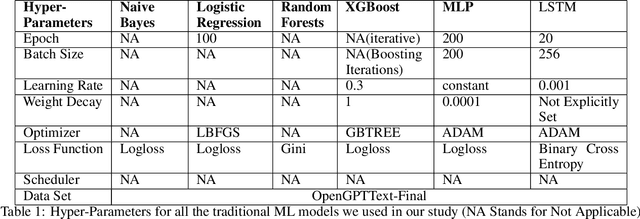
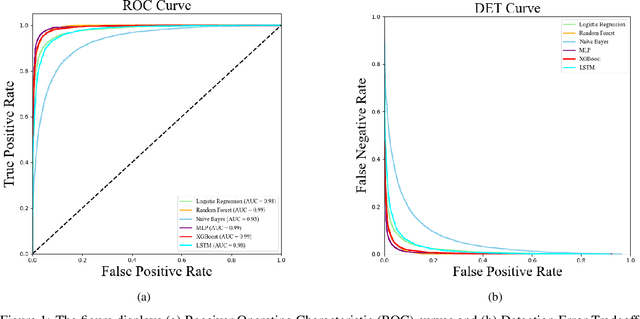
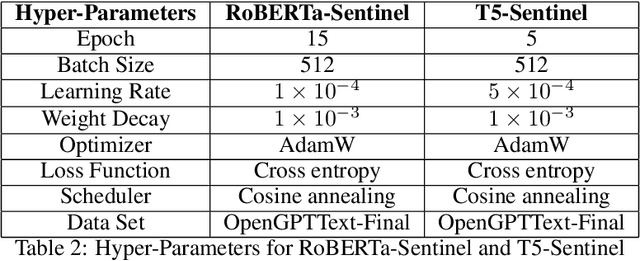
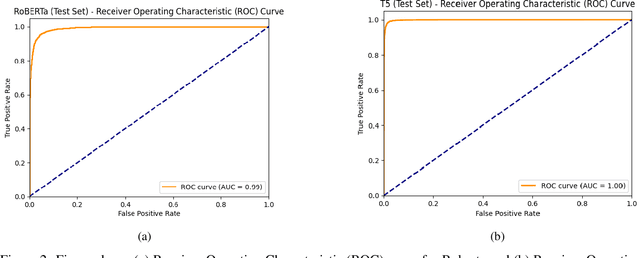
As LLMs become increasingly proficient at producing human-like responses, there has been a rise of academic and industrial pursuits dedicated to flagging a given piece of text as "human" or "AI". Most of these pursuits involve modern NLP detectors like T5-Sentinel and RoBERTa-Sentinel, without paying too much attention to issues of interpretability and explainability of these models. In our study, we provide a comprehensive analysis that shows that traditional ML models (Naive-Bayes,MLP, Random Forests, XGBoost) perform as well as modern NLP detectors, in human vs AI text detection. We achieve this by implementing a robust testing procedure on diverse datasets, including curated corpora and real-world samples. Subsequently, by employing the explainable AI technique LIME, we uncover parts of the input that contribute most to the prediction of each model, providing insights into the detection process. Our study contributes to the growing need for developing production-level LLM detection tools, which can leverage a wide range of traditional as well as modern NLP detectors we propose. Finally, the LIME techniques we demonstrate also have the potential to equip these detection tools with interpretability analysis features, making them more reliable and trustworthy in various domains like education, healthcare, and media.