 Add to Chrome
 Add to Firefox
 Add to Edge
EOS-Bench: A Comprehensive Benchmark for Earth Observation Satellite Scheduling
Apr 28, 2026
Earth observation satellite imaging scheduling is a challenging NP-hard combinatorial optimisation problem central to space mission operations. While next-generation agile Earth observation satellites (EOS) increase operational flexibility, they also significantly raise scheduling complexity. The lack of a unified, open-source benchmark makes it difficult to compare algorithms across studies. This paper introduces EOS-Bench, a comprehensive framework for systematic and reproducible evaluation of scheduling methods. By integrating high-fidelity orbital dynamics and platform constraints, EOS-Bench generates 1,390 scenarios and 13,900 benchmark instances, spanning from small-scale validation cases to large coordination problems with up to 1,000 satellites and 10,000 requests. We further propose a scenario characterisation scheme to quantify structural difficulty based on factors such as opportunity density, task flexibility, conflict intensity, and satellite congestion. A multidimensional evaluation protocol is introduced, assessing performance across five metrics: task profit, completion rate, workload balance, timeliness, and runtime. The framework is evaluated using mixed-integer programming, heuristics, meta-heuristics, and deep reinforcement learning across both agile and non-agile settings. Results show that EOS-Bench effectively distinguishes solver performance across scales and conditions, revealing trade-offs between solution quality and computational efficiency, and providing deeper insight into scenario complexity. EOS-Bench offers a unified and extensible open testbed for advancing research in Earth observation satellite scheduling. The code and data are available at https://github.com/Ethan19YQ/EOS-Bench.

Gain Scheduling with a Neural Operator for a Transport PDE with Nonlinear Recirculation
Jan 04, 2024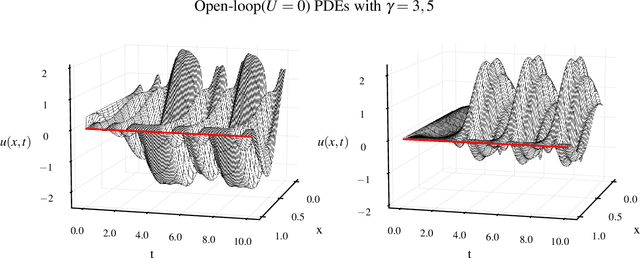
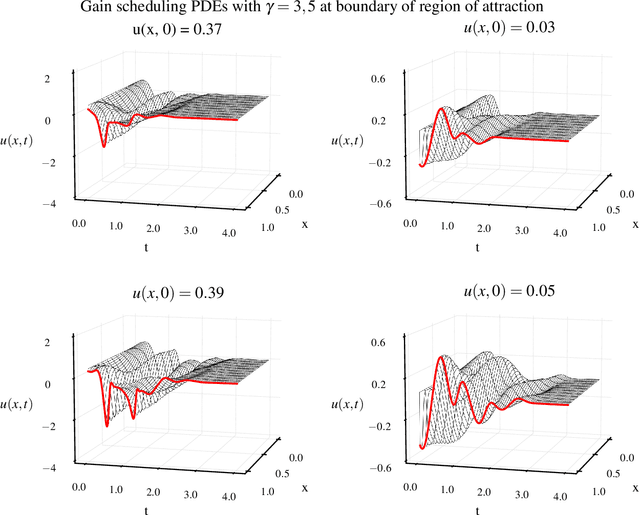
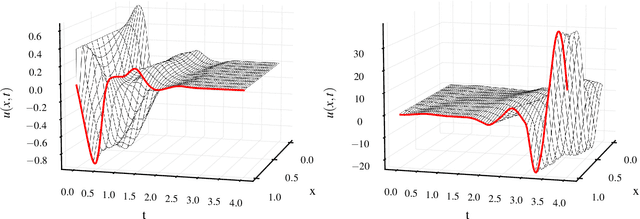
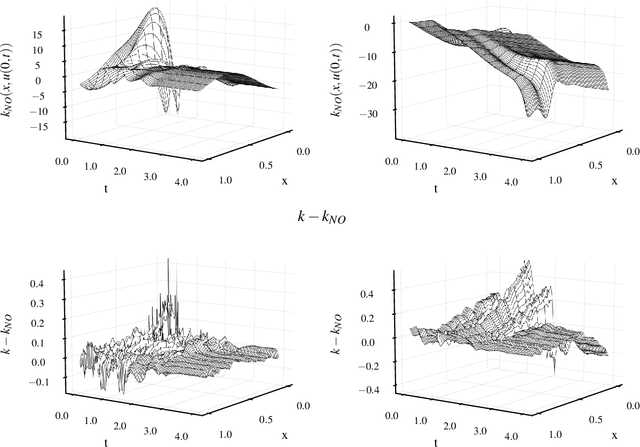
To stabilize PDE models, control laws require space-dependent functional gains mapped by nonlinear operators from the PDE functional coefficients. When a PDE is nonlinear and its "pseudo-coefficient" functions are state-dependent, a gain-scheduling (GS) nonlinear design is the simplest approach to the design of nonlinear feedback. The GS version of PDE backstepping employs gains obtained by solving a PDE at each value of the state. Performing such PDE computations in real time may be prohibitive. The recently introduced neural operators (NO) can be trained to produce the gain functions, rapidly in real time, for each state value, without requiring a PDE solution. In this paper we introduce NOs for GS-PDE backstepping. GS controllers act on the premise that the state change is slow and, as a result, guarantee only local stability, even for ODEs. We establish local stabilization of hyperbolic PDEs with nonlinear recirculation using both a "full-kernel" approach and the "gain-only" approach to gain operator approximation. Numerical simulations illustrate stabilization and demonstrate speedup by three orders of magnitude over traditional PDE gain-scheduling. Code (Github) for the numerical implementation is published to enable exploration.