 Add to Chrome
 Add to Firefox
 Add to Edge
Arko-T: A Foundation Model for Text-to-Structured 3D Generation
Jun 30, 2026
Text-to-3D systems can now synthesize a model from a single sentence, yet the result is a shape to render, not a design to edit. We present Arko-T, a 4B-parameter text-to-design model that maps natural-language intent directly into executable, parametric CAD programs. Rather than optimizing for code executability alone, Arko-T aligns every stage of the pipeline to a formal notion of design state, so that data curation, code normalization, and execution-grounded supervision all work to preserve the features, parameters, and construction logic that make a CAD artifact editable. Benchmarked against seven frontier LLMs across 12 metrics, Arko-T attains the best score on 8 and the second-best on 3 more, at roughly one-tenth the per-benchmark cost. The results suggest that targeted design-level training at moderate scale can match frontier general-purpose models on structured CAD generation.

XWSB: A Blend System Utilizing XLS-R and WavLM with SLS Classifier detection system for SVDD 2024 Challenge
Sep 27, 2024
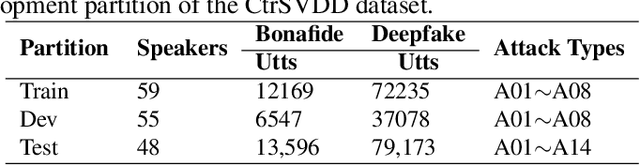
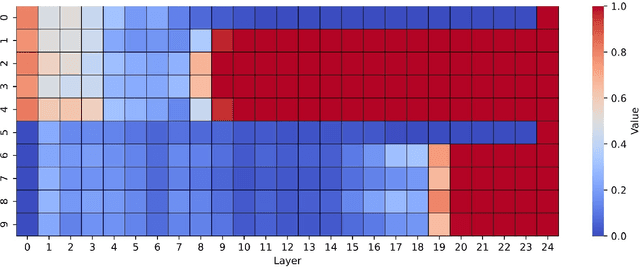

This paper introduces the model structure used in the SVDD 2024 Challenge. The SVDD 2024 challenge has been introduced this year for the first time. Singing voice deepfake detection (SVDD) which faces complexities due to informal speech intonations and varying speech rates. In this paper, we propose the XWSB system, which achieved SOTA per-formance in the SVDD challenge. XWSB stands for XLS-R, WavLM, and SLS Blend, representing the integration of these technologies for the purpose of SVDD. Specifically, we used the best performing model structure XLS-R&SLS from the ASVspoof DF dataset, and applied SLS to WavLM to form the WavLM&SLS structure. Finally, we integrated two models to form the XWSB system. Experimental results show that our system demonstrates advanced recognition capabilities in the SVDD challenge, specifically achieving an EER of 2.32% in the CtrSVDD track. The code and data can be found at https://github.com/QiShanZhang/XWSB_for_ SVDD2024.