 Add to Chrome
 Add to Firefox
 Add to Edge
Spiking Heterogeneous Graph Attention Networks
Dec 31, 2025
Real-world graphs or networks are usually heterogeneous, involving multiple types of nodes and relationships. Heterogeneous graph neural networks (HGNNs) can effectively handle these diverse nodes and edges, capturing heterogeneous information within the graph, thus exhibiting outstanding performance. However, most methods of HGNNs usually involve complex structural designs, leading to problems such as high memory usage, long inference time, and extensive consumption of computing resources. These limitations pose certain challenges for the practical application of HGNNs, especially for resource-constrained devices. To mitigate this issue, we propose the Spiking Heterogeneous Graph Attention Networks (SpikingHAN), which incorporates the brain-inspired and energy-saving properties of Spiking Neural Networks (SNNs) into heterogeneous graph learning to reduce the computing cost without compromising the performance. Specifically, SpikingHAN aggregates metapath-based neighbor information using a single-layer graph convolution with shared parameters. It then employs a semantic-level attention mechanism to capture the importance of different meta-paths and performs semantic aggregation. Finally, it encodes the heterogeneous information into a spike sequence through SNNs, simulating bioinformatic processing to derive a binarized 1-bit representation of the heterogeneous graph. Comprehensive experimental results from three real-world heterogeneous graph datasets show that SpikingHAN delivers competitive node classification performance. It achieves this with fewer parameters, quicker inference, reduced memory usage, and lower energy consumption. Code is available at https://github.com/QianPeng369/SpikingHAN.

Conformal Prediction with Cellwise Outliers: A Detect-then-Impute Approach
May 08, 2025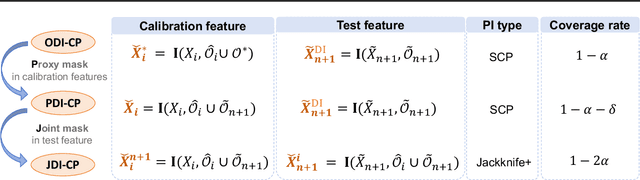
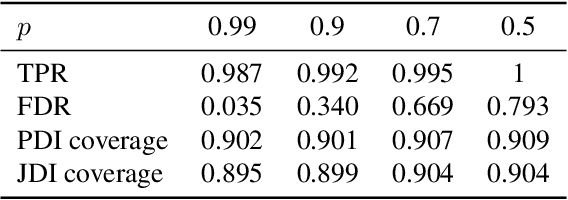
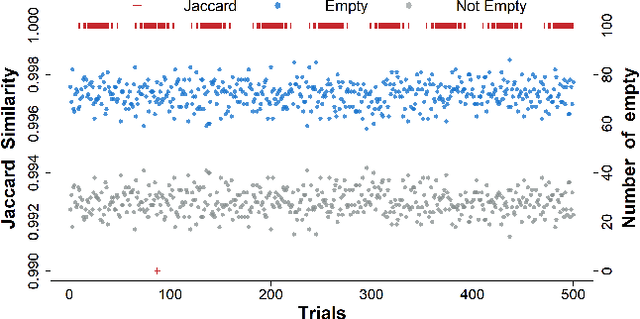
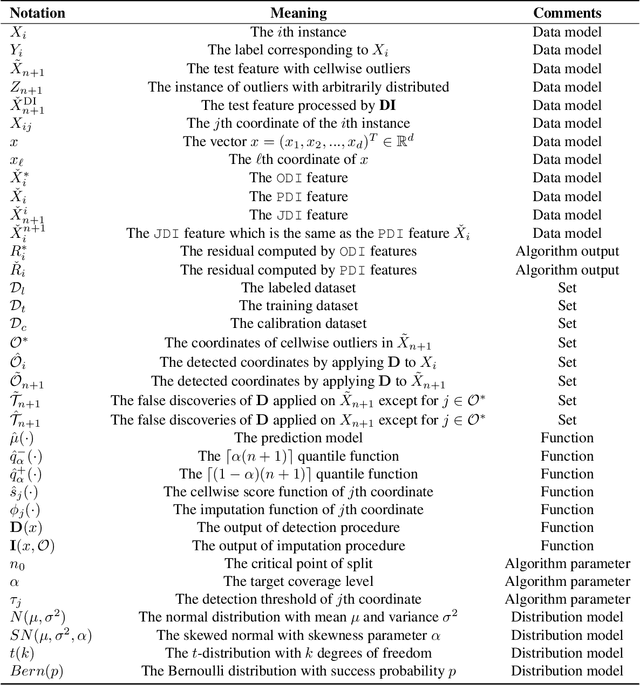
Conformal prediction is a powerful tool for constructing prediction intervals for black-box models, providing a finite sample coverage guarantee for exchangeable data. However, this exchangeability is compromised when some entries of the test feature are contaminated, such as in the case of cellwise outliers. To address this issue, this paper introduces a novel framework called detect-then-impute conformal prediction. This framework first employs an outlier detection procedure on the test feature and then utilizes an imputation method to fill in those cells identified as outliers. To quantify the uncertainty in the processed test feature, we adaptively apply the detection and imputation procedures to the calibration set, thereby constructing exchangeable features for the conformal prediction interval of the test label. We develop two practical algorithms, PDI-CP and JDI-CP, and provide a distribution-free coverage analysis under some commonly used detection and imputation procedures. Notably, JDI-CP achieves a finite sample $1-2\alpha$ coverage guarantee. Numerical experiments on both synthetic and real datasets demonstrate that our proposed algorithms exhibit robust coverage properties and comparable efficiency to the oracle baseline.
VMAgent: Scheduling Simulator for Reinforcement Learning
Dec 09, 2021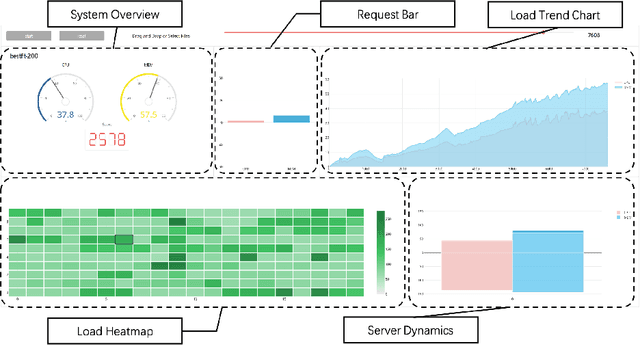
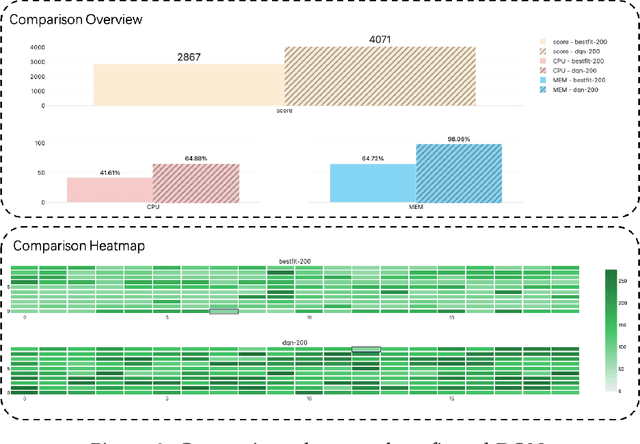
A novel simulator called VMAgent is introduced to help RL researchers better explore new methods, especially for virtual machine scheduling. VMAgent is inspired by practical virtual machine (VM) scheduling tasks and provides an efficient simulation platform that can reflect the real situations of cloud computing. Three scenarios (fading, recovering, and expansion) are concluded from practical cloud computing and corresponds to many reinforcement learning challenges (high dimensional state and action spaces, high non-stationarity, and life-long demand). VMAgent provides flexible configurations for RL researchers to design their customized scheduling environments considering different problem features. From the VM scheduling perspective, VMAgent also helps to explore better learning-based scheduling solutions.