 Add to Chrome
 Add to Firefox
 Add to Edge
EigentSearch-Q+: Enhancing Deep Research Agents with Structured Reasoning Tools
Apr 09, 2026
Deep research requires reasoning over web evidence to answer open-ended questions, and it is a core capability for AI agents. Yet many deep research agents still rely on implicit, unstructured search behavior that causes redundant exploration and brittle evidence aggregation. Motivated by Anthropic's "think" tool paradigm and insights from the information-retrieval literature, we introduce Q+, a set of query and evidence processing tools that make web search more deliberate by guiding query planning, monitoring search progress, and extracting evidence from long web snapshots. We integrate Q+ into the browser sub-agent of Eigent, an open-source, production-ready multi-agent workforce for computer use, yielding EigentSearch-Q+. Across four benchmarks (SimpleQA-Verified, FRAMES, WebWalkerQA, and X-Bench DeepSearch), Q+ improves Eigent's browser agent benchmark-size-weighted average accuracy by 3.0, 3.8, and 0.6 percentage points (pp) for GPT-4.1, GPT-5.1, and Minimax M2.5 model backends, respectively. Case studies further suggest that EigentSearch-Q+ produces more coherent tool-calling trajectories by making search progress and evidence handling explicit.

Towards a Barrier-free GeoQA Portal: Natural Language Interaction with Geospatial Data Using Multi-Agent LLMs and Semantic Search
Mar 18, 2025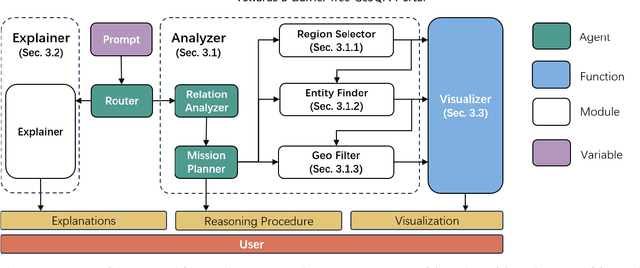
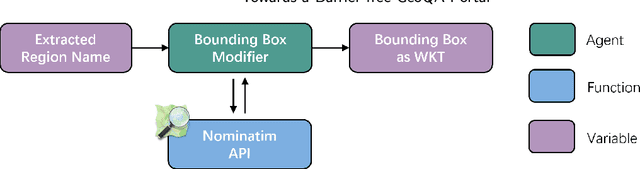
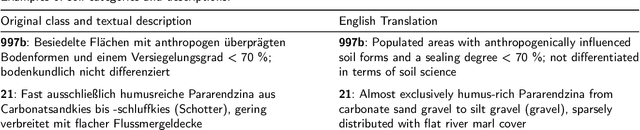
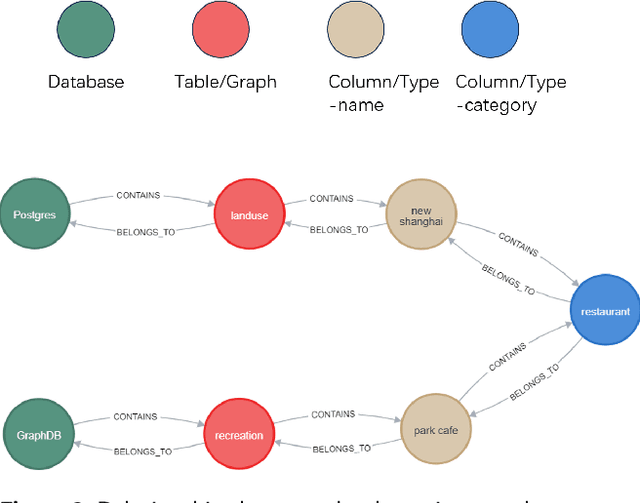
A Barrier-Free GeoQA Portal: Enhancing Geospatial Data Accessibility with a Multi-Agent LLM Framework Geoportals are vital for accessing and analyzing geospatial data, promoting open spatial data sharing and online geo-information management. Designed with GIS-like interaction and layered visualization, they often challenge non-expert users with complex functionalities and overlapping layers that obscure spatial relationships. We propose a GeoQA Portal using a multi-agent Large Language Model framework for seamless natural language interaction with geospatial data. Complex queries are broken into subtasks handled by specialized agents, retrieving relevant geographic data efficiently. Task plans are shown to users, boosting transparency. The portal supports default and custom data inputs for flexibility. Semantic search via word vector similarity aids data retrieval despite imperfect terms. Case studies, evaluations, and user tests confirm its effectiveness for non-experts, bridging GIS complexity and public access, and offering an intuitive solution for future geoportals.