 Add to Chrome
 Add to Firefox
 Add to Edge
Rough Sets for Explainability of Spectral Graph Clustering
Dec 13, 2025
Graph Spectral Clustering methods (GSC) allow representing clusters of diverse shapes, densities, etc. However, the results of such algorithms, when applied e.g. to text documents, are hard to explain to the user, especially due to embedding in the spectral space which has no obvious relation to document contents. Furthermore, the presence of documents without clear content meaning and the stochastic nature of the clustering algorithms deteriorate explainability. This paper proposes an enhancement to the explanation methodology, proposed in an earlier research of our team. It allows us to overcome the latter problems by taking inspiration from rough set theory.

A Method for Handling Negative Similarities in Explainable Graph Spectral Clustering of Text Documents -- Extended Version
Apr 16, 2025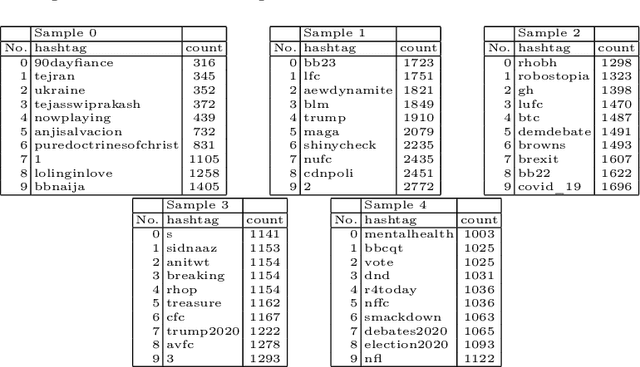
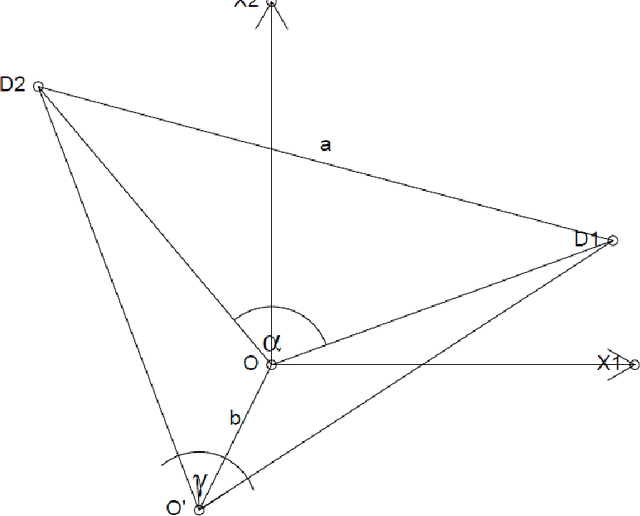
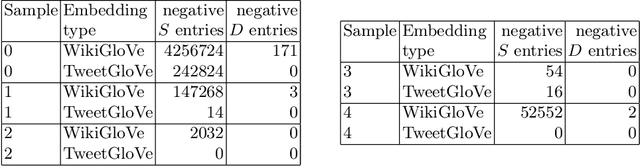
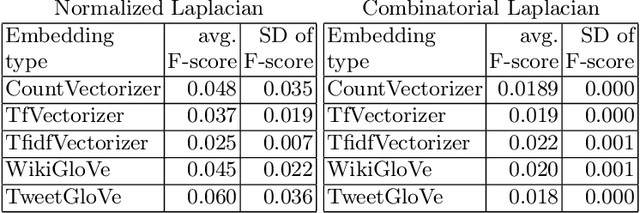
This paper investigates the problem of Graph Spectral Clustering with negative similarities, resulting from document embeddings different from the traditional Term Vector Space (like doc2vec, GloVe, etc.). Solutions for combinatorial Laplacians and normalized Laplacians are discussed. An experimental investigation shows the advantages and disadvantages of 6 different solutions proposed in the literature and in this research. The research demonstrates that GloVe embeddings frequently cause failures of normalized Laplacian based GSC due to negative similarities. Furthermore, application of methods curing similarity negativity leads to accuracy improvement for both combinatorial and normalized Laplacian based GSC. It also leads to applicability for GloVe embeddings of explanation methods developed originally bythe authors for Term Vector Space embeddings.
Semantic classifier approach to document classification
Jan 16, 2017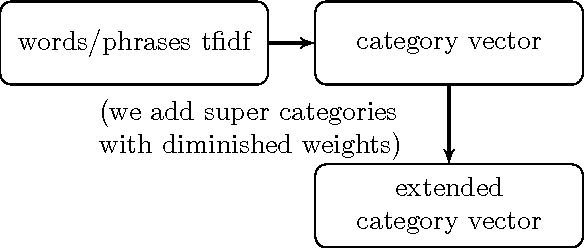
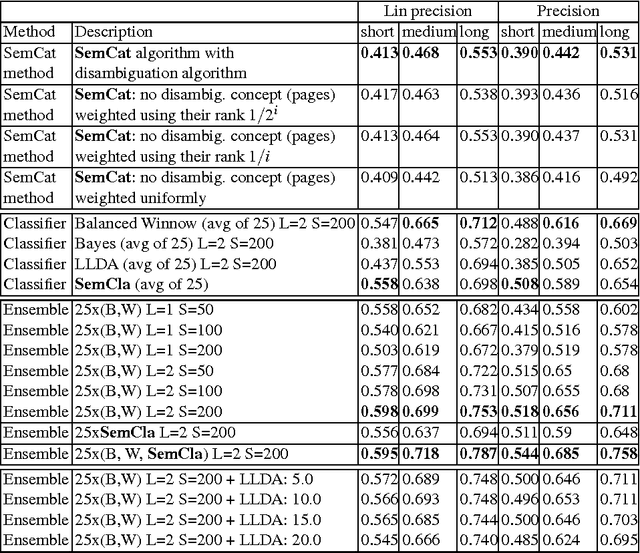
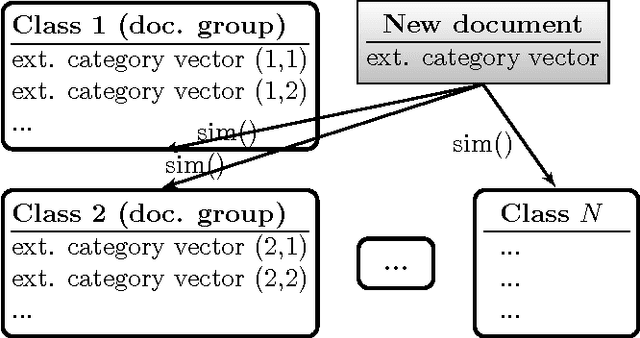
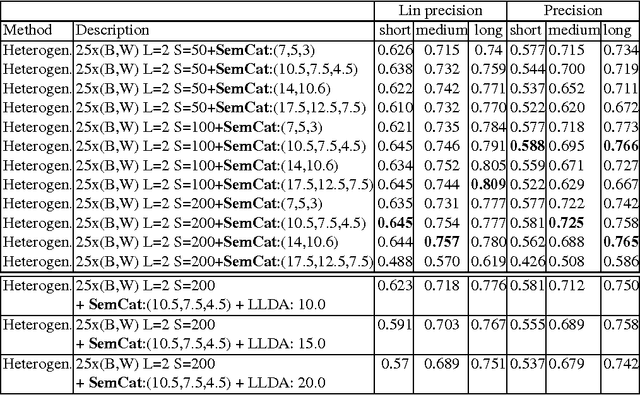
In this paper we propose a new document classification method, bridging discrepancies (so-called semantic gap) between the training set and the application sets of textual data. We demonstrate its superiority over classical text classification approaches, including traditional classifier ensembles. The method consists in combining a document categorization technique with a single classifier or a classifier ensemble (SEMCOM algorithm - Committee with Semantic Categorizer).