 Add to Chrome
 Add to Firefox
 Add to Edge
CG-World: A Large-Scale World-State Dataset and Protocol for World Models
Jul 29, 2026
World models must learn the joint dynamics of states, actions, events, and observations, yet existing video, robotics, and simulation datasets usually capture only part of this structure. We introduce CG-World, a large-scale world-state dataset and protocol derived from industrial computer graphics production pipelines. CG-World explicitly records intermediate states, including multimodal semantics, spatial structure, skeletal and controller states, motion curves, camera and lighting parameters, physics caches, contact events, and multi-pass renderings. CG-World v1 contains approximately 850,000 temporally aligned segments of 1-5 seconds. It separates latent states, observations, relations, events, and branch metadata, and organizes them into unified spatiotemporal samples. To support intervention learning and counterfactual reasoning, CG-World defines a branch lineage covering factual trajectories, observation interventions, action interventions, mechanism interventions, and strict counterfactual branches, with intervention targets, invariants, and alternative outcomes explicitly recorded. We evaluate the dataset on geometry-conditioned video generation, action prediction, and closed-loop vision-language-action policy transfer. Results show that CG-World provides reusable structured supervision for controlled generation, action modeling, and embodied policy transfer. We plan to expand CG-World through continued data collection and community collaboration toward a shared data infrastructure for world models, Physical AI, and embodied intelligence.

3D-UGCN: A Unified Graph Convolutional Network for Robust 3D Human Pose Estimation from Monocular RGB Images
Jul 23, 2024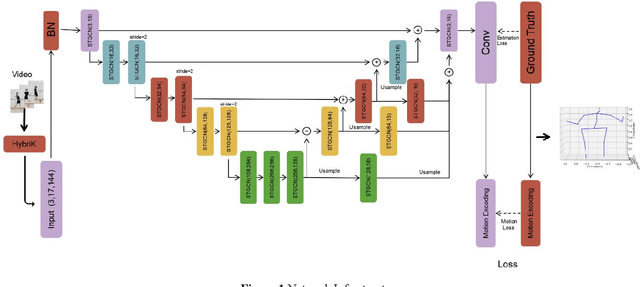

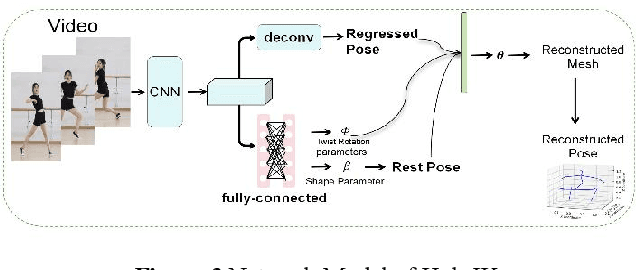
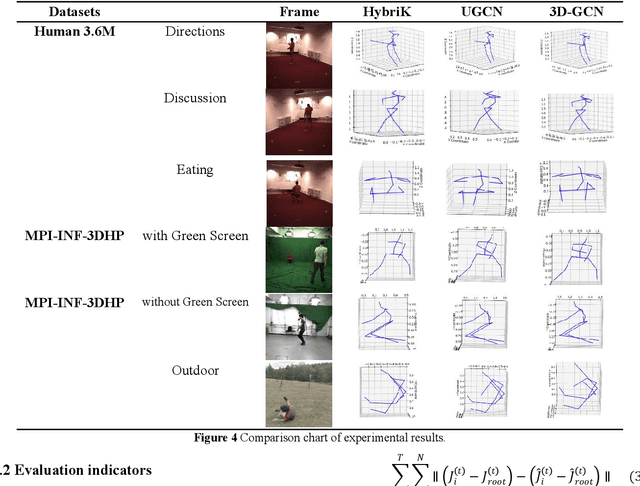
Human pose estimation remains a multifaceted challenge in computer vision, pivotal across diverse domains such as behavior recognition, human-computer interaction, and pedestrian tracking. This paper proposes an improved method based on the spatial-temporal graph convolution net-work (UGCN) to address the issue of missing human posture skeleton sequences in single-view videos. We present the improved UGCN, which allows the network to process 3D human pose data and improves the 3D human pose skeleton sequence, thereby resolving the occlusion issue.
DeepICP: An End-to-End Deep Neural Network for 3D Point Cloud Registration
May 10, 2019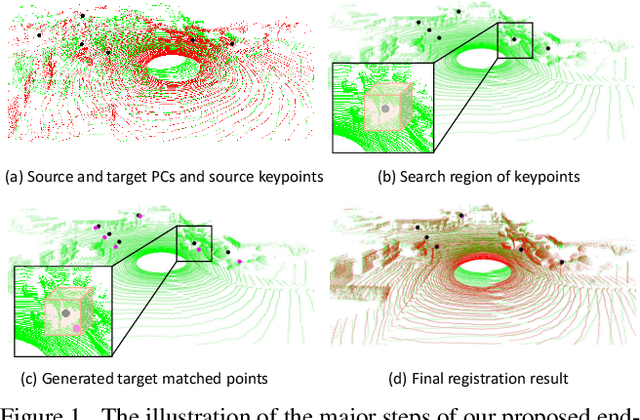
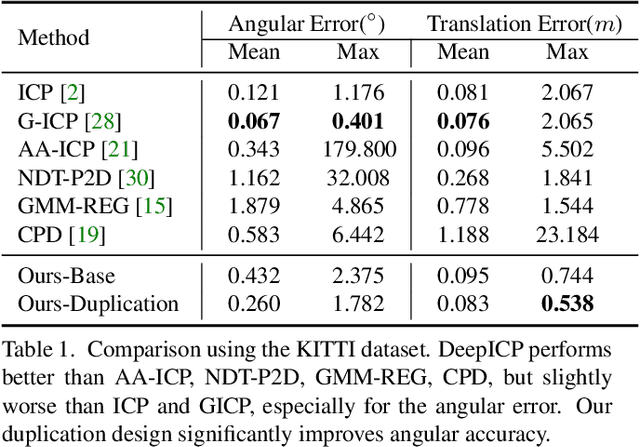
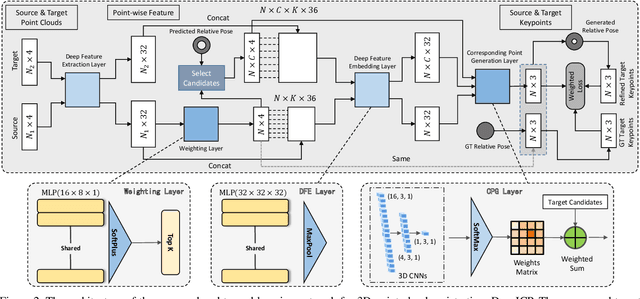
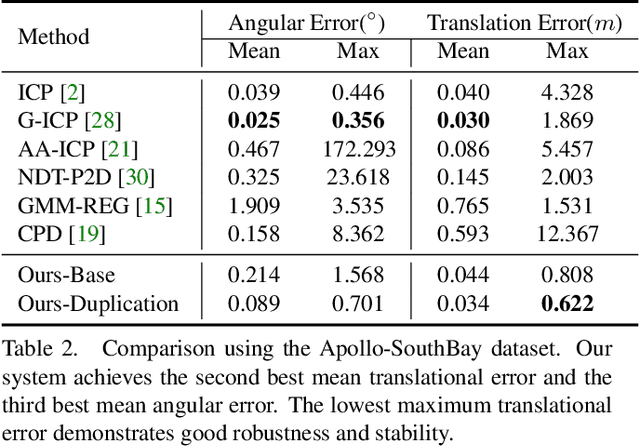
We present DeepICP - a novel end-to-end learning-based 3D point cloud registration framework that achieves comparable registration accuracy to prior state-of-the-art geometric methods. Different from other keypoint based methods where a RANSAC procedure is usually needed, we implement the use of various deep neural network structures to establish an end-to-end trainable network. Our keypoint detector is trained through this end-to-end structure and enables the system to avoid the inference of dynamic objects, leverages the help of sufficiently salient features on stationary objects, and as a result, achieves high robustness. Rather than searching the corresponding points among existing points, the key contribution is that we innovatively generate them based on learned matching probabilities among a group of candidates, which can boost the registration accuracy. Our loss function incorporates both the local similarity and the global geometric constraints to ensure all above network designs can converge towards the right direction. We comprehensively validate the effectiveness of our approach using both the KITTI dataset and the Apollo-SouthBay dataset. Results demonstrate that our method achieves comparable or better performance than the state-of-the-art geometry-based methods. Detailed ablation and visualization analysis are included to further illustrate the behavior and insights of our network. The low registration error and high robustness of our method makes it attractive for substantial applications relying on the point cloud registration task.