 Add to Chrome
 Add to Firefox
 Add to Edge
The complexities of patient-centred conversational artificial intelligence
Jul 09, 2026
Consumer-facing health chatbots powered by large language models (LLMs) are increasingly used for symptom assessment. However, chatbot development and evaluation often rely on cooperative, articulate, simulated patients. We analysed 2,053 real patient-chatbot conversations and found that communication patterns and expression of emotions vary widely across users. We developed a patient simulator that separately models clinical content, emotional state, conversational strategy, and communication style. In a Turing-inspired evaluation of realism with 15 human graders, simulated conversations were nearly indistinguishable from real ones, with human graders achieving an accuracy of 55%. We used five distinct patient personae, across 1,164 clinician-graded cases, to evaluate the performance of four LLMs in urgency assessment. We found that communication style can significantly alter triage outcomes. Patient-centred conversational artificial intelligence must accommodate communication diversity: systems designed for idealised, rather than realistic, interactions risk underperforming and amplifying health disparities when deployed in the real world.

A tutorial on fairness in machine learning in healthcare
Jun 15, 2024
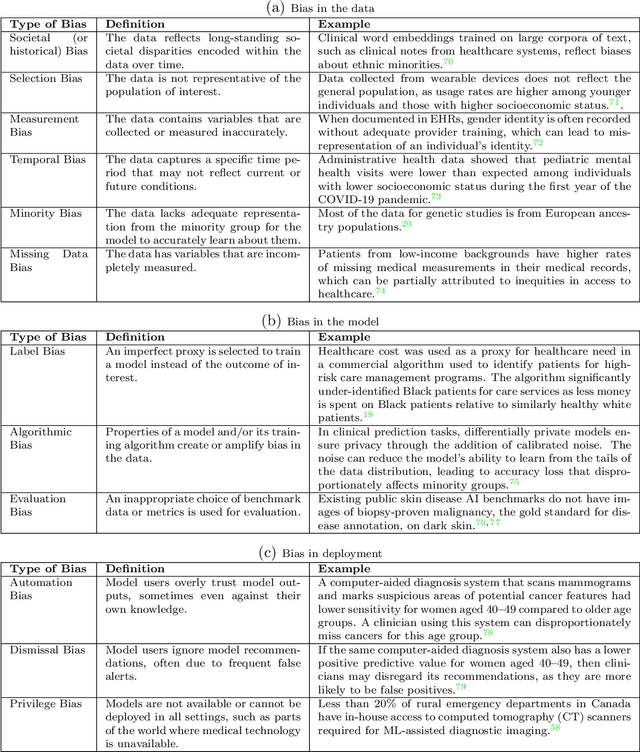
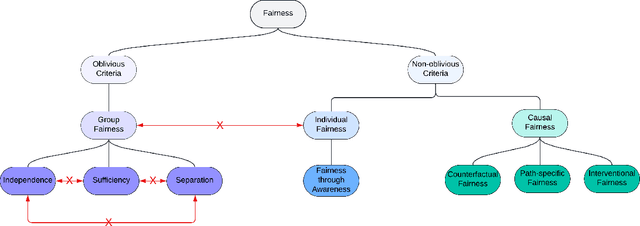
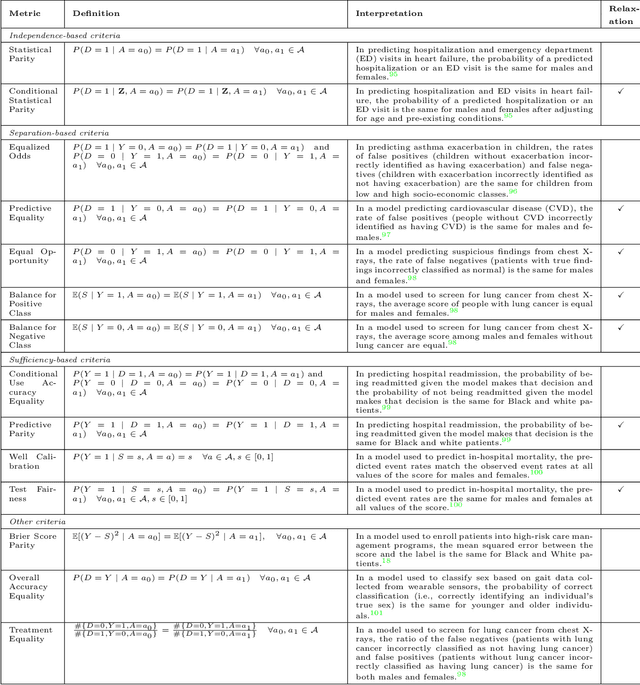
$\textbf{OBJECTIVE}$: Ensuring that machine learning (ML) algorithms are safe and effective within all patient groups, and do not disadvantage particular patients, is essential to clinical decision making and preventing the reinforcement of existing healthcare inequities. The objective of this tutorial is to introduce the medical informatics community to the common notions of fairness within ML, focusing on clinical applications and implementation in practice. $\textbf{TARGET AUDIENCE}$: As gaps in fairness arise in a variety of healthcare applications, this tutorial is designed to provide an understanding of fairness, without assuming prior knowledge, to researchers and clinicians who make use of modern clinical data. $\textbf{SCOPE}$: We describe the fundamental concepts and methods used to define fairness in ML, including an overview of why models in healthcare may be unfair, a summary and comparison of the metrics used to quantify fairness, and a discussion of some ongoing research. We illustrate some of the fairness methods introduced through a case study of mortality prediction in a publicly available electronic health record dataset. Finally, we provide a user-friendly R package for comprehensive group fairness evaluation, enabling researchers and clinicians to assess fairness in their own ML work.
Uncertainty-Aware PPG-2-ECG for Enhanced Cardiovascular Diagnosis using Diffusion Models
May 19, 2024Analyzing the cardiovascular system condition via Electrocardiography (ECG) is a common and highly effective approach, and it has been practiced and perfected over many decades. ECG sensing is non-invasive and relatively easy to acquire, and yet it is still cumbersome for holter monitoring tests that may span over hours and even days. A possible alternative in this context is Photoplethysmography (PPG): An optically-based signal that measures blood volume fluctuations, as typically sensed by conventional ``wearable devices''. While PPG presents clear advantages in acquisition, convenience, and cost-effectiveness, ECG provides more comprehensive information, allowing for a more precise detection of heart conditions. This implies that a conversion from PPG to ECG, as recently discussed in the literature, inherently involves an unavoidable level of uncertainty. In this paper we introduce a novel methodology for addressing the PPG-2-ECG conversion, and offer an enhanced classification of cardiovascular conditions using the given PPG, all while taking into account the uncertainties arising from the conversion process. We provide a mathematical justification for our proposed computational approach, and present empirical studies demonstrating its superior performance compared to state-of-the-art baseline methods.