 Add to Chrome
 Add to Firefox
 Add to Edge
SEATauBench: Adapting Tool-Agent-User Evaluation Into Low-Resource Southeast Asian Languages
Jun 27, 2026
While AI development and evaluation for Southeast Asia (SEA) has grown rapidly, agent capabilities in regional languages are still poorly understood despite its importance to sovereign AI. To fill this gap, we introduce SEATauBench, the first agent-focused evaluation framework for SEA sovereign AI. SeaTau adapts TauBench to five languages -- Mandarin, Vietnamese, Thai, Indonesian, and Filipino -- and evaluates agents across progressively localized settings that vary the language of user-agent interaction, tool specifications, and task domains. Across three recent models, we find that English agent capabilities transfer reasonably well when only the conversation language changes, but quality and robustness degrade sharply as more task contexts are localized, with the largest losses in full domain adaptation. We also the limits of English-only agent assessment for measuring agent capabilities in SEA languages. More broadly, SeaTau provides a diagnostic benchmark and reusable adaptation pipeline for building reliable multilingual agents for linguistically diverse regions. Data and code can be accessed at github.com/SEACrowd/SEATauBench.

Exploring Extrinsic and Intrinsic Properties for Effective Reasoning with Code Interpreter
Jun 15, 2026Reasoning with a Code Interpreter (CI) has emerged as an effective paradigm for enhancing the reasoning capabilities of large language models (LLMs) through executable computation and iterative verification. Despite its growing adoption, the behavioral properties underlying effective code reasoning remain largely underexplored. In this work, we investigate code reasoning from two distinct perspectives inspired by prior studies of natural language reasoning: extrinsic properties, represented by crucial tokens, and intrinsic properties, represented by code-specific cognitive behaviors. Across multiple LLMs, we find that stronger CI reasoning models consistently exhibit a higher prevalence of crucial tokens and cognitive behaviors, particularly verification, backtracking, and backward chaining. Building on these observations, we examine how these properties can be leveraged during both inference and training. At inference time, appending code-specific crucial tokens improves performance on several reasoning capabilities, including mathematical, ordering, and optimization, while yielding limited benefits elsewhere. At training time, augmenting a state-of-the-art framework with code-specific cognitive behaviors improves supervised fine-tuning and reinforcement learning performance in two of three evaluated models. Further analysis shows that these behaviors reduce overthinking in incorrect responses and improve token efficiency, while also revealing factors that limit gains in a certain model. Our findings provide the first systematic characterization of effective reasoning with CI and demonstrate both the potential and limitations of leveraging key properties to improve CI-based reasoning.
DuDi: Dual-Signal Distillation with Cross-Lingual Verbalizer
Jun 03, 2026Small language models (SLMs) are efficient and scalable, but their multilingual capabilities degrade severely at sub-billion scales, especially for Southeast Asian (SEA) languages. We introduce DuDi, a dual-signal multilingual distillation framework that combines an online sequence-level signal with off-policy and on-policy token-level signals. DuDi further uses a cross-lingual verbalizer to refine teacher feedback and improve teacher-student transferability in multilingual settings. Experiments on SEA-HELM across multiple model families, scales, and teacher-student settings show that DuDi consistently outperforms competitive distillation baselines. Ablations and analyses confirm that sequence-level optimization, token-level supervision, and cross-lingual verbalization provide complementary and transferable learning signals for multilingual SLMs.
Distilling Multilingual Vision-Language Models: When Smaller Models Stay Multilingual
Oct 30, 2025Vision-language models (VLMs) exhibit uneven performance across languages, a problem that is often exacerbated when the model size is reduced. While Knowledge distillation (KD) demonstrates promising results in transferring knowledge from larger to smaller VLMs, applying KD in multilingualism is an underexplored area. This paper presents a controlled empirical study of KD behavior across five distillation approaches, isolating their effects on cross-lingual representation consistency and downstream performance stability under model compression. We study five distillation formulations across CLIP and SigLIP2, and evaluate them on in-domain retrieval and out-of-domain visual QA. We find that some configurations preserve or even improve multilingual retrieval robustness despite halving model size, but others fail to maintain cross-task stability, exposing design-sensitive trade-offs that aggregate accuracy alone does not reveal.
Towards Better Understanding of Program-of-Thought Reasoning in Cross-Lingual and Multilingual Environments
Feb 25, 2025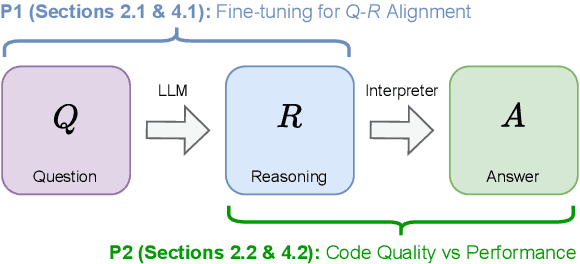
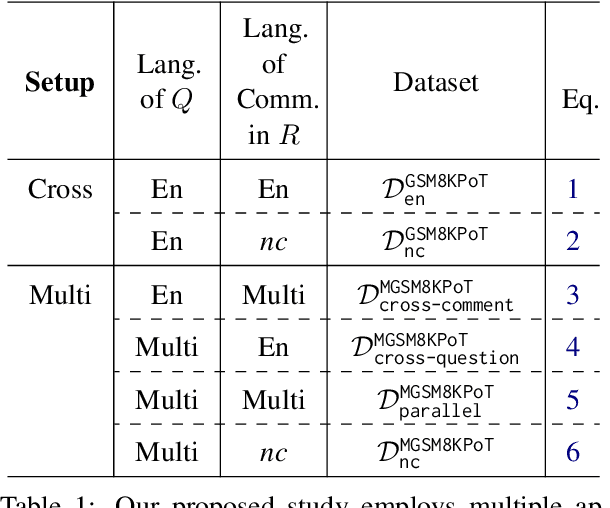
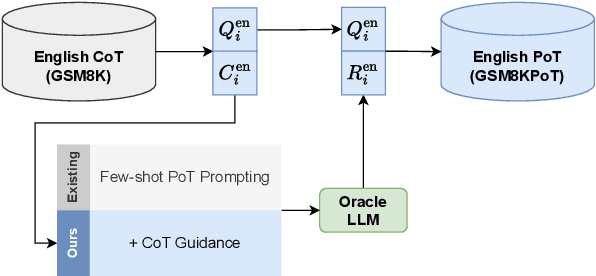
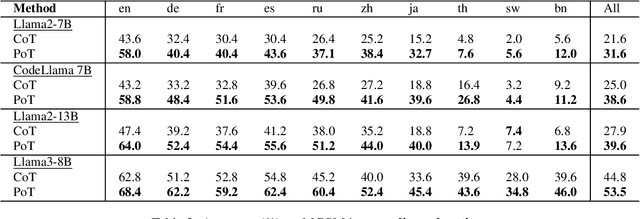
Multi-step reasoning is essential for large language models (LLMs), yet multilingual performance remains challenging. While Chain-of-Thought (CoT) prompting improves reasoning, it struggles with non-English languages due to the entanglement of reasoning and execution. Program-of-Thought (PoT) prompting separates reasoning from execution, offering a promising alternative but shifting the challenge to generating programs from non-English questions. We propose a framework to evaluate PoT by separating multilingual reasoning from code execution to examine (i) the impact of fine-tuning on question-reasoning alignment and (ii) how reasoning quality affects answer correctness. Our findings demonstrate that PoT fine-tuning substantially enhances multilingual reasoning, outperforming CoT fine-tuned models. We further demonstrate a strong correlation between reasoning quality (measured through code quality) and answer accuracy, highlighting its potential as a test-time performance improvement heuristic.
WangchanLion and WangchanX MRC Eval
Mar 24, 2024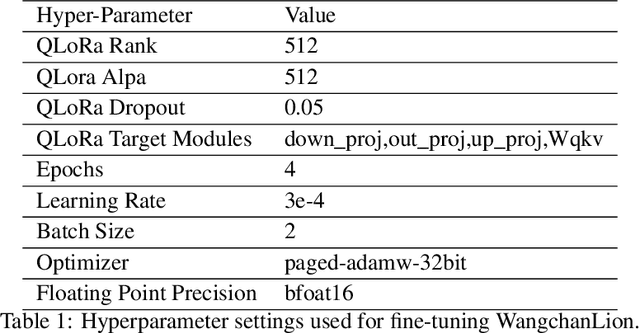
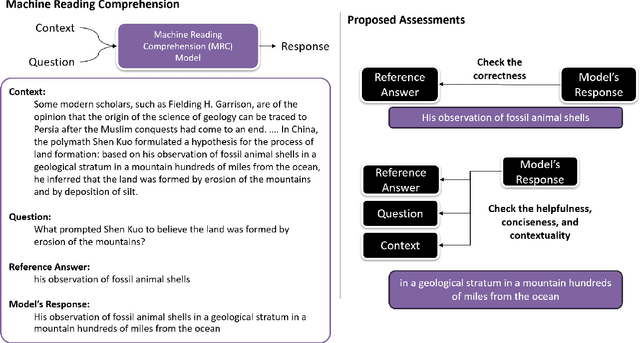
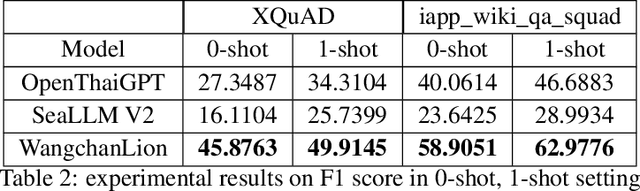
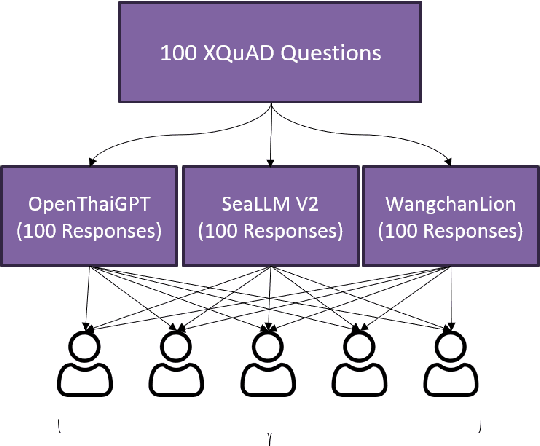
This technical report describes the development of WangchanLion, an instruction fine-tuned model focusing on Machine Reading Comprehension (MRC) in the Thai language. Our model is based on SEA-LION and a collection of instruction following datasets. To promote open research and reproducibility, we publically release all training data, code, and the final model weights under the Apache-2 license. To assess the contextual understanding capability, we conducted extensive experimental studies using two Thai MRC datasets, XQuAD and Iapp_wiki_qa_squad. Experimental results demonstrate the model's ability to comprehend the context and produce an answer faithful to the reference one in 0-shot and 1-shot settings. In addition, our evaluation goes beyond the traditional MRC. We propose a new evaluation scheme assessing the answer's correctness, helpfulness, conciseness, and contextuality. Evaluation results provide insight into how we can improve our model in the future. Our code is public at https://github.com/vistec-AI/WangchanLion.