 Add to Chrome
 Add to Firefox
 Add to Edge
Static Timing Orchestration for Tree-Structured Robot Control Firmware
Aug 05, 2026
As robotic systems become increasingly complex, generating control firmware from structural description files has emerged as a promising paradigm for reducing development complexity and improving maintainability. Existing robot description formats naturally represent robotic systems as hierarchical tree structures, where devices are recursively composed into functional subsystems and eventually into the complete robot. However, such tree-structured organization also introduces structured data dependencies that affect perception-to-decision latency and, consequently, control performance. In this paper, we propose FineMote, a control firmware generation framework with a scheduling mechanism tailored for tree-structured device models. The framework objectifies heterogeneous low-level control logic and exposes unified scheduling units and execution entry points. Based on the resulting object hierarchy, the scheduling mechanism exploits compile-time information to statically determine execution order with minimal runtime overhead. We prove that the proposed mechanism satisfies deadline and precedence constraints, and further derive an upper bound on intra-tree decision latency. We implement the proposed framework and evaluate it on real robotic control platforms. The experimental results show improved timing behavior and runtime responsiveness, demonstrating the practical effectiveness of the proposed design.

Aucamp: An Underwater Camera-Based Multi-Robot Platform with Low-Cost, Distributed, and Robust Localization
Jun 11, 2025
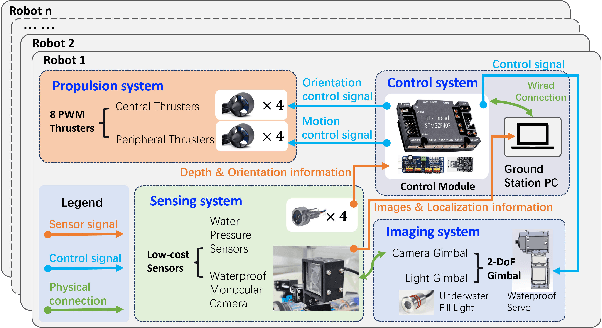
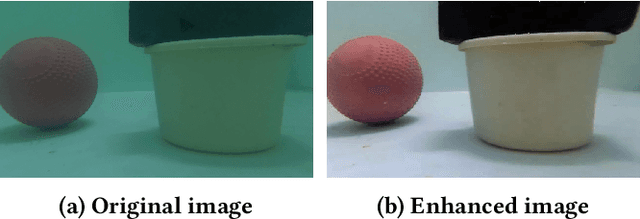
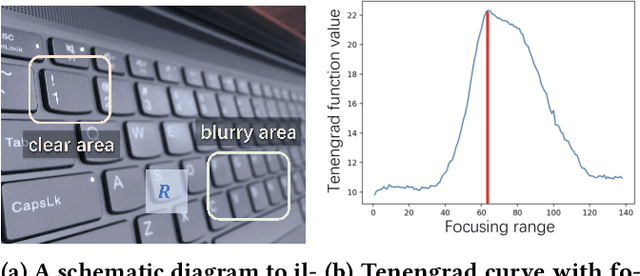
This paper introduces an underwater multi-robot platform, named Aucamp, characterized by cost-effective monocular-camera-based sensing, distributed protocol and robust orientation control for localization. We utilize the clarity feature to measure the distance, present the monocular imaging model, and estimate the position of the target object. We achieve global positioning in our platform by designing a distributed update protocol. The distributed algorithm enables the perception process to simultaneously cover a broader range, and greatly improves the accuracy and robustness of the positioning. Moreover, the explicit dynamics model of the robot in our platform is obtained, based on which, we propose a robust orientation control framework. The control system ensures that the platform maintains a balanced posture for each robot, thereby ensuring the stability of the localization system. The platform can swiftly recover from an forced unstable state to a stable horizontal posture. Additionally, we conduct extensive experiments and application scenarios to evaluate the performance of our platform. The proposed new platform may provide support for extensive marine exploration by underwater sensor networks.
HiCRISP: A Hierarchical Closed-Loop Robotic Intelligent Self-Correction Planner
Sep 21, 2023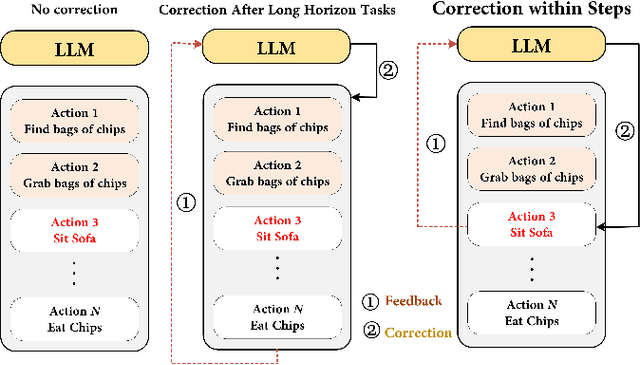
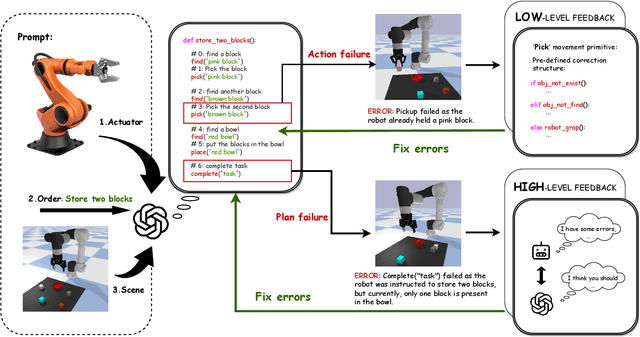


The integration of Large Language Models (LLMs) into robotics has revolutionized human-robot interactions and autonomous task planning. However, these systems are often unable to self-correct during the task execution, which hinders their adaptability in dynamic real-world environments. To address this issue, we present a Hierarchical Closed-loop Robotic Intelligent Self-correction Planner (HiCRISP), an innovative framework that enables robots to correct errors within individual steps during the task execution. HiCRISP actively monitors and adapts the task execution process, addressing both high-level planning and low-level action errors. Extensive benchmark experiments, encompassing virtual and real-world scenarios, showcase HiCRISP's exceptional performance, positioning it as a promising solution for robotic task planning with LLMs.