 Add to Chrome
 Add to Firefox
 Add to Edge
Deep Learning Based Estimation of Blood Glucose Levels from Multidirectional Scleral Blood Vessel Imaging
Mar 13, 2026
Regular monitoring of glycemic status is essential for diabetes management, yet conventional blood-based testing can be burdensome for frequent assessment. The sclera contains superficial microvasculature that may exhibit diabetes related alterations and is readily visible on the ocular surface. We propose ScleraGluNet, a multiview deep-learning framework for three-class metabolic status classification (normal, controlled diabetes, and high-glucose diabetes) and continuous fasting plasma glucose (FPG) estimation from multidirectional scleral vessel images. The dataset comprised 445 participants (150/140/155) and 2,225 anterior-segment images acquired from five gaze directions per participant. After vascular enhancement, features were extracted using parallel convolutional branches, refined with Manta Ray Foraging Optimization (MRFO), and fused via transformer-based cross-view attention. Performance was evaluated using subject-wise five-fold cross-validation, with all images from each participant assigned to the same fold. ScleraGluNet achieved 93.8% overall accuracy, with one-vs-rest AUCs of 0.971,0.956, and 0.982 for normal, controlled diabetes, and high-glucose diabetes, respectively. For FPG estimation, the model achieved MAE = 6.42 mg/dL and RMSE = 7.91 mg/dL, with strong correlation to laboratory measurements (r = 0.983; R2 = 0.966). Bland Altman analysis showed a mean bias of +1.45 mg/dL with 95% limits of agreement from -8.33 to +11.23$ mg/dL. These results support multidirectional scleral vessel imaging with multiview learning as a promising noninvasive approach for glycemic assessment, warranting multicenter validation before clinical deployment.

Aucamp: An Underwater Camera-Based Multi-Robot Platform with Low-Cost, Distributed, and Robust Localization
Jun 11, 2025
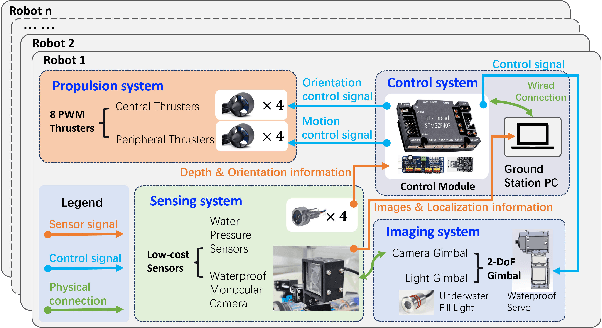
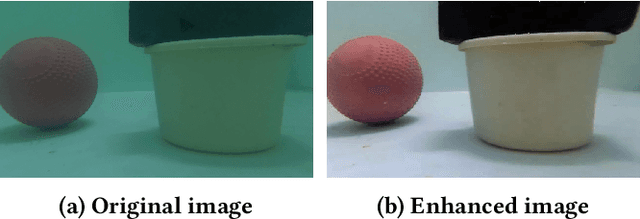
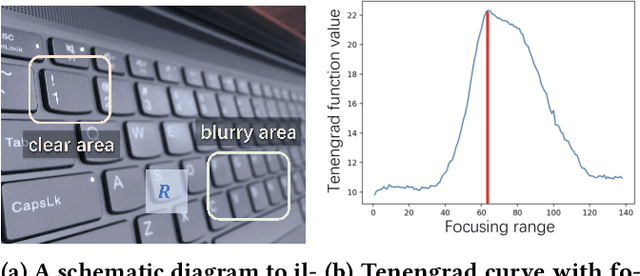
This paper introduces an underwater multi-robot platform, named Aucamp, characterized by cost-effective monocular-camera-based sensing, distributed protocol and robust orientation control for localization. We utilize the clarity feature to measure the distance, present the monocular imaging model, and estimate the position of the target object. We achieve global positioning in our platform by designing a distributed update protocol. The distributed algorithm enables the perception process to simultaneously cover a broader range, and greatly improves the accuracy and robustness of the positioning. Moreover, the explicit dynamics model of the robot in our platform is obtained, based on which, we propose a robust orientation control framework. The control system ensures that the platform maintains a balanced posture for each robot, thereby ensuring the stability of the localization system. The platform can swiftly recover from an forced unstable state to a stable horizontal posture. Additionally, we conduct extensive experiments and application scenarios to evaluate the performance of our platform. The proposed new platform may provide support for extensive marine exploration by underwater sensor networks.