 Add to Chrome
 Add to Firefox
 Add to Edge
Situation Aware Frontier Prioritization for Quadruped Search and Rescue
Aug 03, 2026
Quadruped robots are a promising platform for search and rescue missions because they can navigate cluttered indoor environments that may be restrictive for wheeled systems. However, in unknown rescue scenarios, autonomous exploration must balance map expansion with the likelihood of finding victims, which is not explicitly addressed by clas- sical frontier selection strategies. This paper presents a situation aware frontier prioritization method for single robot quadruped search and rescue. The proposed approach preserves the frontier exploration framework, but extends frontier ranking with information gain, observation deficit, rescue relevance, terrain penalty, and travel cost. The method is eval- uated in Gazebo simulation with a quadruped robot in two indoor rescue scenarios with different levels of difficulty. The first scenario is used as a sanity check, while the second introduces stronger clutter and frontier ambiguity. Experimental results show that all methods perform reliably in a simple scenario, whereas in a complex scenario is different. In that setting, the proposed method achieves the highest completion rate and the highest victim recovery among the evaluated approaches. These results indicate that situation aware frontier prioritization is beneficial when frontier choice becomes nontrivial and rescue utility must be balanced against generic exploration objectives.

Hybrid Attention Estimation Pipeline for Adaptive HRI Using an Expressive Robotic Head
Jul 31, 2026This paper presents an applied case study on hybrid visual attention estimation for human-robot interaction using an expressive robotic head based on the InMoov ecosystem. The proposed pipeline combines a fast geometric perception layer with an independent semantic perception layer based on a vision-language model. The geometric layer provides high-frequency face and head-pose information for temporal regulation, while the semantic layer receives only raw egocentric camera frames and produces contextual attention labels related to attention toward the robot, phone use, or attention elsewhere. These signals are integrated through a finite state machine that regulates adaptive interaction behavior, including activation, waiting, interaction resumption, and return to rest. The system was evaluated with 10 participants across 40 trials covering baseline and adaptive interaction conditions. Results show reliable interaction start across all trials, consistent pause behavior in the adaptive distraction condition, and non-redundant semantic information between the geometric and semantic outputs.
UruBots Autonomous Cars Challenge Pro Team Description Paper for FIRA 2025
Jun 09, 2025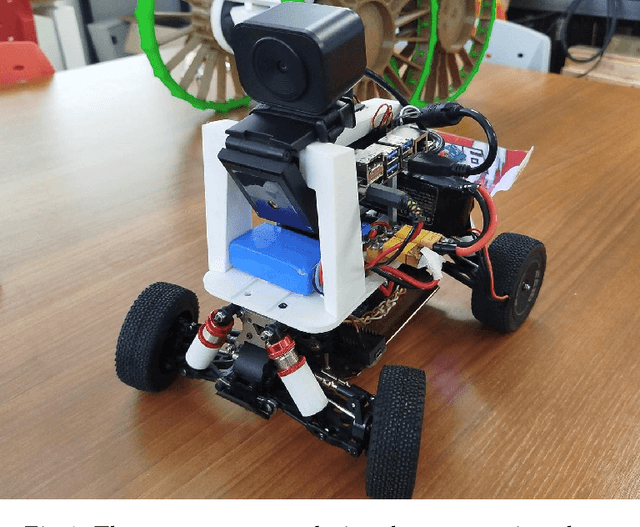
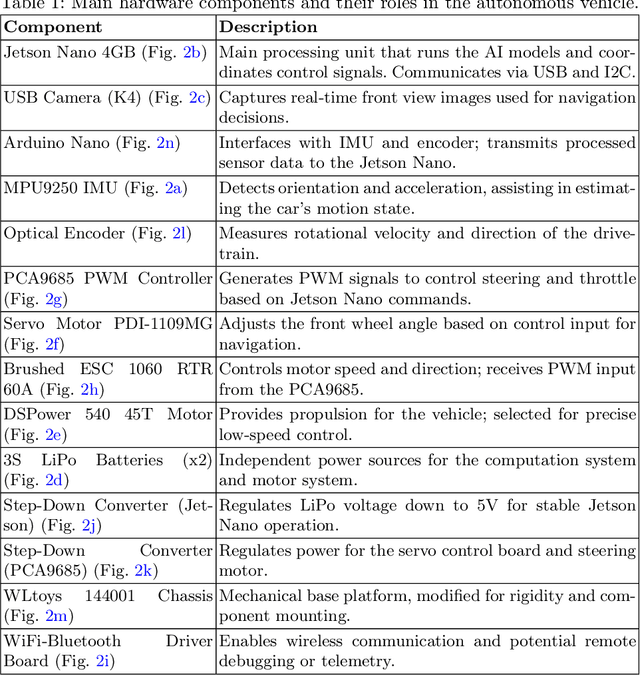
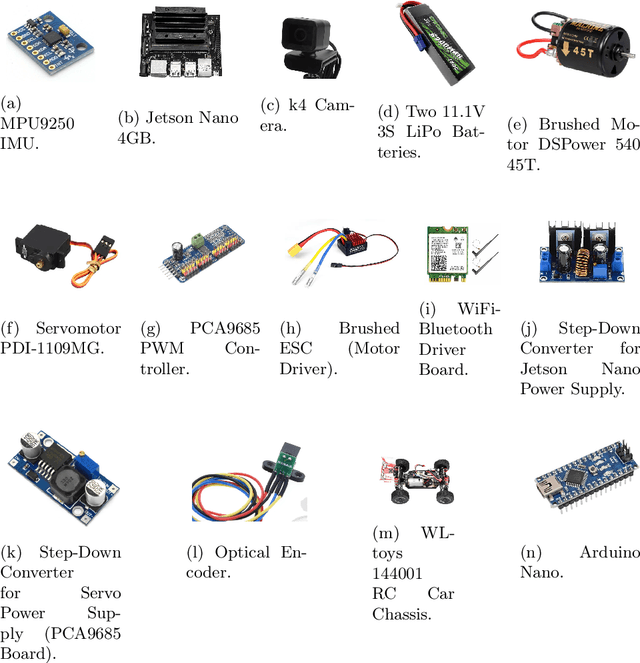
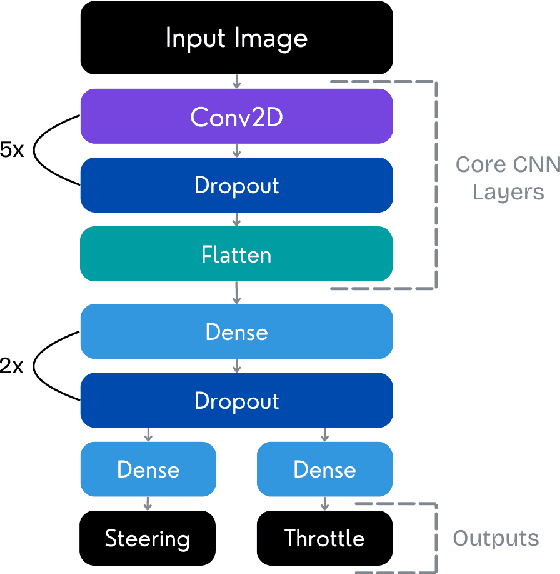
This paper describes the development of an autonomous car by the UruBots team for the 2025 FIRA Autonomous Cars Challenge (Pro). The project involves constructing a compact electric vehicle, approximately the size of an RC car, capable of autonomous navigation through different tracks. The design incorporates mechanical and electronic components and machine learning algorithms that enable the vehicle to make real-time navigation decisions based on visual input from a camera. We use deep learning models to process camera images and control vehicle movements. Using a dataset of over ten thousand images, we trained a Convolutional Neural Network (CNN) to drive the vehicle effectively, through two outputs, steering and throttle. The car completed the track in under 30 seconds, achieving a pace of approximately 0.4 meters per second while avoiding obstacles.
RoboCup Rescue 2025 Team Description Paper UruBots
Apr 14, 2025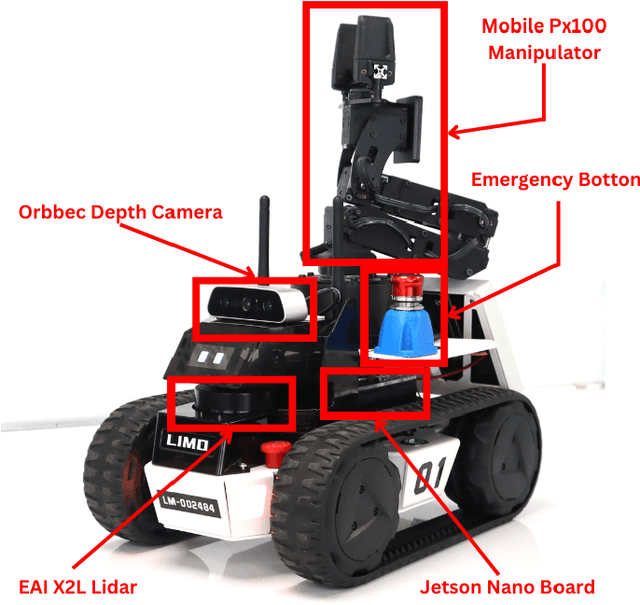
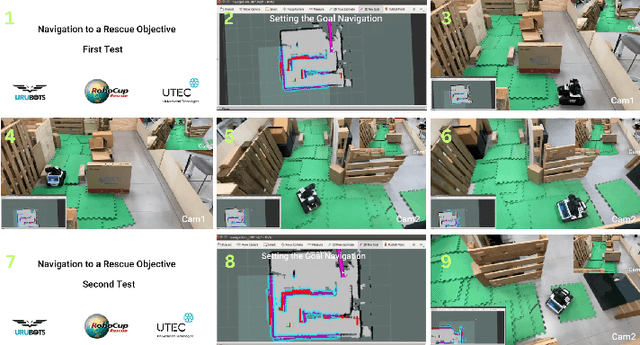
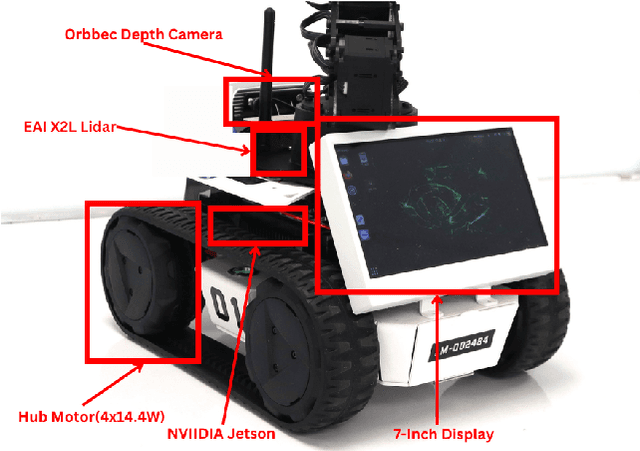
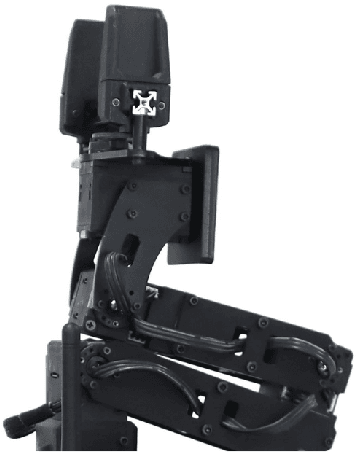
This paper describes the approach used by Team UruBots for participation in the 2025 RoboCup Rescue Robot League competition. Our team aims to participate for the first time in this competition at RoboCup, using experience learned from previous competitions and research. We present our vehicle and our approach to tackle the task of detecting and finding victims in search and rescue environments. Our approach contains known topics in robotics, such as ROS, SLAM, Human Robot Interaction and segmentation and perception. Our proposed approach is open source, available to the RoboCup Rescue community, where we aim to learn and contribute to the league.
UruBots RoboCup Work Team Description Paper
Apr 13, 2025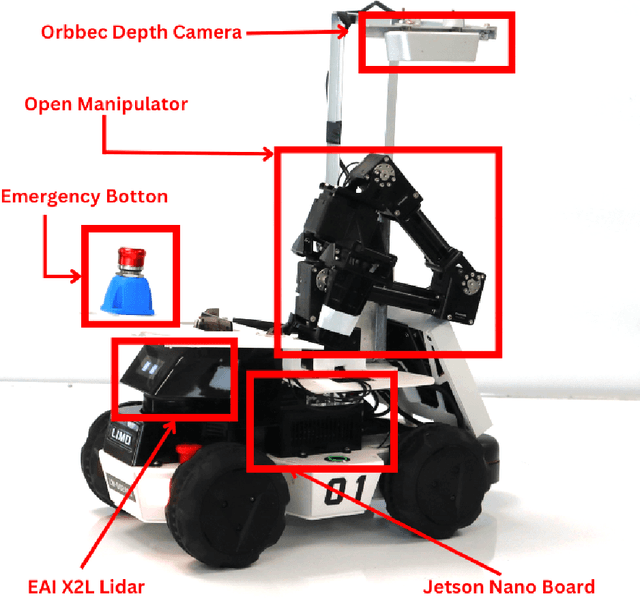
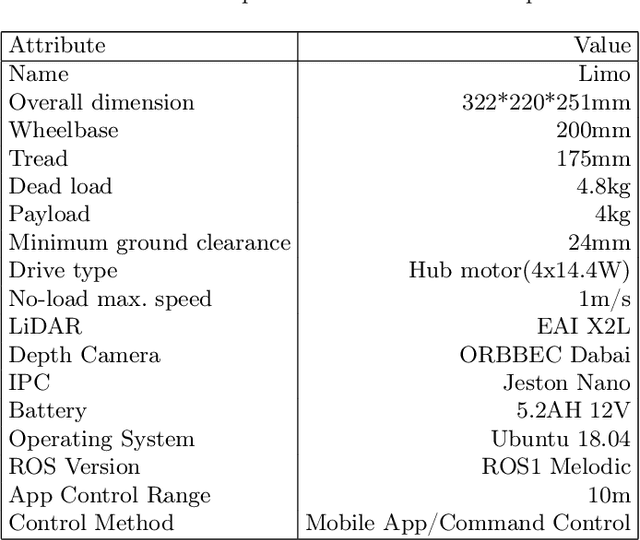
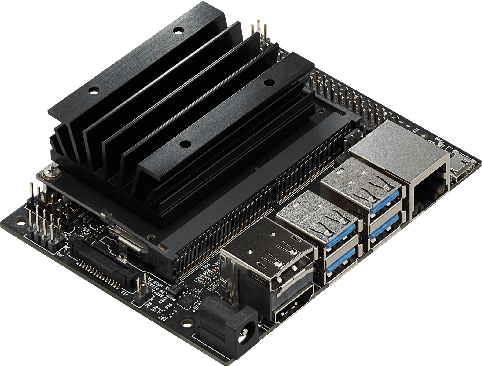
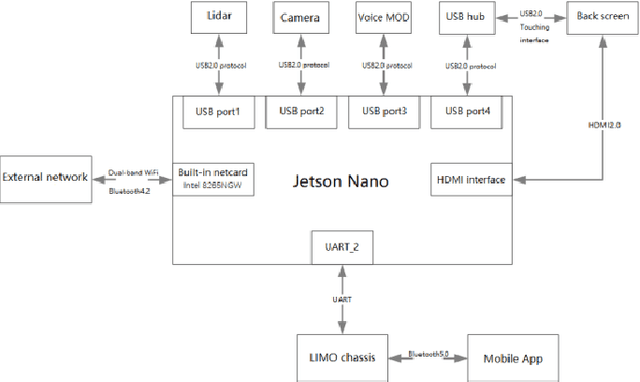
This work presents a team description paper for the RoboCup Work League. Our team, UruBots, has been developing robots and projects for research and competitions in the last three years, attending robotics competitions in Uruguay and around the world. In this instance, we aim to participate and contribute to the RoboCup Work category, hopefully making our debut in this prestigious competition. For that, we present an approach based on the Limo robot, whose main characteristic is its hybrid locomotion system with wheels and tracks, with some extras added by the team to complement the robot's functionalities. Overall, our approach allows the robot to efficiently and autonomously navigate a Work scenario, with the ability to manipulate objects, perform autonomous navigation, and engage in a simulated industrial environment.
Implementación de Navegación en Plataforma Robótica Móvil Basada en ROS y Gazebo
Oct 25, 2024This research focused on utilizing ROS2 and Gazebo for simulating the TurtleBot3 robot, with the aim of exploring autonomous navigation capabilities. While the study did not achieve full autonomous navigation, it successfully established the connection between ROS2 and Gazebo and enabled manual simulation of the robot's movements. The primary objective was to understand how these tools can be integrated to support autonomous functions, providing valuable insights into the development process. The results of this work lay the groundwork for future research into autonomous robotics. The topic is particularly engaging for both teenagers and adults interested in discovering how robots function independently and the underlying technology involved. This research highlights the potential for further advancements in autonomous systems and serves as a stepping stone for more in-depth studies in the field.
Configuração e operação da plataforma Clearpath Husky A200 e Manipulador Cobot UR5 2-Finger Gripper
Oct 22, 2024This article presents initial configuration work and use of the robotic platform and manipulator in question. The development of the ideal configuration for using this robot serves as a guide for new users and also validates its functionality for use in projects. Husky is a large payload capacity and power systems robotics development platform that accommodates a wide variety of payloads, customized to meet research needs. Together with the Cobot UR5 Manipulator attached to its base, it expands the application area of its capacity in projects. Advances in robots and mobile manipulators have revolutionized industries by automating tasks that previously required human intervention. These innovations alone increase productivity but also reduce operating costs, which makes the company more competitive in an evolving global market. Therefore, this article investigates the functionalities of this robot to validate its execution in robotics projects.
De la Extensión a la Investigación: Como La Robótica Estimula el Interés Académico en Estudiantes de Grado
Oct 22, 2024This research examines the impact of robotics groups in higher education, focusing on how these activities influence the development of transversal skills and academic motivation. While robotics goes beyond just technical knowledge, participation in these groups has been observed to significantly improve skills such as teamwork, creativity, and problem-solving. The study, conducted with the UruBots group, shows that students involved in robotics not only reinforce their theoretical knowledge but also increase their interest in research and academic commitment. These results highlight the potential of educational robotics to transform the learning experience by promoting active and collaborative learning. This work lays the groundwork for future research on how robotics can continue to enhance higher education and motivate students in their academic and professional careers
UruBots UAV -- Air Emergency Service Indoor Team Description Paper for FIRA 2024
Jun 13, 2024


This document addresses the description of the corresponding "Urubots" Team for the 2024 Fira Air League, "Air Emergency Service (Indoor)." We introduce our team and an autonomous Unmanned Aerial Vehicle (UAV) that relies on computer vision for its flight control. This UAV has the capability to perform a wide variety of navigation tasks in indoor environments, without requiring the intervention of an external operator or any form of external processing, resulting in a significant decrease in workload and manual dependence. Additionally, our software has been designed to be compatible with the vehicle's structure and for its application to the competition circuit. In this paper, we detail additional aspects about the mechanical structure, software, and application to the FIRA competition.
UruBots Autonomous Cars Team One Description Paper for FIRA 2024
Jun 13, 2024This document presents the design of an autonomous car developed by the UruBots team for the 2024 FIRA Autonomous Cars Race Challenge. The project involves creating an RC-car sized electric vehicle capable of navigating race tracks with in an autonomous manner. It integrates mechanical and electronic systems alongside artificial intelligence based algorithms for the navigation and real-time decision-making. The core of our project include the utilization of an AI-based algorithm to learn information from a camera and act in the robot to perform the navigation. We show that by creating a dataset with more than five thousand samples and a five-layered CNN we managed to achieve promissing performance we our proposed hardware setup. Overall, this paper aims to demonstrate the autonomous capabilities of our car, highlighting its readiness for the 2024 FIRA challenge, helping to contribute to the field of autonomous vehicle research.