 Add to Chrome
 Add to Firefox
 Add to Edge
Situation Aware Frontier Prioritization for Quadruped Search and Rescue
Aug 03, 2026
Quadruped robots are a promising platform for search and rescue missions because they can navigate cluttered indoor environments that may be restrictive for wheeled systems. However, in unknown rescue scenarios, autonomous exploration must balance map expansion with the likelihood of finding victims, which is not explicitly addressed by clas- sical frontier selection strategies. This paper presents a situation aware frontier prioritization method for single robot quadruped search and rescue. The proposed approach preserves the frontier exploration framework, but extends frontier ranking with information gain, observation deficit, rescue relevance, terrain penalty, and travel cost. The method is eval- uated in Gazebo simulation with a quadruped robot in two indoor rescue scenarios with different levels of difficulty. The first scenario is used as a sanity check, while the second introduces stronger clutter and frontier ambiguity. Experimental results show that all methods perform reliably in a simple scenario, whereas in a complex scenario is different. In that setting, the proposed method achieves the highest completion rate and the highest victim recovery among the evaluated approaches. These results indicate that situation aware frontier prioritization is beneficial when frontier choice becomes nontrivial and rescue utility must be balanced against generic exploration objectives.

RoboCup Rescue 2025 Team Description Paper UruBots
Apr 14, 2025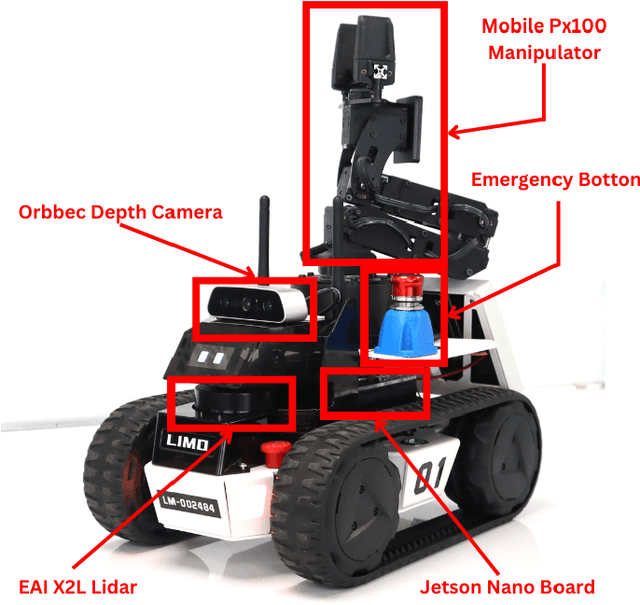
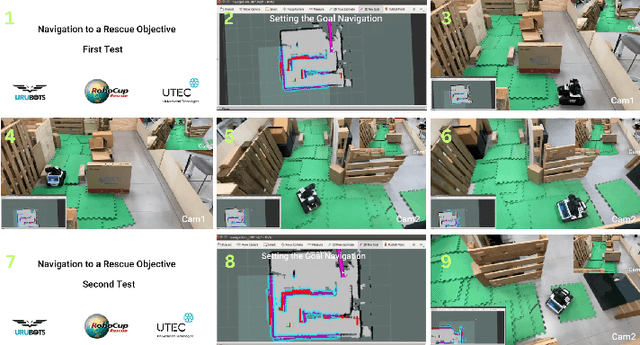
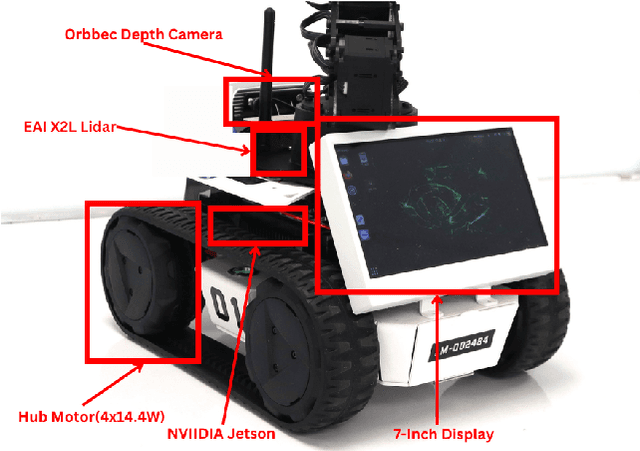
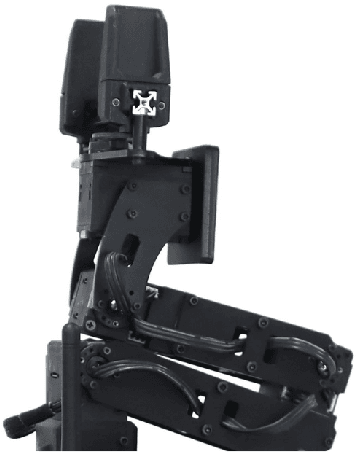
This paper describes the approach used by Team UruBots for participation in the 2025 RoboCup Rescue Robot League competition. Our team aims to participate for the first time in this competition at RoboCup, using experience learned from previous competitions and research. We present our vehicle and our approach to tackle the task of detecting and finding victims in search and rescue environments. Our approach contains known topics in robotics, such as ROS, SLAM, Human Robot Interaction and segmentation and perception. Our proposed approach is open source, available to the RoboCup Rescue community, where we aim to learn and contribute to the league.
UruBots Autonomous Cars Team One Description Paper for FIRA 2024
Jun 13, 2024This document presents the design of an autonomous car developed by the UruBots team for the 2024 FIRA Autonomous Cars Race Challenge. The project involves creating an RC-car sized electric vehicle capable of navigating race tracks with in an autonomous manner. It integrates mechanical and electronic systems alongside artificial intelligence based algorithms for the navigation and real-time decision-making. The core of our project include the utilization of an AI-based algorithm to learn information from a camera and act in the robot to perform the navigation. We show that by creating a dataset with more than five thousand samples and a five-layered CNN we managed to achieve promissing performance we our proposed hardware setup. Overall, this paper aims to demonstrate the autonomous capabilities of our car, highlighting its readiness for the 2024 FIRA challenge, helping to contribute to the field of autonomous vehicle research.