 Add to Chrome
 Add to Firefox
 Add to Edge
Look Before You Zoom: Adaptive Routing for the Resolution-Context Trade-off in Visual RAG
Jun 20, 2026
Vision-Language Models (VLMs) struggle as query-relevant objects become smaller. To address this, recent training-free approaches dynamically retrieve and zoom into local image regions. However, we show that indiscriminately applying retrieval ignores a critical vulnerability: the resolution-context trade-off. Patch-based zooming recovers details for small targets, but can split large objects and destroy global spatial context; attention-based retrieval better preserves large objects, but remains less reliable on tiny details; and global perception is often fastest when retrieval is unnecessary. Motivated by these failure modes, we introduce ViRGo (Visual Retrieval or Global Perception), a lightweight framework that formulates visual retrieval as an adaptive routing problem. ViRGo estimates object scale from the VLM's intrinsic localization heads during the initial forward pass and combines it with semantic token confidence to select between global perception, patch-based retrieval, and attention-based retrieval with minimal additional computation. Experiments across multiple VQA benchmarks and object-size groups show that ViRGo improves the accuracy-efficiency trade-off: it matches patch retrieval on small details, leverages attention-based retrieval for larger objects, and reduces inference time by routing to the global baseline when zooming is unnecessary.

Pop-Up Distractions Reveal Bag-of-Events Behavior in Video Large Language Models
May 26, 2026A key capability for video understanding is reliably linking subjects to events across time, yet whether Video Large Language Models (VideoLLMs) actually achieve this remains unclear. In this work, we introduce DistractionBench to evaluate whether VideoLLMs can robustly link subjects and events in the presence of unrelated video segments. Through controlled interventions, such as inserting short advertisement clips into longer videos, we show that VideoLLMs frequently hallucinate interactions between entities from different segments, incorrectly attributing actions from injected advertisements to subjects in the main video. We characterize this systematic hallucination as bag-of-events (BoE) behavior, where models process videos as collections of events rather than temporally structured sequences. Evaluating 11 popular VideoLLMs, we find that all models exhibit substantial BoE behavior. Our findings suggest that VideoLLMs lack reliable mechanisms for temporal grounding and motivate the development of models with more robust subject-event association.
Is CLIP Cross-Eyed? Revealing and Mitigating Center Bias in the CLIP Family
Apr 07, 2026Recent research has shown that contrastive vision-language models such as CLIP often lack fine-grained understanding of visual content. While a growing body of work has sought to address this limitation, we identify a distinct failure mode in the CLIP family, which we term center bias, that persists even in recent model variants. Specifically, CLIP tends to disproportionately focus on the central region of an image, overlooking important objects located near the boundaries. This limitation is fundamental as failure to recognize relevant objects makes it difficult to perform any sophisticated tasks that depend on those objects. To understand the underlying causes of the limitation, we conduct analyses from both representation and attention perspectives. Using interpretability methods, i.e., embedding decomposition and attention map analysis, we find that relevant concepts especially those associated with off-center objects vanish from the model's embedding in the final representation due to information loss during the aggregation of visual embeddings, particularly the reliance on pooling mechanisms. Finally, we show that this bias can be alleviated with training-free strategies such as visual prompting and attention redistribution by redirecting models' attention to off-center regions.
The Role of Exploration Modules in Small Language Models for Knowledge Graph Question Answering
Sep 09, 2025Integrating knowledge graphs (KGs) into the reasoning processes of large language models (LLMs) has emerged as a promising approach to mitigate hallucination. However, existing work in this area often relies on proprietary or extremely large models, limiting accessibility and scalability. In this study, we investigate the capabilities of existing integration methods for small language models (SLMs) in KG-based question answering and observe that their performance is often constrained by their limited ability to traverse and reason over knowledge graphs. To address this limitation, we propose leveraging simple and efficient exploration modules to handle knowledge graph traversal in place of the language model itself. Experiment results demonstrate that these lightweight modules effectively improve the performance of small language models on knowledge graph question answering tasks. Source code: https://github.com/yijie-cheng/SLM-ToG/.
Defending Text-to-image Diffusion Models: Surprising Efficacy of Textual Perturbations Against Backdoor Attacks
Aug 28, 2024Text-to-image diffusion models have been widely adopted in real-world applications due to their ability to generate realistic images from textual descriptions. However, recent studies have shown that these methods are vulnerable to backdoor attacks. Despite the significant threat posed by backdoor attacks on text-to-image diffusion models, countermeasures remain under-explored. In this paper, we address this research gap by demonstrating that state-of-the-art backdoor attacks against text-to-image diffusion models can be effectively mitigated by a surprisingly simple defense strategy - textual perturbation. Experiments show that textual perturbations are effective in defending against state-of-the-art backdoor attacks with minimal sacrifice to generation quality. We analyze the efficacy of textual perturbation from two angles: text embedding space and cross-attention maps. They further explain how backdoor attacks have compromised text-to-image diffusion models, providing insights for studying future attack and defense strategies. Our code is available at https://github.com/oscarchew/t2i-backdoor-defense.
Understanding and Mitigating Spurious Correlations in Text Classification
May 23, 2023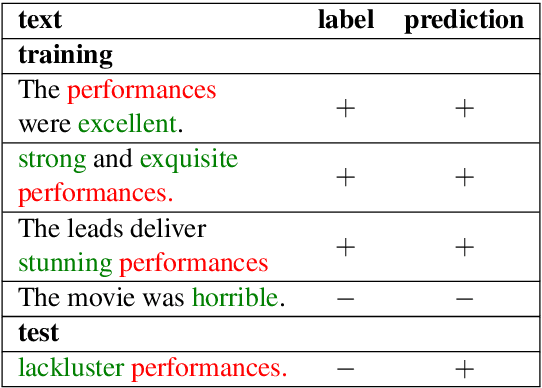

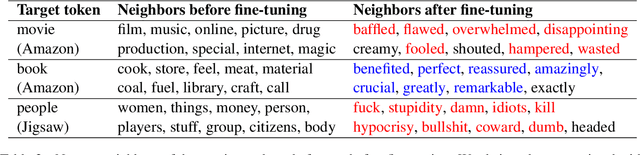
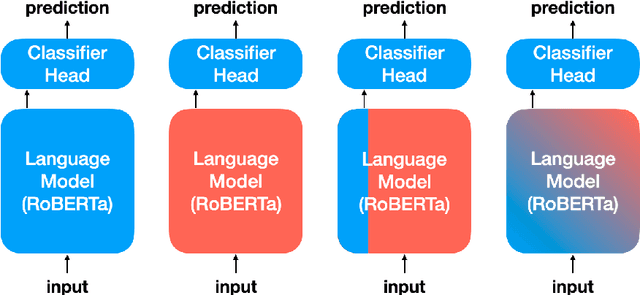
Recent work has shown that deep learning models are prone to exploit spurious correlations that are present in the training set, yet may not hold true in general. A sentiment classifier may erroneously learn that the token spielberg is always tied to positive movie reviews. Relying on spurious correlations may lead to significant degradation in generalizability and should be avoided. In this paper, we propose a neighborhood analysis framework to explain how exactly language models exploit spurious correlations. Driven by the analysis, we propose a family of regularization methods, NFL (do Not Forget your Language) to prevent the situation. Experiments on two text classification tasks show that NFL brings a significant improvement over standard fine-tuning in terms of robustness without sacrificing in-distribution accuracy.