 Add to Chrome
 Add to Firefox
 Add to Edge
FinePseudo: Improving Pseudo-Labelling through Temporal-Alignablity for Semi-Supervised Fine-Grained Action Recognition
Sep 02, 2024

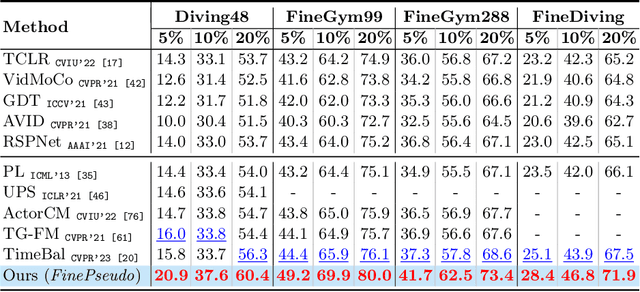

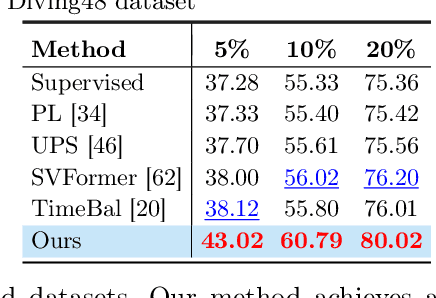
Real-life applications of action recognition often require a fine-grained understanding of subtle movements, e.g., in sports analytics, user interactions in AR/VR, and surgical videos. Although fine-grained actions are more costly to annotate, existing semi-supervised action recognition has mainly focused on coarse-grained action recognition. Since fine-grained actions are more challenging due to the absence of scene bias, classifying these actions requires an understanding of action-phases. Hence, existing coarse-grained semi-supervised methods do not work effectively. In this work, we for the first time thoroughly investigate semi-supervised fine-grained action recognition (FGAR). We observe that alignment distances like dynamic time warping (DTW) provide a suitable action-phase-aware measure for comparing fine-grained actions, a concept previously unexploited in FGAR. However, since regular DTW distance is pairwise and assumes strict alignment between pairs, it is not directly suitable for classifying fine-grained actions. To utilize such alignment distances in a limited-label setting, we propose an Alignability-Verification-based Metric learning technique to effectively discriminate between fine-grained action pairs. Our learnable alignability score provides a better phase-aware measure, which we use to refine the pseudo-labels of the primary video encoder. Our collaborative pseudo-labeling-based framework `\textit{FinePseudo}' significantly outperforms prior methods on four fine-grained action recognition datasets: Diving48, FineGym99, FineGym288, and FineDiving, and shows improvement on existing coarse-grained datasets: Kinetics400 and Something-SomethingV2. We also demonstrate the robustness of our collaborative pseudo-labeling in handling novel unlabeled classes in open-world semi-supervised setups. Project Page: https://daveishan.github.io/finepsuedo-webpage/.

Sync from the Sea: Retrieving Alignable Videos from Large-Scale Datasets
Sep 02, 2024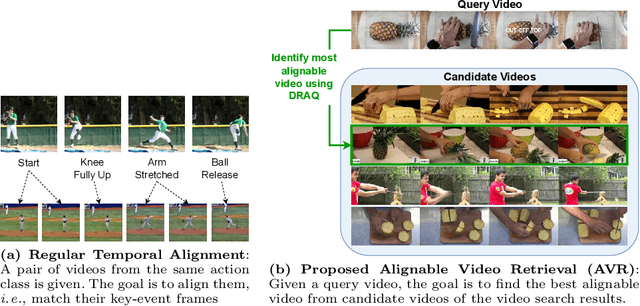
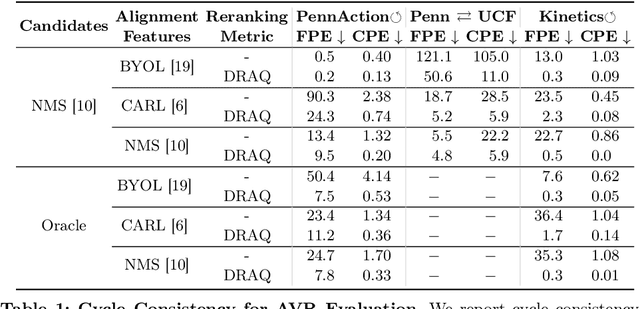
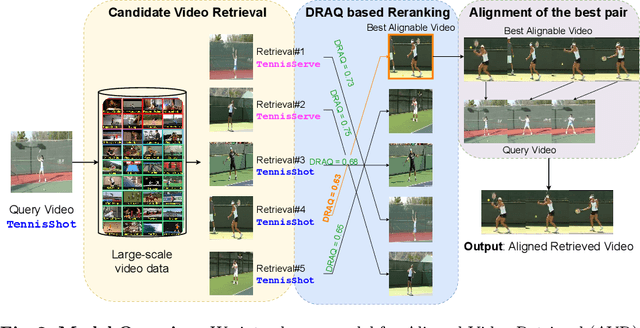
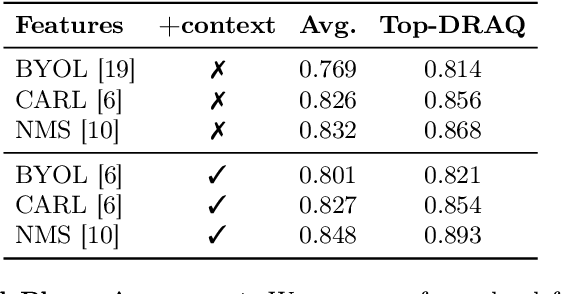
Temporal video alignment aims to synchronize the key events like object interactions or action phase transitions in two videos. Such methods could benefit various video editing, processing, and understanding tasks. However, existing approaches operate under the restrictive assumption that a suitable video pair for alignment is given, significantly limiting their broader applicability. To address this, we re-pose temporal alignment as a search problem and introduce the task of Alignable Video Retrieval (AVR). Given a query video, our approach can identify well-alignable videos from a large collection of clips and temporally synchronize them to the query. To achieve this, we make three key contributions: 1) we introduce DRAQ, a video alignability indicator to identify and re-rank the best alignable video from a set of candidates; 2) we propose an effective and generalizable frame-level video feature design to improve the alignment performance of several off-the-shelf feature representations, and 3) we propose a novel benchmark and evaluation protocol for AVR using cycle-consistency metrics. Our experiments on 3 datasets, including large-scale Kinetics700, demonstrate the effectiveness of our approach in identifying alignable video pairs from diverse datasets. Project Page: https://daveishan.github.io/avr-webpage/.
GAReT: Cross-view Video Geolocalization with Adapters and Auto-Regressive Transformers
Aug 05, 2024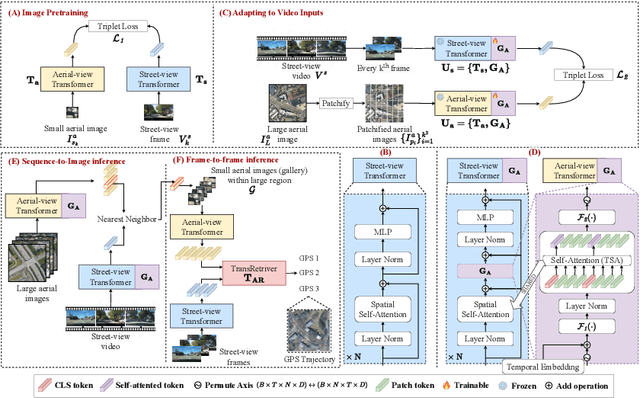
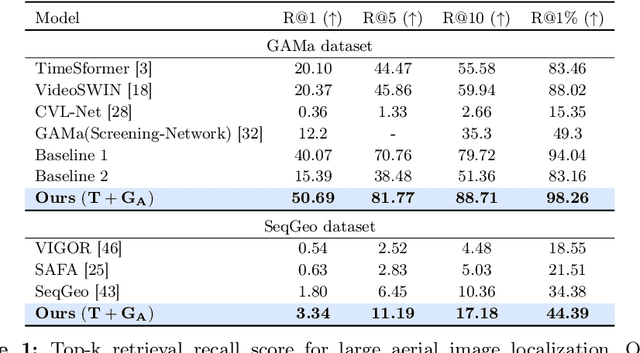
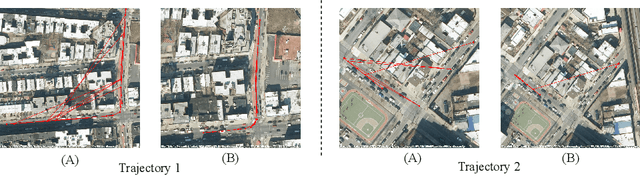
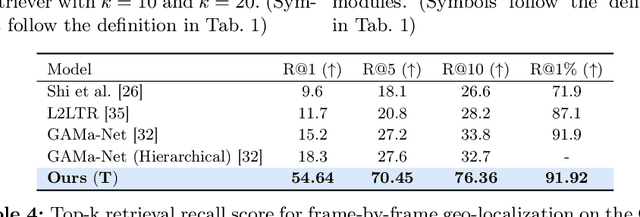
Cross-view video geo-localization (CVGL) aims to derive GPS trajectories from street-view videos by aligning them with aerial-view images. Despite their promising performance, current CVGL methods face significant challenges. These methods use camera and odometry data, typically absent in real-world scenarios. They utilize multiple adjacent frames and various encoders for feature extraction, resulting in high computational costs. Moreover, these approaches independently predict each street-view frame's location, resulting in temporally inconsistent GPS trajectories. To address these challenges, in this work, we propose GAReT, a fully transformer-based method for CVGL that does not require camera and odometry data. We introduce GeoAdapter, a transformer-adapter module designed to efficiently aggregate image-level representations and adapt them for video inputs. Specifically, we train a transformer encoder on video frames and aerial images, then freeze the encoder to optimize the GeoAdapter module to obtain video-level representation. To address temporally inconsistent trajectories, we introduce TransRetriever, an encoder-decoder transformer model that predicts GPS locations of street-view frames by encoding top-k nearest neighbor predictions per frame and auto-regressively decoding the best neighbor based on the previous frame's predictions. Our method's effectiveness is validated through extensive experiments, demonstrating state-of-the-art performance on benchmark datasets. Our code is available at https://github.com/manupillai308/GAReT.
X-Former: Unifying Contrastive and Reconstruction Learning for MLLMs
Jul 18, 2024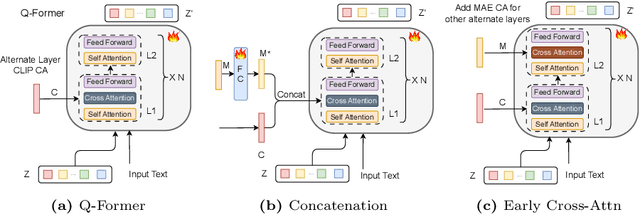
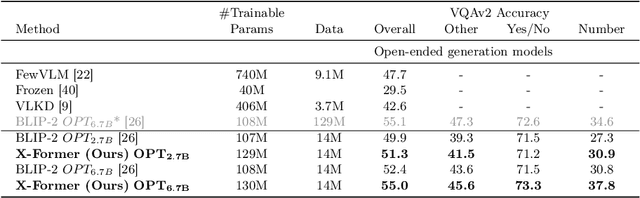
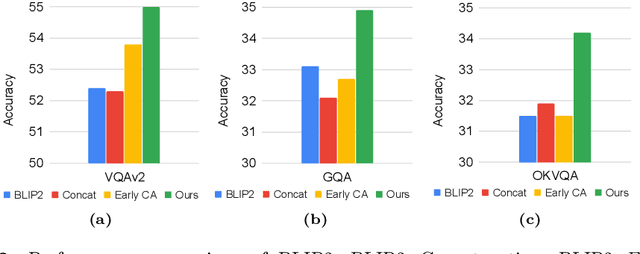
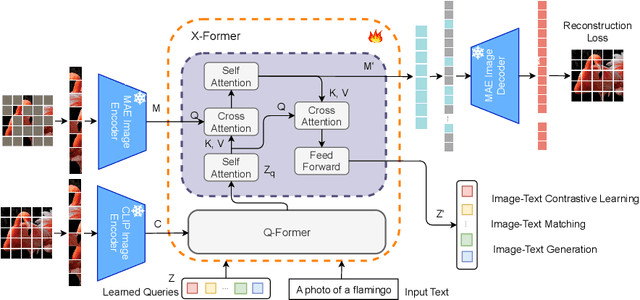
Recent advancements in Multimodal Large Language Models (MLLMs) have revolutionized the field of vision-language understanding by integrating visual perception capabilities into Large Language Models (LLMs). The prevailing trend in this field involves the utilization of a vision encoder derived from vision-language contrastive learning (CL), showing expertise in capturing overall representations while facing difficulties in capturing detailed local patterns. In this work, we focus on enhancing the visual representations for MLLMs by combining high-frequency and detailed visual representations, obtained through masked image modeling (MIM), with semantically-enriched low-frequency representations captured by CL. To achieve this goal, we introduce X-Former which is a lightweight transformer module designed to exploit the complementary strengths of CL and MIM through an innovative interaction mechanism. Specifically, X-Former first bootstraps vision-language representation learning and multimodal-to-multimodal generative learning from two frozen vision encoders, i.e., CLIP-ViT (CL-based) and MAE-ViT (MIM-based). It further bootstraps vision-to-language generative learning from a frozen LLM to ensure visual features from X-Former can be interpreted by the LLM. To demonstrate the effectiveness of our approach, we assess its performance on tasks demanding detailed visual understanding. Extensive evaluations indicate that X-Former excels in visual reasoning tasks involving both structural and semantic categories in the GQA dataset. Assessment on fine-grained visual perception benchmark further confirms its superior capabilities in visual understanding.
Open Vocabulary Multi-Label Video Classification
Jul 12, 2024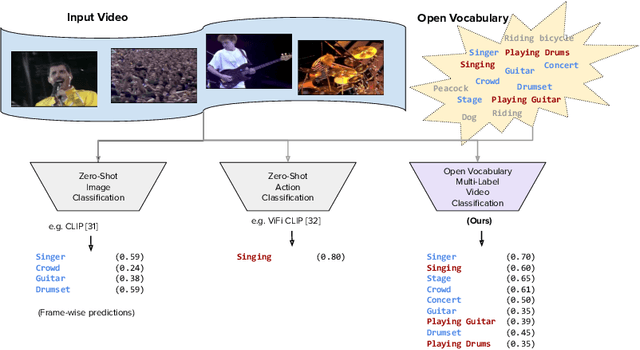
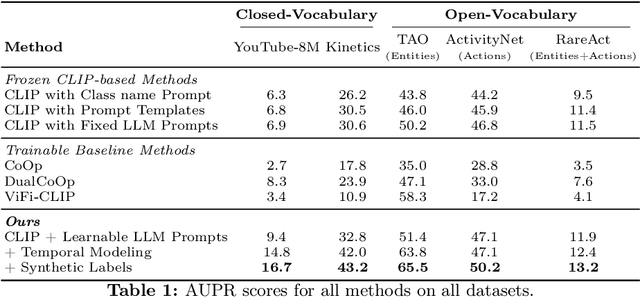
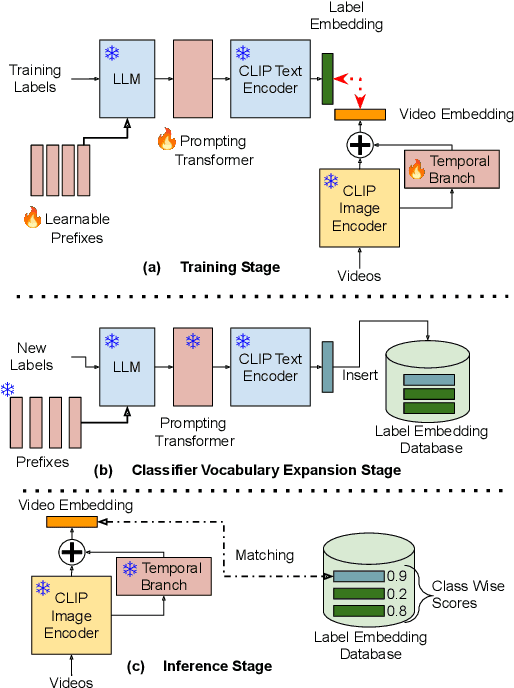
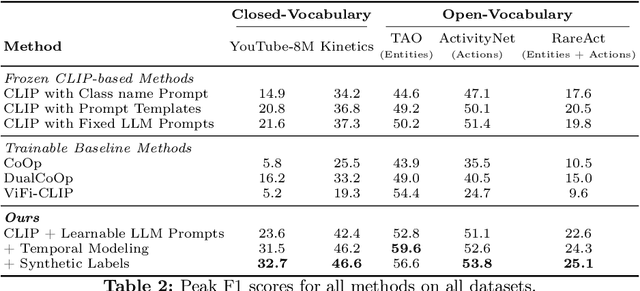
Pre-trained vision-language models (VLMs) have enabled significant progress in open vocabulary computer vision tasks such as image classification, object detection and image segmentation. Some recent works have focused on extending VLMs to open vocabulary single label action classification in videos. However, previous methods fall short in holistic video understanding which requires the ability to simultaneously recognize multiple actions and entities e.g., objects in the video in an open vocabulary setting. We formulate this problem as open vocabulary multilabel video classification and propose a method to adapt a pre-trained VLM such as CLIP to solve this task. We leverage large language models (LLMs) to provide semantic guidance to the VLM about class labels to improve its open vocabulary performance with two key contributions. First, we propose an end-to-end trainable architecture that learns to prompt an LLM to generate soft attributes for the CLIP text-encoder to enable it to recognize novel classes. Second, we integrate a temporal modeling module into CLIP's vision encoder to effectively model the spatio-temporal dynamics of video concepts as well as propose a novel regularized finetuning technique to ensure strong open vocabulary classification performance in the video domain. Our extensive experimentation showcases the efficacy of our approach on multiple benchmark datasets.
Regulating Model Reliance on Non-Robust Features by Smoothing Input Marginal Density
Jul 05, 2024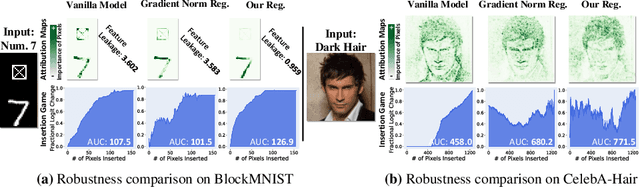
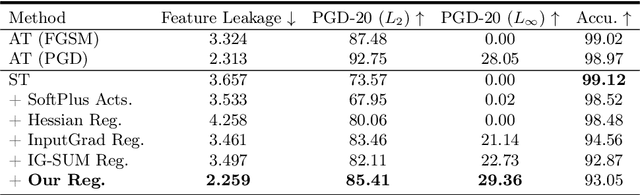
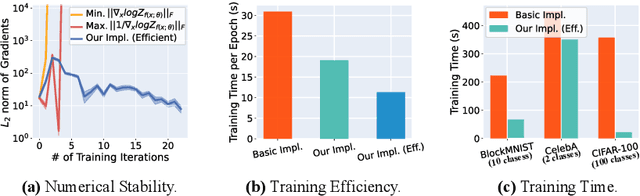
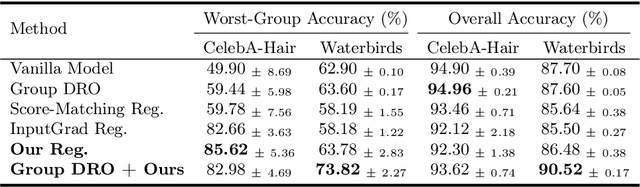
Trustworthy machine learning necessitates meticulous regulation of model reliance on non-robust features. We propose a framework to delineate and regulate such features by attributing model predictions to the input. Within our approach, robust feature attributions exhibit a certain consistency, while non-robust feature attributions are susceptible to fluctuations. This behavior allows identification of correlation between model reliance on non-robust features and smoothness of marginal density of the input samples. Hence, we uniquely regularize the gradients of the marginal density w.r.t. the input features for robustness. We also devise an efficient implementation of our regularization to address the potential numerical instability of the underlying optimization process. Moreover, we analytically reveal that, as opposed to our marginal density smoothing, the prevalent input gradient regularization smoothens conditional or joint density of the input, which can cause limited robustness. Our experiments validate the effectiveness of the proposed method, providing clear evidence of its capability to address the feature leakage problem and mitigate spurious correlations. Extensive results further establish that our technique enables the model to exhibit robustness against perturbations in pixel values, input gradients, and density.
SegVG: Transferring Object Bounding Box to Segmentation for Visual Grounding
Jul 03, 2024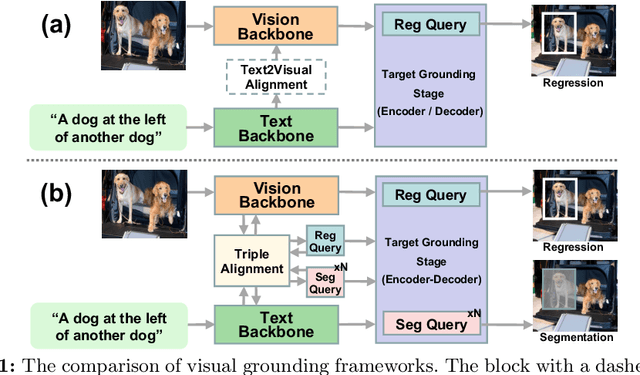
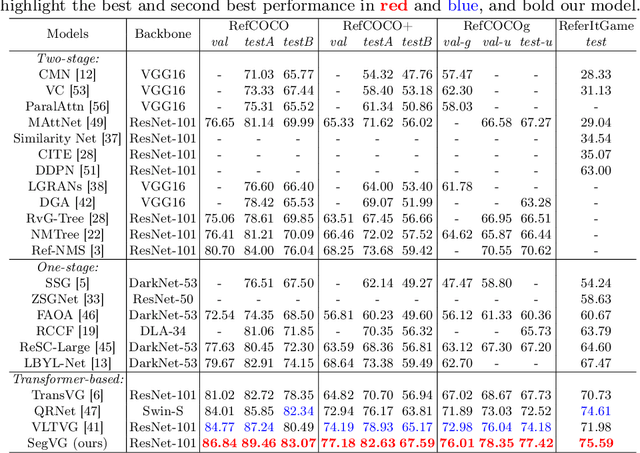
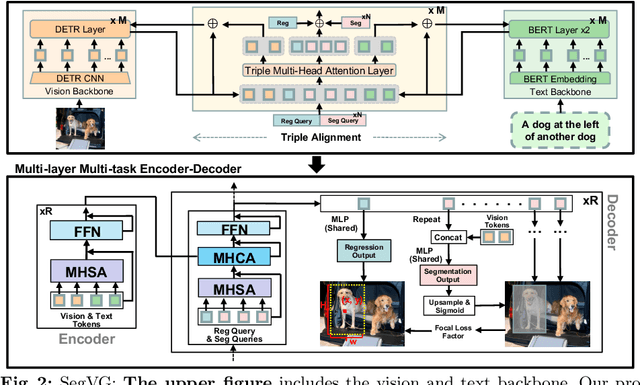

Different from Object Detection, Visual Grounding deals with detecting a bounding box for each text-image pair. This one box for each text-image data provides sparse supervision signals. Although previous works achieve impressive results, their passive utilization of annotation, i.e. the sole use of the box annotation as regression ground truth, results in a suboptimal performance. In this paper, we present SegVG, a novel method transfers the box-level annotation as Segmentation signals to provide an additional pixel-level supervision for Visual Grounding. Specifically, we propose the Multi-layer Multi-task Encoder-Decoder as the target grounding stage, where we learn a regression query and multiple segmentation queries to ground the target by regression and segmentation of the box in each decoding layer, respectively. This approach allows us to iteratively exploit the annotation as signals for both box-level regression and pixel-level segmentation. Moreover, as the backbones are typically initialized by pretrained parameters learned from unimodal tasks and the queries for both regression and segmentation are static learnable embeddings, a domain discrepancy remains among these three types of features, which impairs subsequent target grounding. To mitigate this discrepancy, we introduce the Triple Alignment module, where the query, text, and vision tokens are triangularly updated to share the same space by triple attention mechanism. Extensive experiments on five widely used datasets validate our state-of-the-art (SOTA) performance.
Lung-CADex: Fully automatic Zero-Shot Detection and Classification of Lung Nodules in Thoracic CT Images
Jul 02, 2024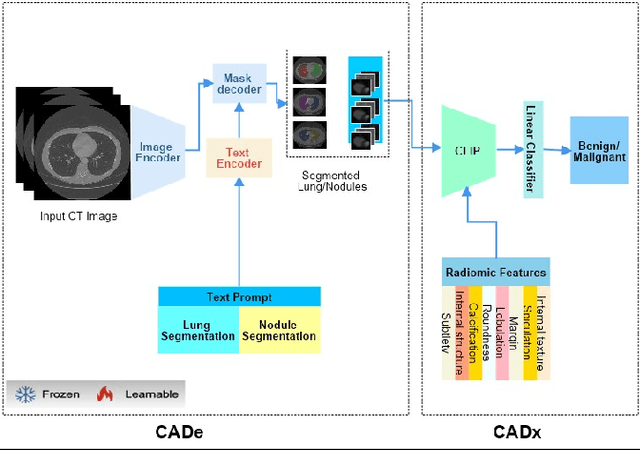
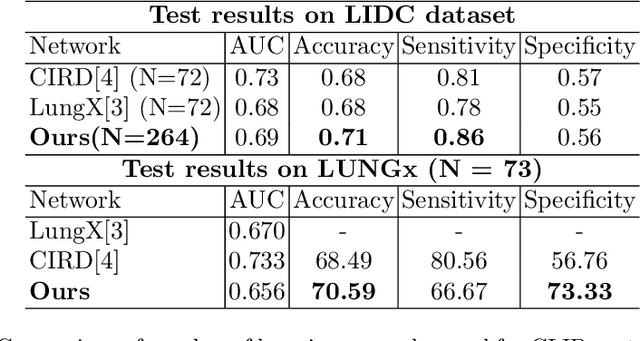
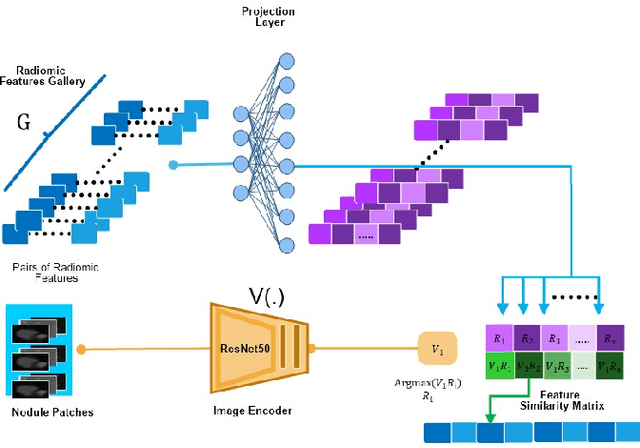

Lung cancer has been one of the major threats to human life for decades. Computer-aided diagnosis can help with early lung nodul detection and facilitate subsequent nodule characterization. Large Visual Language models (VLMs) have been found effective for multiple downstream medical tasks that rely on both imaging and text data. However, lesion level detection and subsequent diagnosis using VLMs have not been explored yet. We propose CADe, for segmenting lung nodules in a zero-shot manner using a variant of the Segment Anything Model called MedSAM. CADe trains on a prompt suite on input computed tomography (CT) scans by using the CLIP text encoder through prefix tuning. We also propose, CADx, a method for the nodule characterization as benign/malignant by making a gallery of radiomic features and aligning image-feature pairs through contrastive learning. Training and validation of CADe and CADx have been done using one of the largest publicly available datasets, called LIDC. To check the generalization ability of the model, it is also evaluated on a challenging dataset, LUNGx. Our experimental results show that the proposed methods achieve a sensitivity of 0.86 compared to 0.76 that of other fully supervised methods.The source code, datasets and pre-processed data can be accessed using the link:
Surgical Triplet Recognition via Diffusion Model
Jun 19, 2024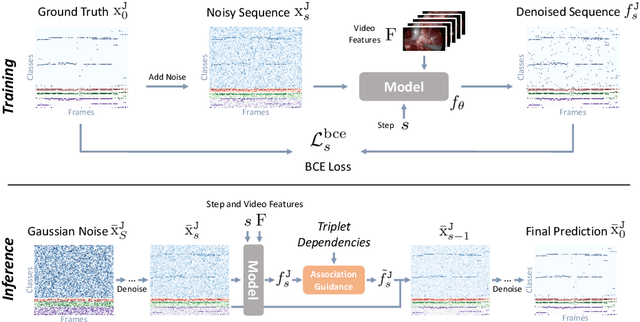
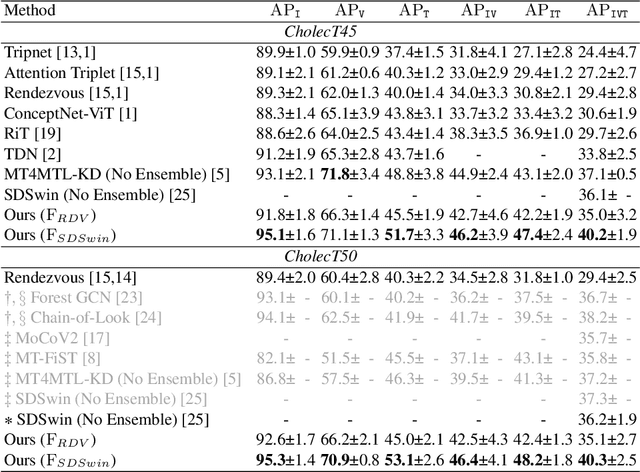
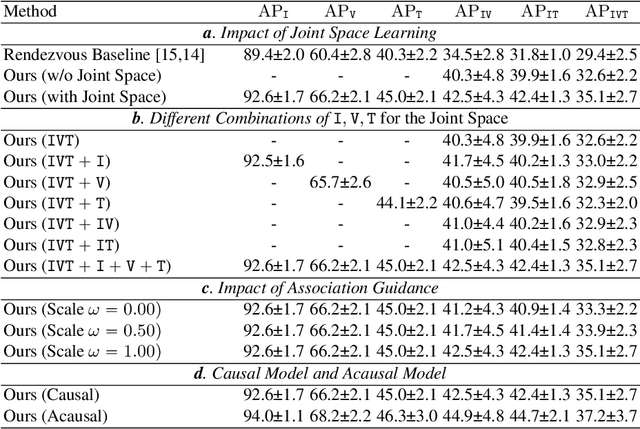
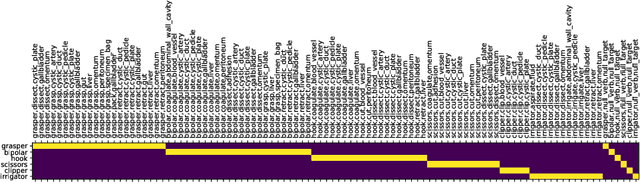
Surgical triplet recognition is an essential building block to enable next-generation context-aware operating rooms. The goal is to identify the combinations of instruments, verbs, and targets presented in surgical video frames. In this paper, we propose DiffTriplet, a new generative framework for surgical triplet recognition employing the diffusion model, which predicts surgical triplets via iterative denoising. To handle the challenge of triplet association, two unique designs are proposed in our diffusion framework, i.e., association learning and association guidance. During training, we optimize the model in the joint space of triplets and individual components to capture the dependencies among them. At inference, we integrate association constraints into each update of the iterative denoising process, which refines the triplet prediction using the information of individual components. Experiments on the CholecT45 and CholecT50 datasets show the superiority of the proposed method in achieving a new state-of-the-art performance for surgical triplet recognition. Our codes will be released.
Xi-Net: Transformer Based Seismic Waveform Reconstructor
Jun 14, 2024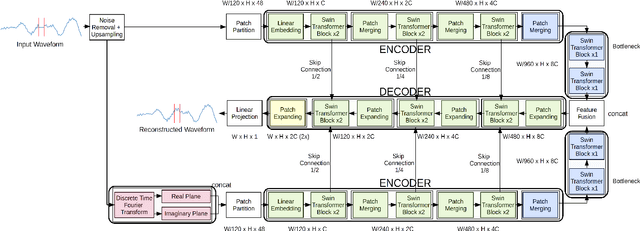
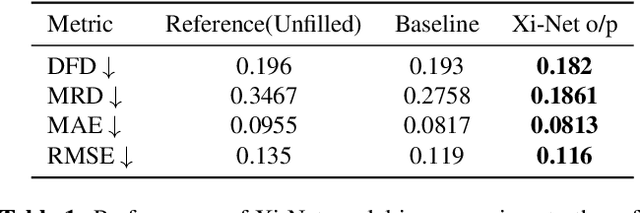
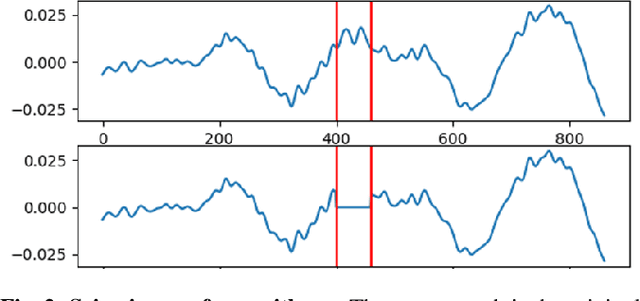
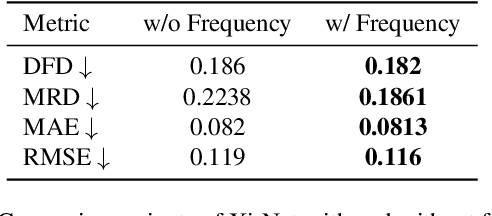
Missing/erroneous data is a major problem in today's world. Collected seismic data sometimes contain gaps due to multitude of reasons like interference and sensor malfunction. Gaps in seismic waveforms hamper further signal processing to gain valuable information. Plethora of techniques are used for data reconstruction in other domains like image, video, audio, but translation of those methods to address seismic waveforms demands adapting them to lengthy sequence inputs, which is practically complex. Even if that is accomplished, high computational costs and inefficiency would still persist in these predominantly convolution-based reconstruction models. In this paper, we present a transformer-based deep learning model, Xi-Net, which utilizes multi-faceted time and frequency domain inputs for accurate waveform reconstruction. Xi-Net converts the input waveform to frequency domain, employs separate encoders for time and frequency domains, and one decoder for getting reconstructed output waveform from the fused features. 1D shifted-window transformer blocks form the elementary units of all parts of the model. To the best of our knowledge, this is the first transformer-based deep learning model for seismic waveform reconstruction. We demonstrate this model's prowess by filling 0.5-1s random gaps in 120s waveforms, resembling the original waveform quite closely. The code, models can be found at: https://github.com/Anshuman04/waveformReconstructor.