 Add to Chrome
 Add to Firefox
 Add to Edge
Dynamic multi-agent deep reinforcement learning-based pricing and incentivization approach in multimodal transportation networks
Jun 22, 2026
In multimodal transportation systems, shared mobility services (SMSs) are promoted for their potential to enhance flexibility and reduce congestion. However, SMS demand is often concentrated in high-density areas, which can limit the effectiveness and accessibility for various commuter groups. This uneven integration challenges transportation system efficiency, especially in terms of emissions and spatial equity. Addressing these issues requires coordination among multiple stakeholders whose objectives frequently conflict. Whereas authorities aim to ensure sustainable and equitable mobility, SMS providers focus on revenue maximization, and travelers seek to minimize personal travel costs. This paper proposes a multi-agent deep reinforcement learning framework that captures these interactions through dynamic pricing and incentivization strategies for SMSs and public transport. The framework integrates two reinforcement learning (RL) agents: (i) a public authority that allocates spatio-temporal public transport incentives to improve equity, emissions, and efficiency, and (ii) an SMS provider that dynamically adjusts fares to optimize revenue. The agents interact with the transportation system and adapt strategies in response to evolving demand, congestion, and network conditions. Numerical experiments conducted over a three-hour morning peak period show that dynamic incentivization effectively reduces congestion peaks, lowers commuters' costs by around 20% and emissions by approximately 10%, while nearly doubling public transport profit and supporting a more equitable distribution of benefits. When combined with dynamic SMS pricing, the two RL agents demonstrate the ability to balance conflicting objectives between private providers and public authorities. The proposed approach provides a decision-support tool for sustainable and equitable multimodal mobility planning.

A Resilience-as-a-Service assessment framework for coordinated disruption response in interdependent urban transit systems
Jun 07, 2026Urban public transport disruptions require rapid response strategies, yet existing studies rarely provide a decision support framework to compare alternative disruption response solutions using a common set of dynamic, passenger, operator, and environment oriented indicators. This paper proposes a KPI-driven, time-indexed framework to assess the resilience of disruption response solutions in urban transit systems. The framework combines an optimization model with a behavioral evaluation in agent-based simulation. It also underlays the secondary service degradation induced on helper lines when in-service vehicles are withdrawn to support the disrupted corridor. Rather than treating resilience as a single score, it evaluates complementary dimensions including vulnerability, adaptability, robustness, resilience loss, responsiveness, cost-based performance, emissions, and equity. The framework is implemented for the RER B transit line in the Ile-de-France (Paris) network. Results show that the coordinated strategy provides the most balanced resilience profile, combining high service continuity with lower total disruption cost than single mode alternatives, while also improving equity and maintaining competitive environmental performance. Sensitivity analysis further identifies the disruption conditions under which coordinated multimodal response is most valuable.
Measuring the State of Open Science in Transportation Using Large Language Models
Jan 20, 2026Open science initiatives have strengthened scientific integrity and accelerated research progress across many fields, but the state of their practice within transportation research remains under-investigated. Key features of open science, defined here as data and code availability, are difficult to extract due to the inherent complexity of the field. Previous work has either been limited to small-scale studies due to the labor-intensive nature of manual analysis or has relied on large-scale bibliometric approaches that sacrifice contextual richness. This paper introduces an automatic and scalable feature-extraction pipeline to measure data and code availability in transportation research. We employ Large Language Models (LLMs) for this task and validate their performance against a manually curated dataset and through an inter-rater agreement analysis. We applied this pipeline to examine 10,724 research articles published in the Transportation Research Part series of journals between 2019 and 2024. Our analysis found that only 5% of quantitative papers shared a code repository, 4% of quantitative papers shared a data repository, and about 3% of papers shared both, with trends differing across journals, topics, and geographic regions. We found no significant difference in citation counts or review duration between papers that provided data and code and those that did not, suggesting a misalignment between open science efforts and traditional academic metrics. Consequently, encouraging these practices will likely require structural interventions from journals and funding agencies to supplement the lack of direct author incentives. The pipeline developed in this study can be readily scaled to other journals, representing a critical step toward the automated measurement and monitoring of open science practices in transportation research.
A methodological framework for Resilience as a Service (RaaS) in multimodal urban transportation networks
Aug 30, 2024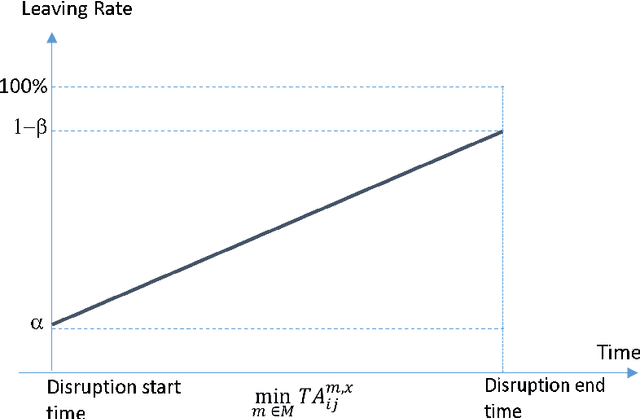
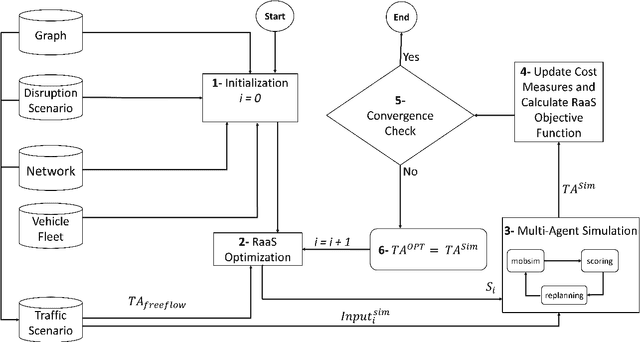
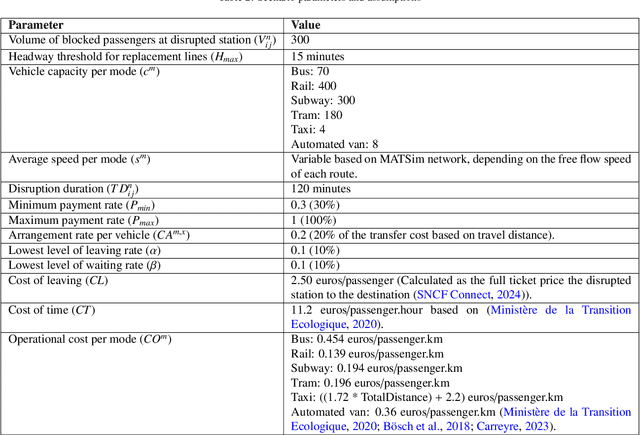
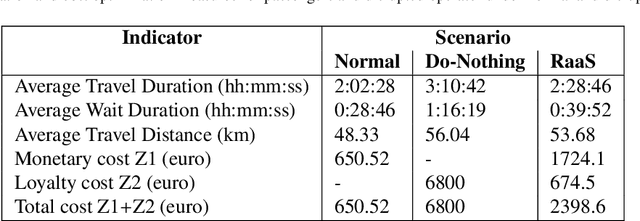
Public transportation systems are experiencing an increase in commuter traffic. This increase underscores the need for resilience strategies to manage unexpected service disruptions, ensuring rapid and effective responses that minimize adverse effects on stakeholders and enhance the system's ability to maintain essential functions and recover quickly. This study aims to explore the management of public transport disruptions through resilience as a service (RaaS) strategies, developing an optimization model to effectively allocate resources and minimize the cost for operators and passengers. The proposed model includes multiple transportation options, such as buses, taxis, and automated vans, and evaluates them as bridging alternatives to rail-disrupted services based on factors such as their availability, capacity, speed, and proximity to the disrupted station. This ensures that the most suitable vehicles are deployed to maintain service continuity. Applied to a case study in the Ile de France region, Paris and suburbs, complemented by a microscopic simulation, the model is compared to existing solutions such as bus bridging and reserve fleets. The results highlight the model's performance in minimizing costs and enhancing stakeholder satisfaction, optimizing transport management during disruptions.